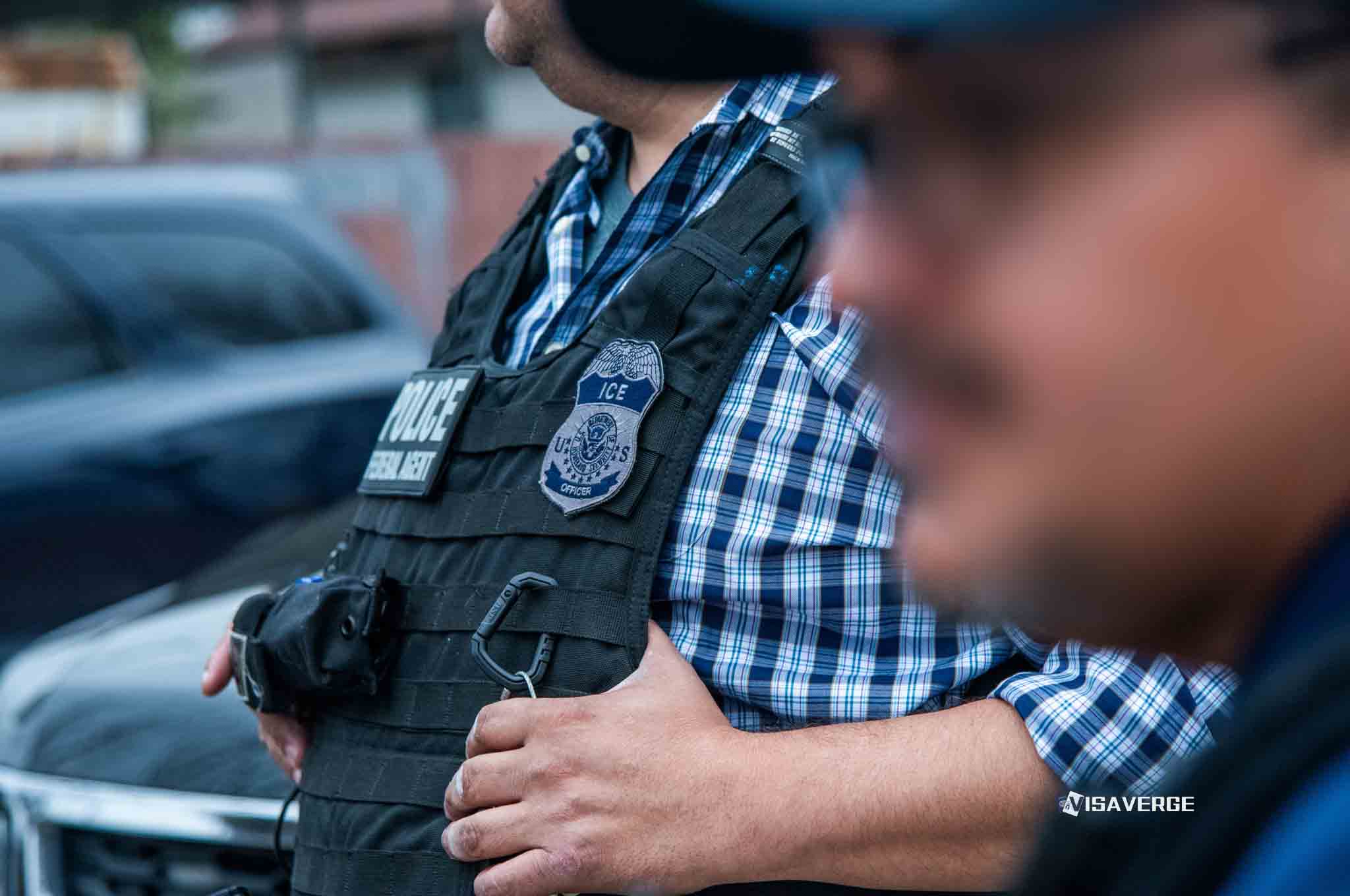
- Five individuals in Louisiana were indicted for a decade-long U-visa fraud scheme involving fake armed robbery reports.
- Three current or former police chiefs allegedly accepted bribes to certify false immigration paperwork for hundreds of noncitizens.
- The scheme resulted in 62 federal charges, including visa fraud, mail fraud, and money laundering across multiple agencies.
(LOUISIANA) — Federal prosecutors indicted five people in Louisiana in July 2025, including three current or former police chiefs, accusing them of fabricating armed robbery reports for a decade to help noncitizens obtain U-visas through a visa fraud scheme.
The 62-count indictment alleges the group created false police reports and related immigration paperwork from December 2015 to July 2025, listing hundreds of noncitizens, predominantly Indian nationals, as victims of crimes that never happened. Prosecutors said the false reports were used to support applications for U-visas, a form of immigration relief reserved for legitimate crime victims who assist law enforcement.

USCIS announced the case in a July 17, 2025 news release titled A day earlier, the U.S. Attorney’s Office for the Western District of Louisiana outlined the charges in a July 16, 2025 press release at Acting U.S. Attorney Alexander C. Van Hook, of the Western District of Louisiana, described the alleged conduct in stark terms at a press conference in Lafayette. “In fact, the armed robberies never took place. This case represents a deliberate attempt to undermine federal immigration protections for true victims of crime. This kind of exploitation erodes public trust in both the immigration system and law enforcement.”
USCIS said its fraud detection officers “uncovered a pattern of inconsistencies among U visa applications, spurring a multi-agency federal investigation.” That scrutiny centered on an unusual cluster of armed robbery claims involving people who were not from Louisiana, a pattern that authorities said raised alarms inside the immigration system before the criminal case became public.
Homeland Security Investigations Special Agent in Charge Eric Delaune said the inquiry began after a USCIS tip in 2024. He said almost 200 law enforcement officers took part in executing 11 search warrants.
Prosecutors identified Chandrakant “Lala” Patel as the intermediary in the case, describing him as an Oakdale businessman and Subway franchise owner. Authorities said Patel collected money from noncitizens who wanted to be named as crime victims, then paid officers to generate the documents needed for immigration filings.
Investigators named Chad Doyle, chief of police for Oakdale, Louisiana, among the defendants. They also charged Michael “Freck” Slaney, marshal of the Ward 5 Marshal’s Office in Oakdale, who later resigned on July 22, 2025.
Glynn Dixon, chief of police for Forest Hill, Louisiana, and Tebo Onishea, former chief of police for Glenmora, Louisiana, were also indicted. The defendants, authorities said, used their law enforcement positions to create reports that gave the applications the appearance of official support.
According to prosecutors, noncitizens paid Patel thousands of dollars to be listed as victims in the fabricated robberies. Patel then allegedly paid the officers $5,000 per name to write false reports and sign Form I-918B, the law enforcement certification required for a U-visa petition.
That certification carries unusual weight in the U-visa process because it attests that a person was the victim of qualifying criminal activity and was helpful, is being helpful, or is likely to be helpful to law enforcement. In this case, prosecutors said the underlying crimes were inventions, making the certifications central to the alleged fraud rather than routine paperwork.
The case put renewed attention on weaknesses that federal watchdogs had already flagged in the program. A 2022 report by the Department of Homeland Security’s Office of Inspector General warned that the U-visa program was “susceptible to fraud” because of ineffective management and a lack of vetting for law enforcement signatures.
USCIS later cited suspected fraud in victim-based immigration programs when it issued a policy update on December 22, 2025. The document, titled broadened officers’ ability to use “prohibited source” information to investigate fraud in those cases.
That change affects how USCIS reviews applications tied to claims of abuse or victimization. The update allows officers to consider information from third parties, including alleged abusers, more broadly when they examine whether fraud infected applications for victim-based benefits.
The Louisiana case offered federal officials a vivid example of why that policy shift drew attention. Authorities said the alleged conspiracy did not involve isolated paperwork errors or a single false statement, but a long-running arrangement in which police reports, certifications and immigration filings all reinforced one another.
Prosecutors said the legal exposure for the five defendants is severe. Each faces up to 5 years for conspiracy, 10 years for visa fraud and 20 years for mail fraud per count, while Patel also faces bribery and money laundering charges.
The consequences extend beyond the criminal case against the alleged organizers. Federal authorities said hundreds of approved U-visas linked to the false robbery reports may be revoked, placing recipients of those benefits under new scrutiny.
People who obtained immigration status through the alleged scheme face possible deportation, permanent bars from the United States and criminal prosecution tied to their role in the fraud. Official statements focus on the breadth of the suspected misconduct.
Louisiana sits at the center of the case because the alleged robberies, police certifications and law enforcement signatures all came from central Louisiana agencies. Yet the reach of the investigation stretches far beyond the state, given the number of immigration cases that federal officials said relied on those records.
The investigation also illustrated how immigration vetting and local policing intersect in the U-visa process. Federal officers do not create the certifications themselves; they depend on local law enforcement agencies to confirm that a qualifying crime occurred and that the applicant assisted authorities.
That reliance can create openings for abuse when local officials and intermediaries exploit the system for money. Prosecutors alleged that Patel’s role connected would-be applicants to officers who could produce official-looking robbery reports, turning what should have been a safeguard into the engine of the visa fraud scheme.
USCIS framed the indictment as the product of internal fraud detection rather than an outside complaint. Its release said agency officers spotted inconsistencies in U-visa filings, then passed that information into a broader federal investigation that eventually involved immigration agents and prosecutors in Louisiana.
Delaune’s account of the operation’s scale suggested how seriously investigators treated the allegations once the pattern emerged. Almost 200 law enforcement officers took part in the searches, he said, a substantial deployment for a case focused on paperwork, certifications and immigration benefits.
The public statements from USCIS and the Justice Department do not name the hundreds of noncitizens whose cases were tied to the fake reports. They do, however, describe the group broadly as predominantly Indian nationals and say the same invented robberies appeared repeatedly in applications filed over many years.
Those filings drew attention because they described armed robberies at a concentration that authorities considered implausible. USCIS said the pattern of applications, all relying on similar crime narratives and local certifications, helped expose what investigators now describe as one of the most striking U-visa fraud cases to surface in Louisiana.
The indictment left federal agencies confronting two tracks at once: prosecuting the people accused of creating the false records, and reviewing immigration benefits already granted on the strength of those records. The damage reached beyond the applicants who paid for fraudulent documents, touching a visa program designed for people who report real crimes and depend on police cooperation to remain in the United States.