- A federal grand jury indicted 10 Indian nationals for staging armed robberies to obtain U nonimmigrant visas.
- The conspiracy involved choreographed store holdups across multiple states including Massachusetts, Ohio, and Illinois.
- The scheme’s organizer, Rambhai Patel, collected over $850,000 from participants who paid to play the role of victims.
(BOSTON, MASSACHUSETTS) — A federal grand jury in Boston indicted 10 Indian nationals for allegedly staging armed robberies across several states so participants could fraudulently seek U nonimmigrant status, federal authorities said on April 10, 2026.
U.S. Citizenship and Immigration Services and the Department of Justice said the conspiracy used store holdups that were not real crimes in the usual sense. Prosecutors said the events were choreographed so clerks could later claim they had become victims of violent offenses and use that claim in U-visa filings.
USCIS described its role in the case in a newsroom statement dated April 10, 2026. “U.S. Citizenship and Immigration Services provided pivotal assistance to a visa fraud investigation that resulted in federal grand jury indictments of 10 Indian nationals.”
Leah B. Foley, the U.S. attorney whose office announced the charges on March 13, 2026, framed the alleged purpose in blunt terms. “It is alleged that the purpose of the staged robberies was to allow the clerks present to falsely claim that they were victims of a violent crime on an application for U non-immigration status (U Visa).”
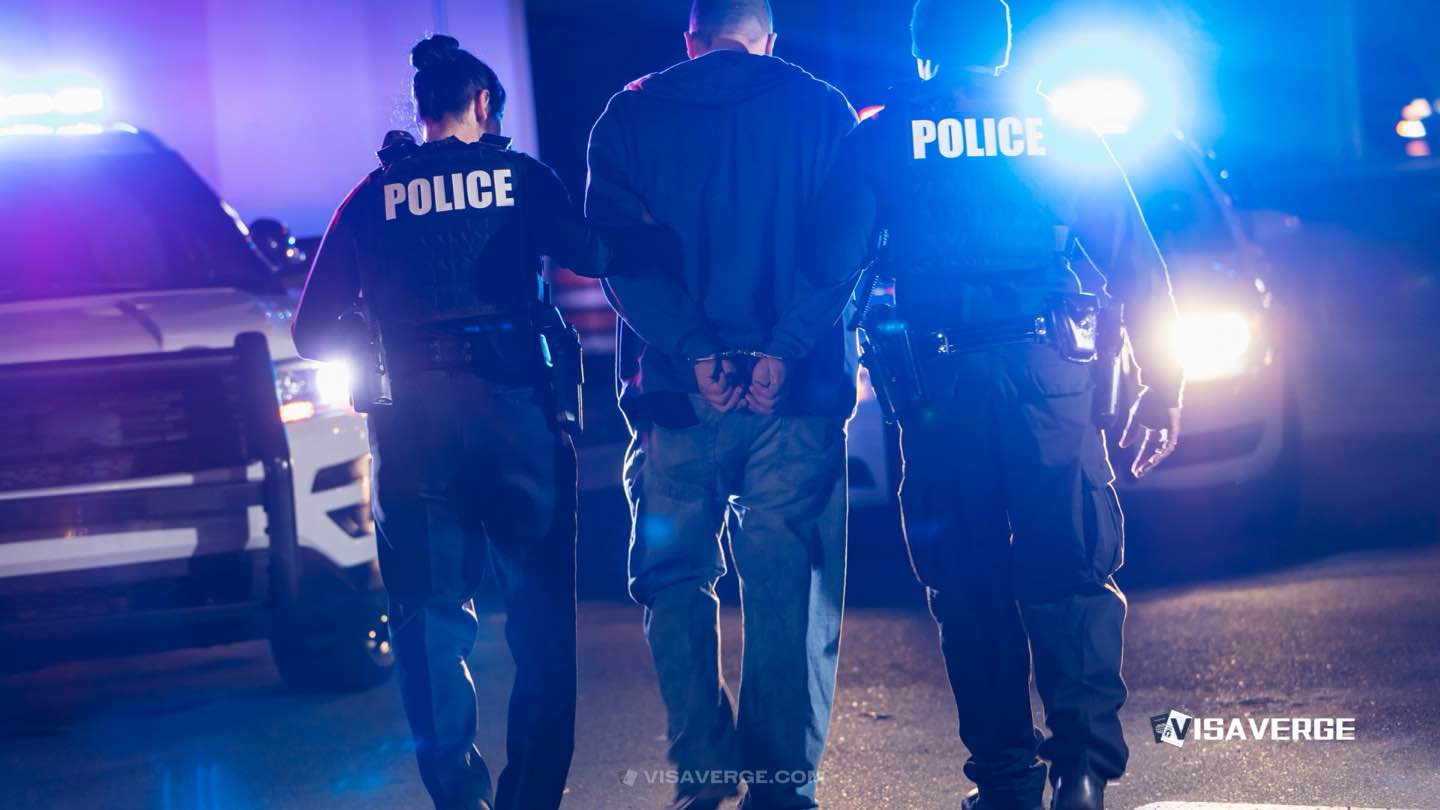
The case centers on a series of staged robberies at convenience stores, liquor stores and fast-food restaurants in Massachusetts, Ohio, Kentucky, Tennessee and Illinois. Court filings describe a repeated pattern: a hired robber entered, displayed what appeared to be a weapon, threatened the clerk and left with footage captured on store cameras.
That visual record mattered to the scheme. Prosecutors said participants carried out the incidents in front of surveillance systems so they would have CCTV clips that looked like proof of a qualifying crime.
Authorities said the robber often used a fake gun, or what court records called an “apparent firearm.” Clerks then waited at least five minutes before calling police, giving the robber time to get away and making the event appear unscripted.
Federal officials said the operation followed a script. Participants played assigned roles, with one person acting as the victim, another as the robber and others helping arrange the location, timing and escape.
Prosecutors identified Rambhai Patel as the organizer of the conspiracy and Balwinder Singh as a getaway driver. Patel had already been sentenced in a related case before the latest indictments were returned.
On August 20, 2025, Patel received 20 months and eight days in prison and a forfeiture order of $850,000. Investigators said he collected between $10,000 and $20,000 from purported victims who wanted to join the scheme, and earned approximately $850,000 before his arrest.
Authorities said Patel also paid store owners for use of their businesses as backdrops for the staged crimes. The shops became sets, not scenes of spontaneous violence, while clerks and owners allegedly helped create records for immigration filings.
FBI Special Agent Ted E. Docks pointed to the breadth of the investigation after Patel’s sentencing on August 25, 2025. “Valuable assistance in the investigation was provided by all participating law enforcement agencies,” Docks said, naming USCIS and FBI divisions in Seattle, New York and Boston.
The new defendants face one count of conspiracy to commit visa fraud. That charge carries a maximum sentence of five years in prison, three years of supervised release and a fine of $250,000, prosecutors said.
Federal authorities also said the defendants face deportation after any prison terms are completed. One defendant, Dipikaben Patel, has already been deported to India.
The allegations cut at the purpose of the U-visa system itself. Congress created U nonimmigrant status for people who suffer serious crimes and assist law enforcement, offering a path intended to protect witnesses and victims who might otherwise avoid police because of their immigration status.
In that system, commercial robbery claims can carry weight because they can involve threats with weapons, physical harm and police cooperation. Prosecutors said this conspiracy tried to mimic those facts closely enough to move fraudulent cases through a humanitarian program meant for genuine victims.
Authorities said the clerks were not caught in random crimes. They were recruited participants who paid to take part, then tried to turn the staged robberies into immigration benefits.
The alleged design also exploited a large queue. Federal authorities have said the system already carries a backlog of more than 250,000 cases, a strain that can slow decisions for applicants with legitimate claims.
USCIS has responded by sharpening its review of robbery-based filings. Federal authorities said adjudicators have received training to spot red flags in U-visa applications tied to commercial holdups, including delayed police calls and the absence of physical injuries.
That scrutiny developed as the case expanded over time. A Justice Department release dated May 17, 2024 announced that six defendants had been indicted for allegedly staging robberies to apply for immigration benefits, and the later filings widened the picture.
By April 10, 2026, prosecutors said the scheme had reached across multiple states and involved a more elaborate network of participants than first outlined. Each incident added a paper trail: a police report, video footage and an account that authorities say was false from the start.
Officials have presented the case as a rare example of immigration fraud built on simulated violence rather than fabricated paperwork alone. The alleged victims sought to show fear, cooperation and harm, while investigators say the events had been arranged in advance and priced like a service.
In practical terms, the money moved through the scheme in several directions. Clerks or would-be applicants paid Patel, Patel paid location owners, and the staged crime itself became the product sold to people seeking lawful status.
That structure gave investigators several points of entry. Store surveillance recordings, police response patterns and travel or communication records could all be checked against the claims made in immigration filings.
The case also shows the overlap between immigration enforcement and traditional criminal investigations. USCIS supplied assistance on visa records and application issues, while federal prosecutors and FBI agents built the broader fraud case around the staged incidents themselves.
Authorities have not described the operation as a one-state offense that happened to spill outward. They have instead portrayed it as a multi-state plan that reused the same method in different retail settings, with the same goal each time: create what looked like a violent crime, preserve enough evidence to persuade officials, and convert that appearance into an immigration benefit.
Federal agencies have tied the latest indictments to a chain of earlier announcements, including USCIS’s news release, the Justice Department’s August 20, 2025 press release on Patel’s sentencing, and its May 17, 2024 release on the first round of charges.
Those records trace a case built from staged robberies, a fake gun and clerks who prosecutors say were acting out fear for the camera. The people charged now face criminal penalties, possible removal from the United States, and a federal case that accuses them of turning a program for crime victims into a paid fraud scheme.