- null
(NETHERLANDS) — Dutch MPs backed a bilateral May 28, 2026 treaty with Morocco that is designed to simplify and accelerate the deportation of crime suspects, widening cooperation between the two countries beyond older international agreements.
Members of Parliament approved a deal covering suspects involved in offenses that carry a minimum sentence of one year, including murder, violent assault, money laundering and fraud. Dutch officials presented the accord as a way to speed removals and prosecutions in cases that had previously been harder to pursue across borders.
Free toolUSCIS Receipt Number Decoder
Dutch Justice Minister David van Weel cast the treaty as a deterrent aimed at suspects who tried to place distance between themselves and Dutch authorities. “The treaty sends out a signal that you cannot avoid the consequences if you commit crimes in either country. [Criminals] deliberately go to Morocco as they used to do with Dubai. It has become less attractive,” van Weel said on May 28, 2026.
The agreement goes beyond earlier UN-based arrangements that focused on international crimes such as terrorism and drug trafficking. Dutch officials said it addresses a “revolving door” in which suspects sought refuge in Morocco to avoid Dutch prosecution.
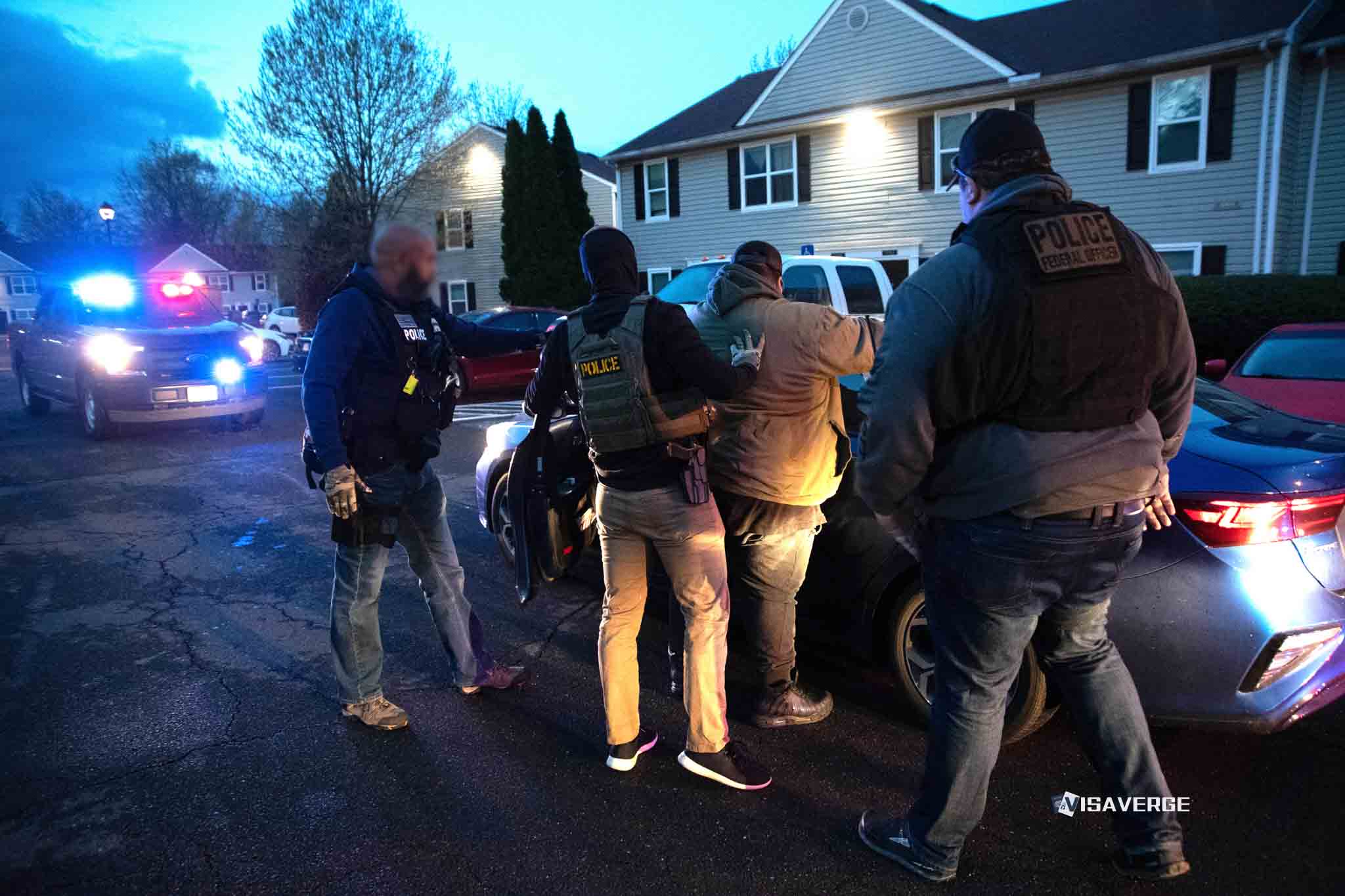
The parliamentary vote came as the United States has also tightened deportation and immigration enforcement affecting Moroccan nationals. In April 2026, Moroccans were among the first groups deported under a U.S. third-country arrangement with Costa Rica.
On April 11, 2026, U.S. authorities deported 25 migrants to Costa Rica, including citizens of Morocco, Albania and China, rather than sending them to their home countries. The transfer followed a Memorandum of Understanding signed in March 2026 under which the United States provides financial support to Costa Rica to accept up to 25 deportees per week when home countries refuse to take them back or return is “impracticable.”
That policy has placed deportees in countries where they often have no ties. The arrangement with Costa Rica illustrated a wider push by governments to secure removal destinations outside migrants’ countries of origin when direct deportation stalls.
Another U.S. measure affecting Moroccans centered on the Diversity Visa program. After a high-profile shooting incident at Brown University and MIT involving a Diversity Visa recipient, the Department of Homeland Security paused the DV1 program, affecting Moroccan applicants selected in the 2026 Diversity Visa lottery.
DHS Secretary Kristi Noem said in a statement issued on December 19, 2025, and maintained through May 2026, “I am immediately directing [U.S. Citizenship and Immigration Services] to pause the DV1 program to ensure no more Americans are harmed by this disastrous program.” Many Moroccan winners later reported indefinite delays in interview scheduling.
A DHS spokesperson said in March 2026 that the administration was “protecting” the nation by “upholding the highest standards of national security and public safety through its visa process.” That language matched a broader enforcement stance that treated criminal history and security screening as central to deportation, visa issuance and citizenship review.
U.S. officials also announced denaturalization actions on May 14, 2026 against several individuals accused of concealing criminal pasts during the naturalization process. Among the cases cited was Khalid Ouazzani, 48, a native of Morocco, who faced claims for denaturalization after authorities said he had “knowingly lied to immigration authorities” about past offenses during his citizenship application.
Taken together, the Dutch move and the U.S. measures show governments pressing for wider cooperation on removals involving Morocco. The treaty approved by Dutch MPs points to Morocco’s readiness to work more closely on criminal deportations, a shift that could shape future bilateral negotiations elsewhere.
The legal and practical consequences differ sharply across the policies. The Dutch deportation treaty is aimed at suspects linked to serious crimes with a threshold of at least one year in prison, while the U.S. third-country program focuses on removal logistics when direct return cannot be carried out. In the Costa Rica transfers, deportees faced the immediate problem of landing in a country whose language, institutions and support networks were unfamiliar.
Language barriers and the absence of family or community ties can leave third-country deportees in limbo after arrival. That concern has shadowed the U.S. agreement with Costa Rica since the first 25 migrants were sent there on April 11, 2026.
The Dutch government has framed its treaty with Morocco more narrowly, tying it to criminal suspects and prosecution. Dutch officials said previous mechanisms did not adequately cover the type of cross-border cases in which a suspect could leave the Netherlands for Morocco and frustrate enforcement efforts without falling under older treaty categories.
That distinction matters politically inside the Netherlands, where MPs backed a bilateral approach instead of relying on broader multilateral rules. By focusing on offenses such as murder, violent assault, money laundering and fraud, lawmakers endorsed a treaty built around specific criminal conduct rather than the international crimes covered under prior UN-based agreements.
In Washington, the same harder line has reached beyond deportation to visa selection and citizenship status. The DV1 freeze, the Costa Rica memorandum and the denaturalization filings all reflect a policy stance that treats screening failures or alleged concealment as grounds for rapid intervention.
Moroccan nationals appear in each of those strands. They were included in the third-country deportations to Costa Rica, affected by the Diversity Visa pause, and named in at least one denaturalization case brought by USCIS and the Department of Justice.
Official information on the U.S. measures appears through the Department of Homeland Security’s news page and the USCIS newsroom. Dutch government material on the treaty is published through government.nl, while related policy material in Britain is available through the UK Home Office.
Van Weel’s message captured the Dutch government’s immediate objective: “The treaty sends out a signal that you cannot avoid the consequences if you commit crimes in either country. [Criminals] deliberately go to Morocco as they used to do with Dubai. It has become less attractive.”