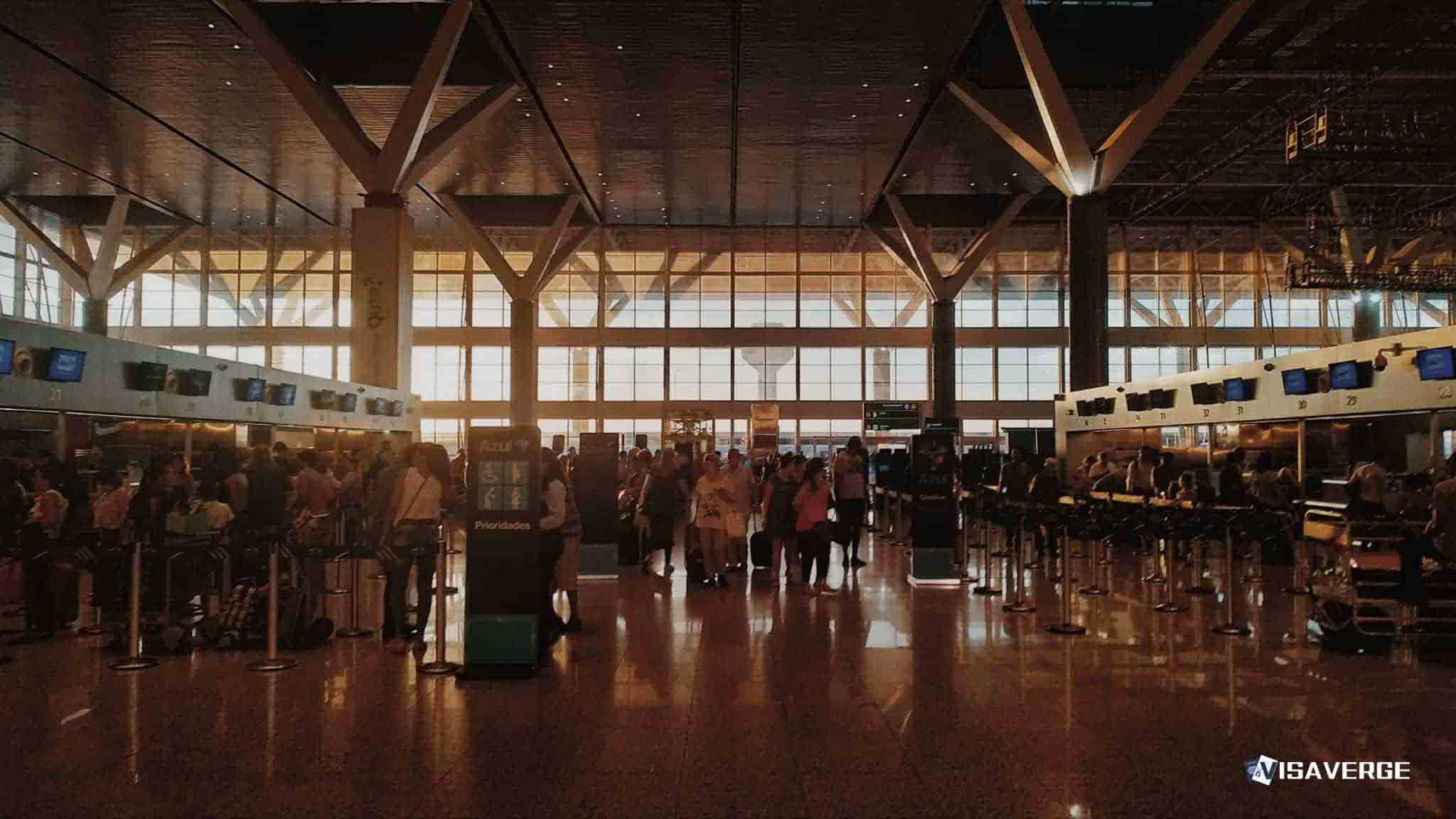
- A missile strike at King Khalid International Airport killed twelve people and injured three hundred nine.
- Authorities evacuated the Riyadh airport and suspended operations while assessing damage and safety conditions.
- The Houthis later claimed the attack was retaliation for Saudi strikes in Yemen.
A missile hit King Khalid International Airport in Riyadh, Saudi Arabia, on Saturday, killing 12 people and injuring 309. Officials evacuated the complex and suspended operations.
Some of the injured were in critical condition, the Saudi General Authority of Civil Aviation said. “All injured individuals are receiving the necessary medical care at several hospitals.”

The missile struck the complex housing Terminals 3 and 4, which serve domestic flights, a regional official said. The official spoke anonymously because they were not authorized to brief the media.
Arrivals were diverted, while departing flights faced delays or cancellations. The last flight reportedly landed at 2:05 p.m. local time.
FlightAware data showed 291 cancellations at the airport in the preceding 24 hours. Authorities evacuated the facility as they assessed damage and carried out safety inspections.
The civil-aviation authority described the facility as a target amid repeated attacks on civilian aviation. Saudi officials had not assigned responsibility in their initial casualty statement.
The Saudi-led coalition also reported that “a projectile” landed near King Fahd International Airport in Dammam, in the Eastern Province. Officials did not immediately report casualties or damage there.
The dead came from eight countries
The aviation authority listed the victims by nationality but did not publicly release their names. The toll comprised four Saudi nationals, two Bangladeshis and one person each from six other countries.
| Nationality | Fatalities |
|---|---|
| Saudi | 4 |
| Bangladeshi | 2 |
| American | 1 |
| Egyptian | 1 |
| Jordanian | 1 |
| Syrian | 1 |
| Palestinian | 1 |
| Sudanese | 1 |
The authority’s figures put the injured total at 309. Some required care at several hospitals, it said.
The Houthis later said the attack was retaliation
The Iran-backed Houthi movement in Yemen did not issue a formal claim in the first accounts. Its military spokesperson, Yahya Saree, reposted an earlier message saying only pre-approved humanitarian flights would be allowed to land at the airport.
He added: “A reminder.” The post came before a later claim of responsibility from senior Houthi official Mohammed al-Bukhaiti.
Al-Bukhaiti called the attack retaliation for Saudi strikes in Yemen. He argued that civilian protections should apply there as well, listing airports, seaports, hospitals, markets, and wedding and funeral venues.
Saree said the group had launched ballistic and cruise missiles at airports in Riyadh and Najran. The missile strikes came amid escalating attacks on civilian aviation and other infrastructure.
Earlier attacks killed four and damaged an aircraft
The October 10 attack was the third assault on the capital’s airport that week. Earlier strikes killed four people, among them Saudia Airlines pilot Capt. Hamoud Ali Alkalthami, and damaged a commercial aircraft on the tarmac.
Accounts of the earlier attacks attributed to or claimed by the Houthis described three Saudi citizens killed, including a pilot, and a Sudanese national killed in an attack on Wednesday. A medical source separately identified an earlier victim as an Egyptian crew member working for a Saudi airline. It identified another as a Palestinian carrying Egyptian travel documents.
On Thursday, October 8, 2026, the Houthis claimed a ballistic missile attack on the airport. Saree also said the group had fired ballistic and cruise missiles toward airports in Riyadh and Najran.
Major General Turki al-Malki, spokesperson for the Saudi-led coalition, said Saudi forces intercepted and destroyed two ballistic missiles aimed at the capital and another aimed at Khamis Mushait. Civil-defense authorities said interception debris damaged a kindergarten and a medical complex. They reported no casualties in that incident.
Saudi Arabia and allied forces had begun a major military offensive against the Houthis in Yemen the week before the airport attack. The ensuing Houthi attacks extended to civilian aviation and other infrastructure.
Washington weighed military support as embassies warned citizens
Donald Trump, President of the United States, said Washington was considering joining Saudi military operations against the Houthis.
“We may. We’re going to look at it. We just found out about the recent attack, so we’ll make a decision. We move very quickly.”
The U.S. Embassy in Riyadh said it was “aware of attacks” and strongly advised U.S. citizens to avoid the airport and surrounding areas. Spain’s embassy called the incident a “new attack” by the Houthi rebels, while Canada’s embassy warned of “ongoing military activity.”
Ahmed Sayed, a resident of the capital, said he heard at least two loud explosions. The attacks also raised pressure on Saudi allies, particularly the United States, to provide military support.
Diplomats urged de-escalation as the airport stayed closed
Saudi Arabia’s foreign minister and his Omani counterpart discussed “supporting diplomatic solutions to de-escalate tensions in the region.” Their names were not included in statements on the talks.
The week’s attacks also targeted military sites, oil infrastructure and aircraft, alongside airports. Airport operations remained suspended while authorities assessed damage and safety conditions.