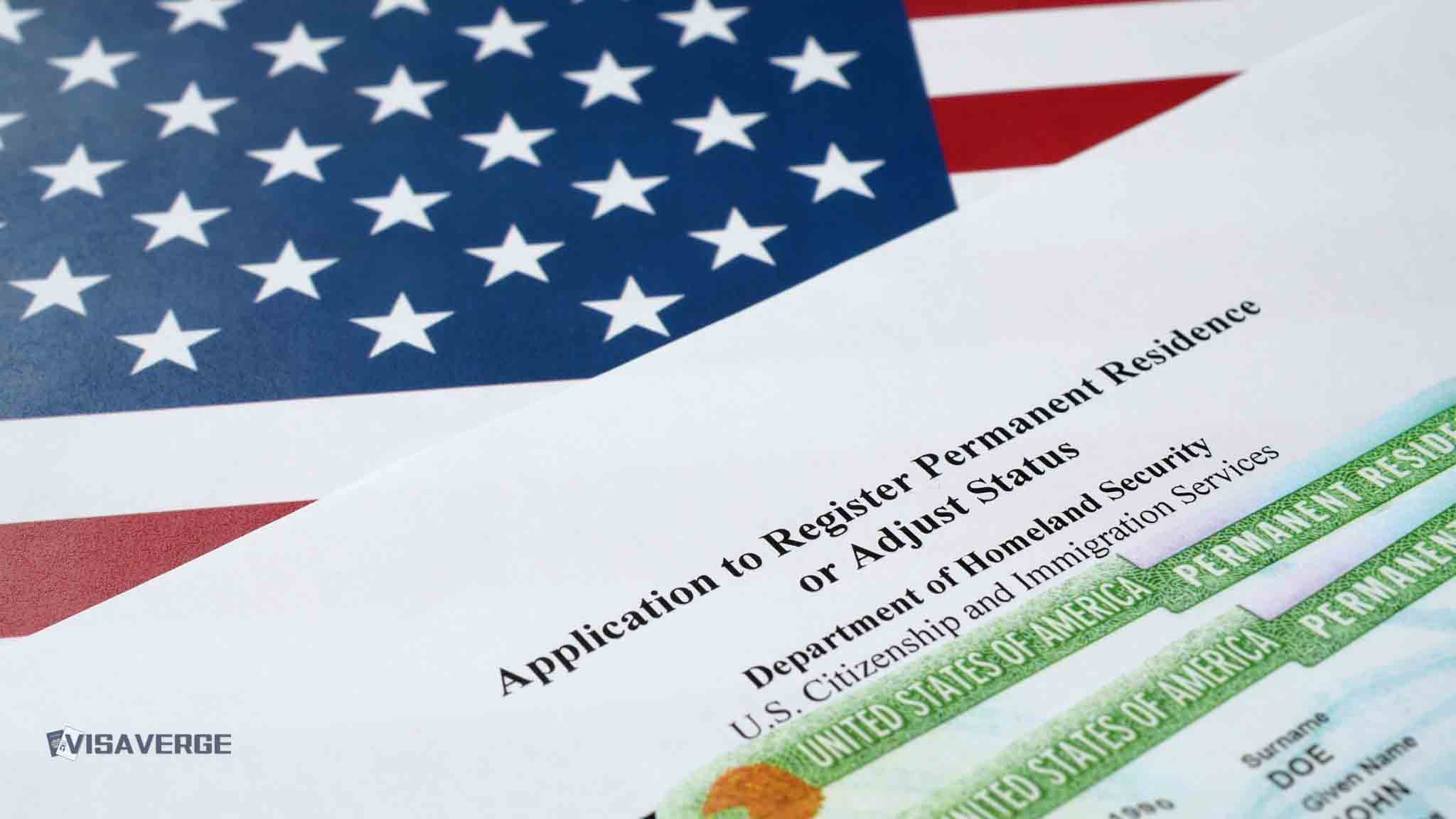
- USCIS describes existing citizenship routes; it did not announce a new removal of the five-year wait.
- The general five-year naturalization route still applies to most applicants today.
- Shorter routes apply only if their requirements are met, such as three-year spouse route.
Checked against USCIS
U.S. Citizenship and Immigration Services (USCIS), the agency that handles naturalization, describes existing citizenship routes for some spouses of U.S. citizens, eligible military members and children of U.S. citizens. These are not new changes removing the five-year wait: the general five-year naturalization route remains in force for most applicants, while people who meet separate requirements may qualify sooner or acquire citizenship automatically.
The spouse provisions are set out in a USCIS Policy Manual chapter issued on April 15, 2019. Some eligible spouses and service members apply for naturalization, the process by which an eligible noncitizen becomes a U.S. citizen, using Form N-400. Qualifying children may acquire citizenship without applying through that process.

Who can use a shorter route as a spouse
Most naturalization applicants must be at least 18 when they file Form N-400, have been lawful permanent residents (green-card holders) for at least five years, and have lived in the state or USCIS district where they claim residence for at least three months before filing.
A spouse of a U.S. citizen may use a three-year route instead of the general five-year route. The applicant must have been a permanent resident for three years and married to and living in marital union with the same U.S.-citizen spouse for at least three years before filing. The couple must remain legally married until the applicant takes the Oath of Allegiance, the ceremony in which a new citizen swears allegiance to the United States. The U.S.-citizen spouse must reside in the United States when the application is filed. The applicant must also have been physically present in the United States for at least 18 months during the three-year residence period and meet the other naturalization requirements. Marriage alone does not qualify someone.
A qualifying spouse may generally file Form N-400 up to 90 calendar days before completing the three-year continuous-residence period. Continuous residence means maintaining residence in the United States over the required period; early filing does not remove the other requirements that must be met when filing. USCIS provides filing and early-filing information on its Form N-400 page.
There are separate routes for some spouses whose U.S.-citizen partner works abroad for the U.S. Government, including the armed forces, or another qualified entity. Under one route, the spouse may naturalize in the United States without a required period of U.S. residence or physical presence after becoming a permanent resident. The applicant must be a permanent resident when filing, and the U.S.-citizen spouse’s qualifying employment must be scheduled to last at least one year after the filing date. The applicant must intend in good faith to live in the United States after that employment ends, be in the United States for the oath, and establish that they will join the spouse within 30 to 45 days after naturalization.
A spouse residing abroad with a U.S.-citizen spouse serving abroad in the U.S. armed forces may naturalize abroad. For the general five-year or three-year spouse route, time abroad counts as U.S. residence and physical presence. A surviving spouse may also naturalize without a required period of U.S. residence or physical presence after becoming a permanent resident if the U.S.-citizen spouse died during honorable active-duty service in the U.S. armed forces or was granted citizenship posthumously. The spouses must have been married and living in marital union when the spouse died; the applicant must be a permanent resident when filing and be in the United States for the interview and oath.
Special spouse provisions may also cover a spouse, former spouse or intended spouse who obtained lawful permanent resident status because they were battered or subjected to extreme cruelty by their U.S.-citizen spouse.
What military service can qualify
Eligible current or former U.S. service members may qualify under two provisions of the Immigration and Nationality Act (INA), the federal law that includes the rules for naturalization. Under INA section 328, an applicant needs at least one year of honorable service in the U.S. armed forces. The applicant must be at least 18 and a permanent resident by the naturalization interview, and meet the applicable requirements for residence, physical presence, English, civics and good moral character.
A section 328 applicant who files while still serving or within six months of an honorable discharge is exempt from the residence and physical-presence requirements. Someone who files six months or more after separation generally must show five years of continuous U.S. residence and 30 months of physical presence during the five years before filing.
Under INA section 329, eligible applicants may qualify through honorable service during a designated period of hostilities. This route does not require the general continuous-residence or physical-presence periods. The designated periods are:
- April 6, 1917-November 11, 1918
- September 1, 1939-December 31, 1946
- June 25, 1950-July 1, 1955
- February 28, 1961-October 15, 1978
- August 2, 1990-April 11, 1991
- September 11, 2001-present
Applicants under section 329 must also meet the provision’s applicable service, status or enlistment-location, English, civics and good-moral-character requirements. Military naturalization applicants file Form N-400; those currently serving under section 328 or 329 must also submit Form N-426, a military-certified service form. Applicants who meet the requirements under either section do not pay the N-400 filing fee. USCIS provides naturalization guidance for military service applicants.
When a child may acquire citizenship
A child may acquire citizenship automatically before age 18 under INA section 320 if the child has a U.S.-citizen parent, is a lawful permanent resident and resides in the United States in that parent’s legal and physical custody. A parent may file Form N-600 to request a Certificate of Citizenship documenting the child’s citizenship. USCIS’s naturalization readiness guide includes information about Form N-600.
A child who regularly resides outside the United States may qualify under the separate INA section 322 process using Form N-600K. The child must be under 18 and meet the applicable custody, lawful-presence and parent-or-grandparent physical-presence requirements. The parent’s next step is to check eligibility and file Form N-600K before the child turns 18; USCIS provides Form N-600K information.
N-400 fees and the conflicting general entries
USCIS’s Form N-400 filing instructions list a standard fee of $760 for paper filing or $710 online. USCIS’s fee schedule, dated October 28, 2026, also lists a general Form N-400 fee of $830 for paper filing and $780 online, alongside a separate general-filing entry listing $760 and $710. The fee schedule contains two different general-fee entries. The N-400 fee changes described in USCIS’s 2024 fee fact sheet took effect on April 1, 2024.
The fee schedule lists a reduced $380 fee for applicants whose documented annual household income is not more than 400% of the Federal Poverty Guidelines, a federal income measure. Applicants seeking a reduced fee or a fee waiver must file on paper. A fee-waiver request must include Form I-912 or a written request with supporting evidence, and the applicant must not submit the fee with the request. USCIS identifies three grounds for a waiver: receiving a means-tested benefit, which is a benefit with eligibility based on income or resources; household income at or below 150% of the Federal Poverty Guidelines; or financial hardship that prevents payment. The N-400 fee schedule contains the fee entries.
How the spouse rules developed
The naturalization provisions for spouses of U.S. citizens reflect legislation dating back to 1922. Congress considered it inefficient and undesirable to make a U.S.-citizen’s spouse wait five years before naturalizing. In 1934, Congress amended the provisions to include a three-year residence period.