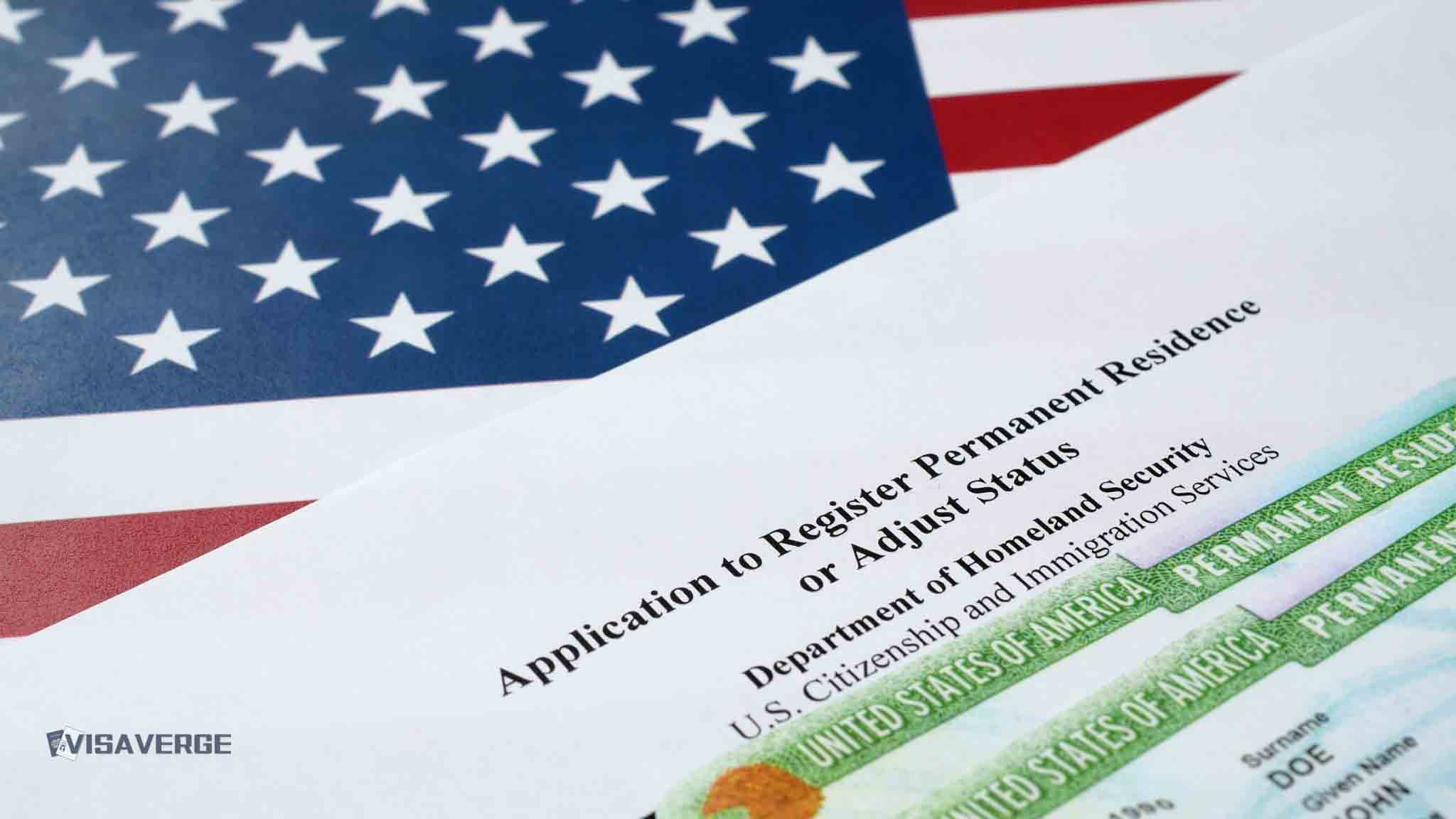
- U.S. population growth slowed to 0.5% in 2025 due to aggressive immigration enforcement policies.
- Officials report over 2.5 million departures, including formal removals and encouraged self-deportations since early 2025.
- Policy shifts include terminating TPS status for several countries and pausing visa processing in 75 nations.
Federal officials are tying a government-recorded slowdown in U.S. population growth to aggressive immigration enforcement, arguing that removals, deterrence messaging, and administrative policy shifts under President Trump reduced net migration sharply in 2025.
The officials link enforcement actions and policy shifts to demographic outcomes, while demographic datasets and measurement windows may not align perfectly with operational surges or court rulings.

1. Official statements and framing from government
Tricia McLaughlin, a Department of Homeland Security (DHS) spokesperson, set the tone on December 10, 2025 by linking enforcement totals to a broad message of deterrence.
In her public statement, she said, “The Trump Administration is shattering historic records with more than 2.5 million illegal aliens leaving the U.S.” She added that DHS “has deported more than 605,000 illegal aliens and another 1.9 million have self-deported,” and that “Since January 20, DHS has arrested more than 595,000 illegal aliens.”
Her statement framed departures as a behavioral response to a warning: “Illegal aliens are hearing our message to leave now.”
Kristi Noem, in DHS’s “Year in Review 2025” messaging released late 2025, reinforced the idea that enforcement outputs translate into population effects.
The review said DHS “delivered on President Trump’s mandate to crack down on illegal immigration,” and pointed to more than 2 million individuals leaving the U.S. population since the start of the administration. DHS presented departures as an outcome to be measured, not only as an enforcement activity.
White House framing made the population link even more direct. A January 22, 2026 fact sheet titled “Secure the Border” asserted: “Due to President Trump’s immigration crackdown, the U.S. had negative net migration in 2025 – the first time in at least a half-century.”
That claim combines policy intent (crackdown) with a demographic result (net migration), while also implying a historical break. Population estimates, however, are compiled on set schedules and rely on defined measurement windows.
Even when officials cite population changes as proof of enforcement success, demographic datasets can lag and may not align perfectly with the timing of enforcement surges, court decisions, or mid-year operational shifts. Different systems measure different things.
That gap is central to interpreting the administration’s claims.
2. Key facts, statistics, and policy details (what the numbers indicate)
U.S. Census Bureau estimates released on January 27, 2026 put the 0.5% growth rate for 2025 among the weakest in modern U.S. history.
Growth rate is a broad measure. It reflects births minus deaths, plus net international migration (NIM). NIM can move quickly when policy changes affect arrivals, visa issuance, border processing, and departures. Birth and death trends usually shift slower.
NIM is narrower than the overall growth rate, but it often drives year-to-year swings. The figures being highlighted by the administration show NIM falling from 2.7 million NIM in 2024 to 1.3 million NIM as of July 1, 2025, with 321,000 projected for 2026.
When NIM drops, the growth rate can fall even if births and deaths remain close to trend. That is why enforcement officials stress migration measures.
Enforcement metrics need careful definitions, because agencies use terms with specific meanings:
- Removals typically refer to a formal process resulting in an enforceable order and a departure under that order. In ICE usage, “removal” often signals a legal action with documented consequences for future admissibility.
- Returns often refer to departures without a formal removal order. Returns can occur after encounters at the border or other processes, depending on the legal pathway used.
- Self-deportation is a political and operational phrase rather than a single statutory label. Agencies use it to describe “departures” encouraged by enforcement pressure or formal incentives, even when no officer physically escorts a person out.
Those distinctions change how readers interpret totals. A high “departures” count can include people who left without a final order, people who departed after a final order, and people who used a program intended to encourage voluntary departure. Each category can carry different legal consequences.
Detention numbers also function differently than removal counts. A daily average of nearly 70,000 detainees is best read as a system-capacity signal.
It indicates how many beds are filled, how quickly cases can move through custody, and how much pressure exists on transportation, medical care, and court scheduling. It does not, by itself, tell you how many removals occurred that week.
Throughput depends on staffing, court dockets, consular cooperation, and travel logistics.
Funding can reshape that capacity. A July 2025 package that provided $170 billion funding through 2029 implies multi-year operational expansion: more officers, more detention contracts, more transportation, and more investigative worksite capacity.
Funding levels do not guarantee outcomes. They usually expand the ceiling of what agencies can do.
| Indicator / Action | Definition (as used by DHS/ICE) | Recent value or status | Official source / date |
|---|---|---|---|
| U.S. population growth rate | Annual population change including births, deaths, and NIM | 0.5% growth rate | U.S. Census Bureau estimate released January 27, 2026 |
| Net international migration (NIM) | Net change from international movement during the estimate window | 2.7 million NIM in 2024; 1.3 million NIM as of July 1, 2025; 321,000 projected for 2026 | U.S. Census Bureau; referenced in administration framing (2019-2026 window comparisons used) |
| Removals (“deportations”) | Formal removals under an order, as reported by DHS | 605,000 deportations | DHS statement by Tricia McLaughlin, December 10, 2025 |
| “Self-deportations” / departures | DHS-described encouraged departures, not always tied to a removal order | 1.9 million self-deportations; included in 2.5 million illegal aliens leaving the U.S. | DHS statement by Tricia McLaughlin, December 10, 2025 |
| Arrests | DHS-reported immigration arrests since the start of the administration | 595,000 arrests | DHS statement by Tricia McLaughlin, December 10, 2025 |
| Detention average daily population | ICE custody headcount; a capacity and throughput indicator | Nearly 70,000 detainees | DHS/ICE operational reporting referenced in administration messaging (early January 2026) |
| Multi-year enforcement funding | Appropriated funding supporting staffing, detention, and operations | $170 billion funding through 2029 | Federal package passed July 2025 |
| Policy shift examples | Administrative actions that can affect eligibility and processing | Temporary Protected Status (TPS) terminations; visa processing pauses; worksite enforcement escalation | DHS and White House policy framing through January 22, 2026 |
Definitions and measurement windows matter: Totals labeled as “departures” or “self-deportations” can encompass multiple administrative categories with different legal consequences, and Census population measures use fixed estimate windows that may lag operational changes.
3. Policy shifts and legal changes (what changed on the ground)
Temporary Protected Status (TPS) has been a major pressure point. The administration cited Temporary Protected Status (TPS) terminations affecting Haiti, Venezuela, and Somalia.
For TPS holders, termination can mean the eventual loss of work authorization tied to TPS and the end of protection from removal based on TPS alone. Timing matters: many people plan renewals, extensions, or alternative filings around Federal Register effective dates and litigation stays.
A termination announcement can change employer compliance decisions and family planning fast.
Visa processing policy has also been used as a lever. The administration described a pause on immigrant visa processing for 75 countries, framed around concerns about migrants who “take welfare… at unacceptable rates.”
Operationally, a processing pause can affect interview scheduling, document collection, and travel planning. It can also create cascading delays in case queues at DOS posts and in follow-on USCIS steps after entry.
Worksite enforcement escalation can reach beyond the targeted workplace. Reports of increased workplace raids and “Operation Midway Blitz” suggest a wider investigative posture, including I-9 scrutiny and operational sweeps.
Employers may face sudden labor disruptions. Employees can face detention risk, wage loss, and family instability, even before any final immigration decision. Legal exposure can vary based on status, prior orders, and criminal history.
Naturalization policy changes are often less visible, but the impact can be real. The administration reported that USCIS resumed personal investigations for naturalization and issued memos directing strict adherence to public charge rules.
A tougher adjudication posture can mean deeper review of prior filings, travel history, tax records, selective service, and criminal or civil issues. Consistency across past applications tends to matter more when interviews become more probing.
| Policy Shift | Groups Affected | Operational Implications | Notes on Uncertainty |
|---|---|---|---|
| Temporary Protected Status (TPS) terminations for Haiti, Venezuela, Somalia | TPS holders and their employers | Potential loss of TPS-based work authorization; higher removal exposure if no other status applies | Effective dates and court challenges can alter timelines |
| Immigrant visa processing pause for 75 countries | Visa applicants and U.S. petitioners | Delays in interviews and issuance; travel planning risk; longer family separation | Scope can change by post capacity, country list updates, and exceptions |
| Worksite enforcement escalation and “Operation Midway Blitz” | Employers, workers, mixed-status families | More audits and on-site actions; possible sudden detentions; local service strain | Operational focus can shift by region and investigative priorities |
| Naturalization scrutiny and strict public charge rules posture | Naturalization applicants; some benefit applicants | More investigation and document requests; longer adjudication timelines in complex cases | USCIS guidance can change through policy memos and litigation |
Callout 1 [risk]: Key legal and practical risks under the new enforcement posture
– TPS holders: Work authorization tied to TPS may end after a termination takes effect, raising job-loss and removal risks.
– Visa applicants: Processing pauses can disrupt interviews and travel plans, and may change family timelines without much notice.
– Workers and employers: Worksite actions can trigger detention, sudden income loss, and compliance exposure for businesses.
– Naturalization applicants: A stricter interview posture can surface old discrepancies, making accurate disclosures and consistent records more urgent.
4. Context and significance (why these indicators matter historically)
A 0.5% growth rate is being described as among the lowest in roughly 125 years because the United States usually grows faster, even in periods of economic stress.
The closest comparisons cited in public discussion include the 1918-1919 Spanish flu pandemic (just under 0.5%) and the 2021 COVID-19 pandemic (0.16%). The drivers differ: pandemic-era declines reflected excess deaths, reduced fertility, and disrupted migration channels.
The 2025 slowdown is being attributed by officials mainly to migration changes linked to enforcement and policy. Low growth has knock-on effects beyond politics.
Labor force growth can slow, especially in sectors that rely on recent arrivals. School enrollment can flatten in some regions while shifting in others. Housing demand forecasts can change, which can affect local planning and tax bases.
Federal budget projections also use population assumptions to estimate future revenues and program costs. Long-range revisions must be read carefully.
The Congressional Budget Office revision cited by policymakers—7 million fewer people over ten years—is not a headcount that already happened. It is a modeled projection driven by assumptions about births, deaths, and net migration.
If policies change, or if enforcement intensity cannot be sustained, the projection can shift again.
5. Impact on affected individuals (real-world effects and risk areas)
Departures at scale can look orderly in aggregate data while feeling chaotic for families. Some people leave after a removal order. Others depart quickly to avoid detention or after an arrest.
Job loss is common. Interrupted schooling happens fast, especially for children in mixed-status households.
The administration’s emphasis on “self-deportation” adds another layer. Programs described as voluntary departure assistance, such as the CBP Home app offering flights and $1,000, can create strong incentives to leave.
Any person considering such a program typically needs to weigh consequences first, including future admissibility bars, the effect of prior unlawful presence, and whether a departure is treated as a “removal” or another form of exit. Outcomes depend on individual history and the legal basis for departure.
An immigration attorney can help assess risk in complex cases.
Los Angeles and Portland were cited as places where enforcement visibility increased and clashes occurred during surges. Even without confrontation, higher visibility can deter people from reporting crimes, attending school meetings, or seeking health care.
Access-to-counsel becomes harder when detention expands and transfers occur. Local support networks often respond, but capacity can lag behind enforcement tempo.
Humanitarian concerns also intersect with detention growth. Congressional reporting referenced 53 deaths in custody in 2025 across ICE and CBP systems.
A higher detainee population increases demand for medical screening, mental health care, and continuity of medications. Families often need clear protocols: keep A-numbers and detention locations, document medical needs, and maintain attorney contact details.
6. Official sources and references (where to verify updates)
U.S. Census Bureau releases remain the anchor for population estimates, growth rates, and NIM. Readers trying to track the 2019-2026 window should compare “vintage” estimate releases carefully, since methodological updates can change prior-year numbers.
DHS releases and year-in-review materials show how the administration is framing removals, arrests, detention capacity, and departures. ICE and CBP operational updates may add context on detention levels and enforcement initiatives, though definitions can differ across products.
White House fact sheets often preview priorities and claim results. They may not match Census measurement windows exactly, so readers should cross-check dates and definitions.
USCIS is the primary source for benefit-related policy memos and the USCIS Policy Manual, including changes that affect adjudication posture for naturalization and public charge rules. Verification should focus on effective dates, transition rules, and whether guidance applies to pending cases.
Official USCIS updates can be checked at https://www.uscis.gov/laws-and-policy/policy-memoranda
DOS channels are the main reference point for visa processing status at consular posts. A processing “pause” can show up as scheduling slowdowns, appointment limits, or post-specific instructions, so applicants often need to review post notices and official communications tied to their case.
Callout 2 [action]: What readers should verify with official sources now
– Effective dates for Temporary Protected Status (TPS) terminations and any court-ordered stays.
– Transition rules for work authorization tied to TPS and pending benefit applications.
– Visa processing status at the relevant DOS post, including interview availability and exception categories.
– USCIS policy memo dates affecting naturalization interviews, investigations, and public charge rules.
– Detention location and medical protocols if a family member is taken into ICE custody.