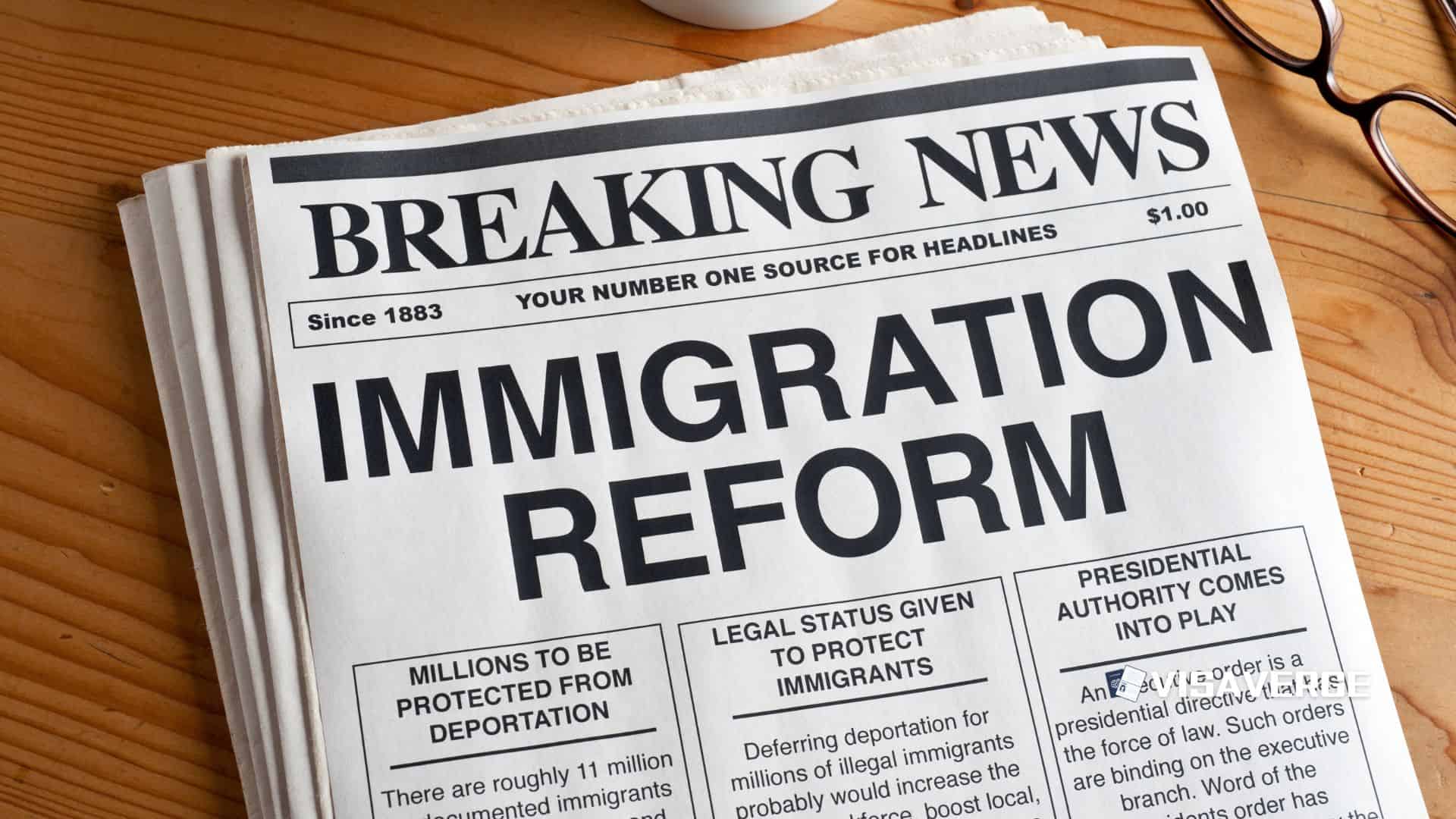
- Mexico maintains unconditional birthright citizenship via Article 30, contrasting with current U.S. executive efforts.
- The U.S. Supreme Court will rule by July 2026 on the landmark case Trump versus Barbara.
- Approximately thirty-three nations, mostly in the Americas, still offer automatic citizenship to children born on their soil.
(MEXICO) — Mexico grants automatic citizenship to every child born on its soil, a constitutional guarantee that now stands in sharp relief against a U.S. executive branch campaign to dismantle the same principle north of the border.
Reporting by the Associated Press on June 24, 2026, confirmed that Mexico, like the United States, extends birthright citizenship to children born on its territory regardless of their parents’ immigration status.

The confirmation arrives at a moment of intensifying legal confrontation, with the U.S. Supreme Court weighing whether to overturn a precedent that has governed American citizenship law for 125 years.
Free toolSubstantial Presence Test CalculatorDHS Secretary Markwayne Mullin laid out the administration’s framing in a formal address on June 9, 2026. “American citizenship is a privilege, and it must be earned honestly. If you come here and break our laws, and lie in your immigration proceedings, you forfeit that privilege,” Mullin said.
The statement followed a separate policy shift announced by a DHS spokesperson on June 3, 2026, involving adjustment of status, the process by which certain immigrants already in the United States obtain lawful permanent residence.
The spokesperson described green card processing as “extraordinary relief” and said it is not a “blanket requirement” that applicants must apply from abroad.
“DHS is using every lawful tool available to address the backlog and abuse of the asylum system. it will be up to individual immigration officers to decide on a case-by-case basis whether to require consular processing abroad,” the spokesperson said.
Individual immigration officers would retain discretion over whether to require consular processing under the memorandum.
That change could route some applicants through U.S. embassies and consulates overseas rather than allowing them to adjust status from within the country, a shift that would extend processing timelines and add travel costs for affected families.
President Trump signed an executive order on January 20, 2025, his first day in office, seeking to end automatic birthright citizenship.
The order targeted children born in the United States to parents who are undocumented or hold temporary legal status, including student visas and work visas such as the H-1B and L-1 categories.
Mexico’s approach is anchored in Article 30 of the Political Constitution of the United Mexican States.
The provision grants nationality to any person born on Mexican territory, regardless of the immigration status of their parents. No exceptions exist for temporary residents, tourists, or undocumented migrants.
This unconditional guarantee has made Mexico a destination for migrants from Haiti and Central America.
Families who arrive in Mexico can secure legal status for their children through birth on Mexican soil, creating a pathway to stability that does not depend on the parents’ own immigration standing.
Mexican nationality, once conferred at birth, opens access to education, healthcare, and eventual employment for the child.
The U.S. conflict centers on the 14th Amendment, which has historically guaranteed citizenship to all persons born in the country.
The executive branch is now arguing in the Supreme Court case Trump v. Barbara, docketed as No. 25-365, that the amendment’s “subject to the jurisdiction thereof” clause should exclude children of non-citizens.
Administration lawyers appeared before the justices for oral arguments on April 1, 2026.
They argued that the 14th Amendment does not codify a “universal” birthright and that the jurisdiction clause was intended to cover only children of citizens and permanent residents, not those of temporary visa holders or undocumented immigrants.
A ruling is expected by early July 2026.
The decision could end the legal framework established in United States v. Wong Kim Ark (1898), a Supreme Court ruling that affirmed citizenship for children born on U.S. soil to non-citizen parents.
That precedent has been the foundation of American birthright citizenship law for more than a century.
Approximately 33 countries offer unconditional birthright citizenship as of 2026, predominantly in the Americas. Canada, Brazil, Argentina, and Mexico all maintain the policy.
The figure contradicts recent administration claims that the United States is the only nation to grant automatic citizenship to those born on its territory.
Advocacy organizations have warned of severe consequences if the Supreme Court sides with the administration.
The ACLU and the American Immigration Council have both cautioned that removing the birthright guarantee could create a new population of stateless children within the United States, children who would hold no recognized nationality in any country.
Statelessness carries cascading legal consequences.
Without citizenship in any nation, a child may be unable to obtain a passport, access public education, qualify for government benefits, or register for work upon reaching adulthood.
No existing U.S. framework provides a resolution for individuals born into this legal void.
The risk is acute for children of undocumented parents whose home countries do not automatically extend nationality to children born abroad.
If the United States denies citizenship at birth and the parents’ country of origin does not recognize the child as a citizen, the child falls between two legal systems with no clear path to nationality in either.
Families on temporary visas face a separate but related uncertainty.
Those holding H-1B specialty occupation visas, L-1 intracompany transfer visas, and similar work authorizations have operated under the assumption that children born during their stay in the United States would receive American citizenship automatically under the 14th Amendment.
That assumption now rests on the outcome of Trump v. Barbara.
A child born today to an H-1B visa holder in the United States receives a birth certificate and, under current law, U.S. citizenship.
Whether that citizenship would survive a ruling in the administration’s favor remains unresolved.
USCIS and DHS have not issued guidance on transitional provisions for children already born to temporary visa holders.
The split between Mexican and U.S. policy has created a geographic fault line in how citizenship is conferred across North America.
South of the border, Article 30 guarantees nationality without exception. North of it, the 14th Amendment’s birthright guarantee faces its most serious legal challenge since the Reconstruction era.
Mexican constitutional law treats birth on the soil as sufficient for nationality.
The U.S. Constitution’s 14th Amendment has historically done the same.
The question before the Supreme Court is whether the phrase “subject to the jurisdiction thereof” narrows that guarantee in the way the administration contends.
Official government sources tracking the developments include the USCIS Newsroom, DHS Press Releases, the Mexican Constitution, and the U.S. Supreme Court Docket for Trump v. Barbara.
The court’s ruling, expected within weeks, will determine whether the United States continues to stand alongside Mexico and the broader Western Hemisphere in granting citizenship by birth, or breaks from a tradition that has defined American nationality since 1898.