- The Supreme Court is reviewing an executive order challenging birthright citizenship protections for children of non-citizens.
- A pending decision centers on lower courts’ power to issue nationwide injunctions against federal immigration policies.
- Advocates warn that narrowing citizenship could create statelessness and barriers to essential healthcare and identification documents.
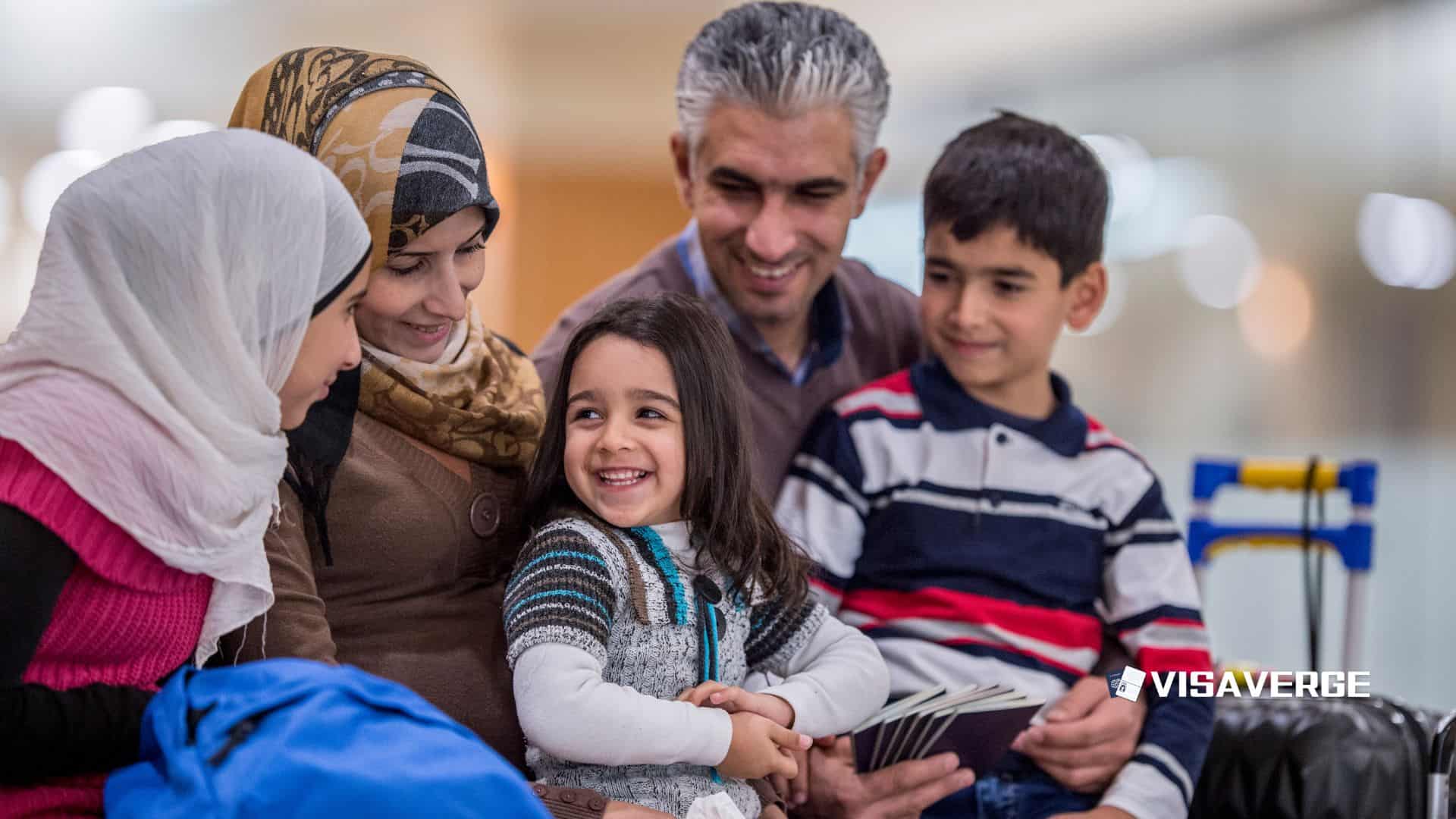
(UNITED STATES) — A pending Supreme Court decision on President Trump’s birthright-citizenship order has left immigrant families, including many Immigrant moms, facing a basic legal question: whether a child born on U.S. soil will still be treated as a U.S. citizen at birth. In similar cases, the practical impact is immediate. Citizenship status affects passports, Social Security records, public benefits, and proof of identity from the first weeks of life.
The current dispute does not arise from a final merits ruling on the Fourteenth Amendment. It arises from litigation over an executive order and the power of lower courts to block it nationwide. As of Monday, June 15, 2026, the constitutional issue remains unresolved. Families are waiting to see whether the Court will permit the order to take effect, narrow existing protections, or leave class-based injunctions in place.

The mothers described in recent reporting are focused on a narrower fear. If the birthright-citizenship order is upheld, some U.S.-born babies may be treated as citizens by neither the United States nor their parents’ country of nationality. Lawyers call that statelessness. In practice, a stateless child may struggle to obtain a passport, government identification, or later proof needed for school enrollment, health coverage, and employment records.
One displaced mother, identified as Lily, said she fears that result for her son. Her lawyer, Conchita Cruz of the Asylum Seeker Advocacy Project, has framed the concern in practical terms: a child without recognized citizenship may lack even basic identification. That problem reaches beyond immigration status. Hospitals, state vital records offices, insurers, and benefit agencies often rely on citizenship-related documentation for Medicaid, CHIP, passport applications, and other records tied to a child’s legal identity.
The administration has taken a different view. It argues the order would apply only to babies born after it becomes effective. It also argues that children born to parents who are in the country unlawfully, or present temporarily, do not automatically qualify for citizenship because their parents do not owe the kind of allegiance the Fourteenth Amendment requires. That argument directly challenges long-settled assumptions about birth on U.S. soil.
The leading Supreme Court precedent remains United States v. Wong Kim Ark, 169 U.S. 649 (1898). The Court held that a child born in the United States to immigrant parents was a U.S. citizen under the Citizenship Clause of the Fourteenth Amendment. That decision has anchored modern birthright citizenship doctrine for more than a century. It is the starting point for nearly every challenge to the current order.
The immigration-law framework around citizenship claims also matters. In removal proceedings, citizenship is not a form of relief under the Immigration and Nationality Act. It is a threshold issue, because a U.S. citizen is not removable. The Board has treated nationality disputes as legally consequential in multiple contexts, including Matter of Hines, 24 I&N Dec. 544 (BIA 2008), which addressed derivative citizenship claims under prior law. That Board precedent does not decide the birthright issue here, but it shows how citizenship disputes often become outcome-determinative in immigration court.
Warning: A birth certificate may document where a child was born, but advocates warn that a narrowed citizenship rule could lead agencies to ask for proof of parental status as well. That would affect passport applications and Social Security processing.
The procedural turning point came in Trump v. CASA, a Supreme Court decision issued on June 27, 2025. The Court limited the use of nationwide injunctions and delayed the executive order’s effect for 30 days, but it did not decide whether the order is constitutional. That distinction matters. The Court addressed remedy, not the substance of the Citizenship Clause.
Another important protection remains in place through class litigation. According to the Asylum Seeker Advocacy Project, a federal judge in Maryland certified a class covering babies born, or to be born, in the United States after February 19, 2025, and entered an injunction shielding those children from the order. After Trump v. CASA, class-wide relief has become even more significant because it may protect groups of affected families where nationwide relief does not.
The administration has argued that future outcomes may differ by location and by proof of parental status. That creates the possibility of uneven treatment across jurisdictions, at least while litigation continues. A family in one federal circuit may be covered by a class order or district court ruling that does not extend elsewhere. No clean circuit split on the constitutional meaning of Wong Kim Ark has displaced the Supreme Court’s precedent. The present conflict is largely procedural, centered on injunction scope and who is protected while the merits remain pending.
Advocates say the uncertainty reaches well beyond undocumented parents. Temporary visitors, students, workers, asylum applicants, and mixed-status families may all face questions about whether a U.S.-born child can prove citizenship with a birth certificate alone. In healthcare settings, the concern is concrete. A baby’s eligibility for some forms of coverage, follow-up care enrollment, and identity-linked benefits may depend on documents that agencies have long treated as routine.
Deadline watch: Families with children potentially covered by the Maryland class order should keep records showing the child’s date and place of birth, and any notices tied to parental status. Class definitions and filing deadlines may control who remains protected.
No INA section overrides the Fourteenth Amendment’s Citizenship Clause, but related provisions may become relevant in litigation over identity documents and immigration benefits. Citizenship claims may arise alongside removal charges under INA § 237, asylum filings under INA § 208, or detention and release issues involving parents. If a child’s citizenship is questioned, the case may also trigger federal court review outside ordinary benefit adjudications. Jurisdiction can matter, and legal standards may vary on procedure even if the constitutional rule ultimately does not.
Separate opinions in the injunction cases have shown that the justices disagree sharply over how far lower courts may go in blocking federal policy before final judgment. That disagreement has practical consequences for families now. A Supreme Court decision that says little about the Fourteenth Amendment may still change who is protected, where protection applies, and whether new babies are covered automatically or only through class actions.
Parents dealing with this issue should treat document preservation as urgent. Keep certified birth certificates, hospital records, proof of residence, immigration filings, notices to appear, parole records, visa records, and any passport or Social Security correspondence. If a child is denied a passport or other identity document, prompt legal review may be necessary. Cases involving newborn citizenship, parental status, asylum, or mixed-status households are fact-specific and typically require counsel.
The central legal point remains stable even as the litigation shifts. The Supreme Court has not overruled Wong Kim Ark. The birthright-citizenship order has not been definitively upheld on the merits. But the Court’s approach to injunctions has already changed the ground beneath these cases, and families are feeling that uncertainty long before any final constitutional ruling arrives.
⚖️ Legal Disclaimer: This article provides general information about immigration law and is not legal advice. Immigration cases are highly fact-specific, and laws vary by jurisdiction. Consult a qualified immigration attorney for advice about your specific situation.
Resources: [AILA Lawyer Referral](https://www.aila.org/find-a-lawyer) | Immigration Advocates Network | [EOIR](https://www.justice.gov/eoir) | [USCIS](https://www.uscis.gov)