- Federal trial will test terrorism framing in protest-related cases and document-handling charges.
- A lawful permanent resident faces significant deportation risks despite not being present during violence.
- Obstruction charges can trigger aggravated felony status if the sentence exceeds one year.
(ALVARADO, TEXAS) — A coming federal trial tied to the July 4, 2025 Prairieland Detention Center protest is poised to test how far prosecutors can push “terrorism” framing in protest-adjacent cases—and it underscores a separate, often overlooked lesson for lawful permanent residents: document-handling and obstruction-style counts can drive detention, sentencing exposure, and removability even when the defendant is not accused of the underlying violence.
Although no immigration-court precedent has “decided” the Sanchez Estrada prosecution, existing Board of Immigration Appeals doctrine shapes what may happen if there is a conviction. In particular, the BIA has treated certain obstruction-related offenses as aggravated felonies when they “relate to obstruction of justice” and the sentence imposed is at least one year. See Matter of Valenzuela Gallardo, 25 I&N Dec. 838 (BIA 2012).

That framework is likely to loom large for any noncitizen assessing plea options and post-conviction immigration exposure.
1) Incident Overview and Defendants
Federal authorities trace the case to a July 4, 2025 “noise demonstration” outside the Prairieland Detention Center in Alvarado, Texas. Prosecutors allege demonstrators wore “black bloc” clothing and used fireworks described as “explosives.”
Authorities also allege gunfire occurred during the event. A key fact in the government narrative is the reported injury to Alvarado Police Lt. Thomas Gross, who was wounded in the neck.
In federal cases, an injury to an officer often affects how prosecutors present danger, intent, and alleged organization. It can also influence detention arguments and potential sentencing positions later.
Daniel “Des” Rolando Sanchez Estrada is charged in the same broader prosecution, but the government alleges he was not present at the protest. His case stands out because he is a lawful permanent resident (LPR).
In immigration terms, that means criminal exposure can carry two tracks of risk: federal court penalties and, separately, removal proceedings under the Immigration and Nationality Act (INA).
It also bears emphasis that charging language is not a finding of guilt. The posture described publicly is investigation, then arrests and indictment, followed by pretrial litigation and trial. Guilt, if any, must be proven in court.
Warning: Noncitizens can face immigration detention or ICE transfer based on arrests, detainers, or bond decisions, even before any conviction. The details vary by jurisdiction and custody arrangements.
2) Charges and Allegations
Public summaries indicate Sanchez Estrada faces two document-related federal counts. Conceptually, these kinds of charges typically focus on concealment, removal, or hiding of records or objects relevant to an investigation, plus an agreement between two or more people to do so.
Prosecutors generally must show intent. They must show the defendant acted “corruptly” or with a wrongful purpose. They must also show a link to an actual or contemplated proceeding or investigation, depending on the statute used.
Conspiracy allegations can broaden exposure beyond a single act. The government often points to communications, shared devices, shared residences, and third-party requests as proof of agreement and coordination.
Here, prosecutors allege a co-defendant spouse, Maricela Rueda, called from jail and asked Sanchez Estrada to remove a box of “antifa materials” from their home. The FBI described the materials as “zines” and “insurrectionist propaganda.”
This is a familiar pattern in federal prosecutions. Evidence-handling can become its own “case driver.” That can happen even when the underlying event involved others and the defendant is not accused of the physical confrontation.
For noncitizens, that matters because immigration consequences attach to convictions. They can also be influenced by the record of conviction and sentencing. Charging choices can also trigger ICE interest through detainers, custody transfers, or later removal screening.
3) Terrorism Designation and Policy Context
The case sits inside a broader policy posture that frames certain protest-linked groups as domestic terrorist organizations or threats. According to official summaries, the administration in September 2025 labeled “Antifa” a “domestic terrorist threat.”
Public reporting indicates that posture has been cited to support “terrorism enhancements” in otherwise conventional federal cases. In practice, a domestic “designation” is not the same thing as an element of a criminal offense. Federal prosecutors still must prove the elements of the charged statutes beyond a reasonable doubt. Courts do not convict based on labels.
Still, terrorism framing can matter in several ways. It can influence detention arguments, including claims of dangerousness or flight risk. It can also affect charging posture, plea negotiations, and sentencing advocacy.
For immigration purposes, terrorism-related allegations can intensify DHS attention. They can also affect how DHS evaluates mandatory detention theories or removability grounds. Outcomes often turn on the final convictions, the sentence imposed, and the official record of proceedings.
The INA includes terrorism-related inadmissibility and removability provisions. See INA § 212(a)(3)(B); INA § 237(a)(4)(B). These provisions are complex and are litigated heavily. They are not limited to conduct labeled “terrorism” in press statements.
Warning: In terrorism-adjacent cases, even a plea that avoids “terrorism” language can still create immigration risk. Risk often depends on the statute of conviction and the sentencing record.
4) Official Statements and Quotes
The Department of Justice has publicly characterized the July 4 event as more than a protest. In a July 8, 2025 statement, the Acting U.S. Attorney described it as an “ambush” and emphasized officer safety.
In a later November 14, 2025 statement tied to the indictment, DOJ messaging described an “organized” cell and referenced “material support for terrorists” in its narrative framing.
DHS and ICE have issued their own public messaging. ICE’s July 10, 2025 statement emphasized deterrence and asserted that violence or vandalism will not deter enforcement at ICE facilities. An October 8, 2025 DHS-related roundtable comment compared the group’s sophistication to major transnational organizations.
Readers should treat these statements as the government’s theory and public posture. Press releases can use broader labels than what is required to prove specific elements in court. They are helpful for context. They are not, by themselves, adjudicated fact-finding.
For immigration stakeholders, public statements can still have practical effects. They can influence detention decisions, bond arguments, and how a case is flagged within DHS systems. That is true even when the eventual conviction, if any, is narrower.
For official updates, readers can consult DOJ pages, including the DOJ Northern District of Texas site at DOJ Northern District of Texas.
5) Trial Timeline and Proceedings
The trial for the remaining defendants, including Sanchez Estrada, is scheduled to begin February 17, 2026, in Fort Worth, Texas. A “trial scheduled” date is not fixed in stone. Federal calendars move.
Continuances, severance motions, and plea negotiations are common. Several pretrial events can matter for noncitizens while the criminal case is pending.
Detention or bond outcomes can affect whether ICE can assume custody sooner. Protective orders can shape what evidence is shared and when. Discovery disputes can impact timelines. Suppression motions can affect admissible evidence.
Plea offers, if they occur, are often a turning point for immigration consequences. A plea can reduce incarceration risk but create removability triggers. It can also affect eligibility for relief in immigration court.
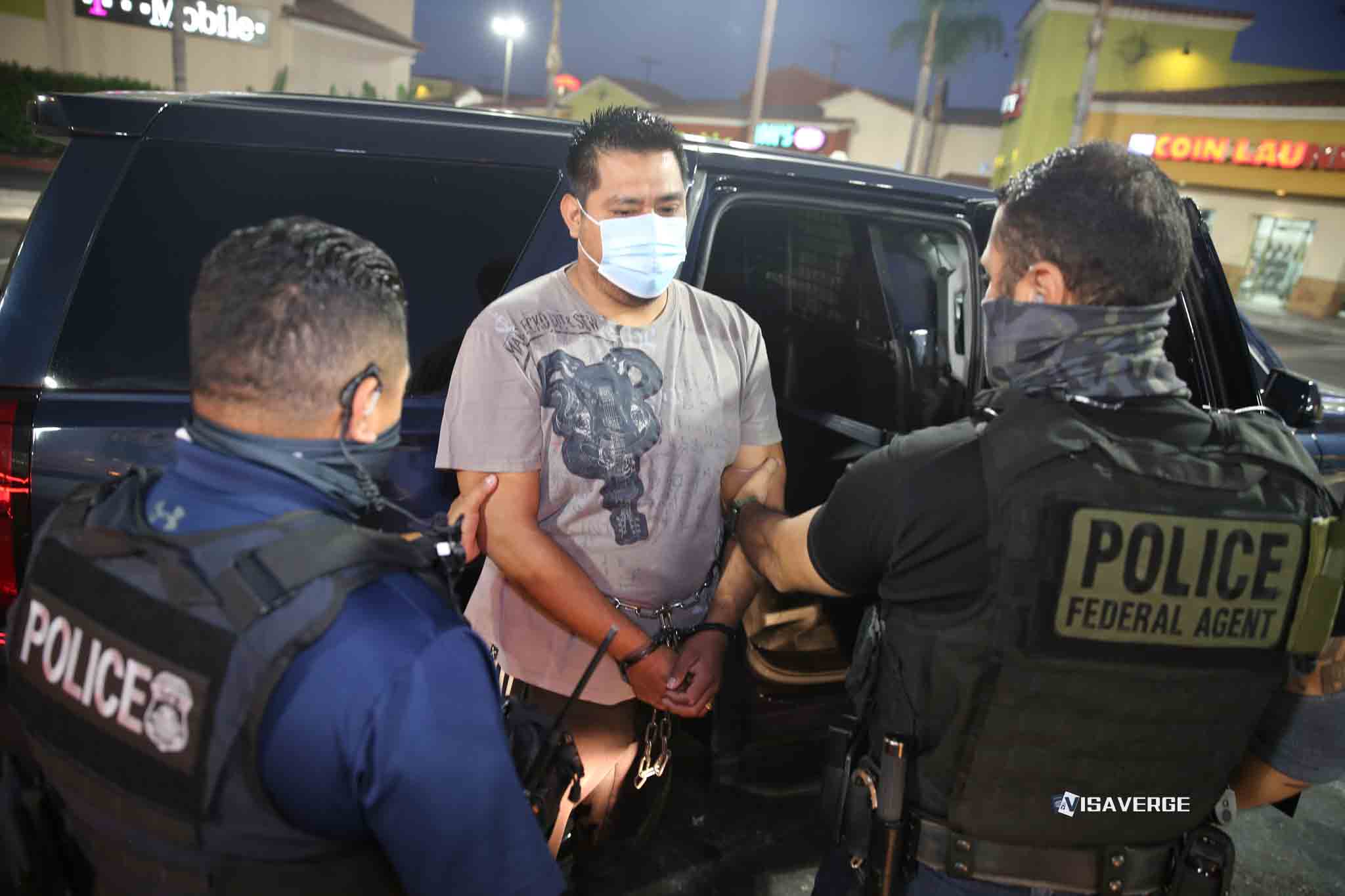
A pending federal case can also intersect with ICE through detainers or custody-transfer coordination. That does not happen in every case. But it is common enough that LPR defendants should plan for it early.
Deadline watch: In many federal cases, plea deadlines and pretrial motion deadlines arrive quickly. Those dates can control strategy. Ask defense counsel for the scheduling order and key cutoffs.
6) Significance, Impact, and Enforcement Context
Observers have called this prosecution precedent-setting because the government theory presents protest activity as an organized “cell” and ties it to terrorism rhetoric. If that theory gains traction at trial, it may influence how future protest-related cases are charged, detained, and sentenced, including cases involving document concealment rather than physical violence.
Sentencing exposure in multi-count indictments is case-specific. It depends on the statutes, guideline calculations, and judicial findings. It also depends on whether enhancements are pursued.
For noncitizens, sentence length can be decisive because multiple INA provisions key off “sentence imposed” or custodial terms. For LPRs, the immigration consequences of a conviction can include:
- Aggravated felony risk. Obstruction-related offenses may be analyzed under INA § 101(a)(43). The BIA has held certain obstruction offenses can qualify when they relate to obstruction of justice and the sentence imposed is at least one year. See Matter of Valenzuela Gallardo, 25 I&N Dec. 838 (BIA 2012). Federal circuit law can differ on the contours of “obstruction,” and the Supreme Court has addressed related issues. Outcomes can vary by jurisdiction.
- CIMT analysis. Some fraud- or deceit-centered offenses may be argued as crimes involving moral turpitude, depending on elements and record. See INA § 237(a)(2)(A)(i). This analysis is technical and statute-specific.
- Terrorism-related grounds. If the conviction or record is framed as terrorist activity, DHS may assess INA § 212(a)(3)(B) and INA § 237(a)(4)(B). These provisions have broad definitions and exceptions. They also raise complex evidentiary questions.
Equally important is the difference between arrest or charge and conviction. Removability typically requires a qualifying conviction or admission. Yet detention and enforcement interest can begin earlier, including through detainers and custody transfers.
If a noncitizen completes a federal sentence and is then taken into DHS custody, removal proceedings begin in immigration court under EOIR. Some categories can trigger mandatory detention under INA § 236(c), depending on the conviction theory and timing.
Finally, the case arrives alongside broader enforcement messaging, including DHS operational announcements and public-facing portals. These initiatives can signal priorities, but they do not decide individual cases.
Practical takeaways for LPRs and families
- Treat document-handling counts as high-stakes. They can carry serious immigration consequences even without violence allegations.
- Get an immigration consequences analysis before any plea. Ask for a statute-by-statute review and likely immigration charges.
- Build a defense record carefully. In immigration court, the “record of conviction” often controls what DHS can prove.
- Coordinate criminal and immigration counsel early. Do not assume LPR status insulates against removal.
An experienced criminal defense attorney should coordinate with a qualified immigration attorney. That coordination is often the difference between a plea that limits immigration harm and one that triggers mandatory removal arguments.
This section is designed to introduce the enforcement context and impact considerations. An interactive tool will provide additional structured analysis and visualizations for significance, impact, and enforcement trends related to this prosecution.
Resources
– AILA Lawyer Referral: AILA Find a Lawyer
– EOIR Immigration Court information: DOJ EOIR
This article provides general information about immigration law and is not legal advice. Immigration cases are highly fact-specific, and laws vary by jurisdiction. Consult a qualified immigration attorney for advice about your specific situation.