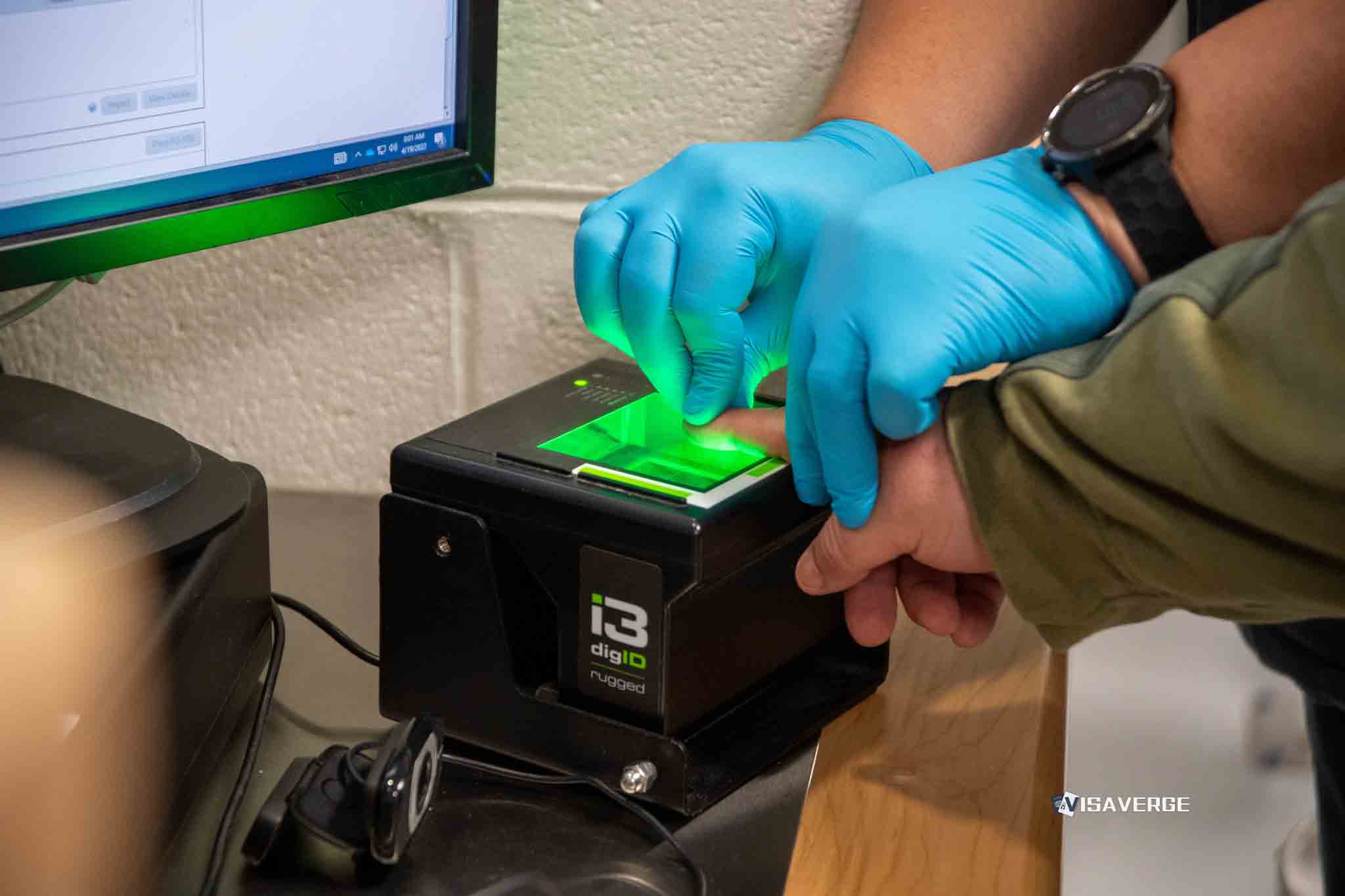
Japan counted 4,281,026 people living in the country as foreign residents on June 30, 2026, setting a new record and representing 3.48% of the population.
The Immigration Services Agency released the figures on October 16. The count rose by 155,631, or 3.8%, from the end of 2025.
Justice Minister Takashi Yamashita announced the results. He said the government would continue “strict yet smooth immigration management so that both Japanese citizens and foreign residents can live safely and securely.”
Free toolUSCIS Receipt Number Decoder
The figures exclude short-term visitors staying for less than three months. Growth was slower than the 5.0% increase recorded in the first half of 2025, but still lifted the total to its highest level.
The census shows foreign residents rising as Japan’s population contracts
The latest administrative count sits alongside a longer population decline. Japan’s 2025 census recorded 122.9 million people as of October 1, down 2.5% from the 2020 count.
The number of Japanese nationals fell 3.5% to 119.1 million over those five years. Foreign residents, by contrast, increased 39.8% to 3.84 million.
Those census figures and the June 2026 administrative count reflect different dates and counting systems. The newer total puts foreign residents at roughly one in every 29 people in Japan.
The change is visible in national population statistics. Japan’s total population is shrinking while the number of foreign residents continues to climb.
Chinese residents lead the largest national groups
Chinese nationals formed the largest group, with 941,031 residents. Vietnamese residents were next, at approximately 693,800, followed by South Koreans at about 408,700 and Filipinos at 362,800.
The next groups in the reported ranking were Nepalese, Indonesians and people from Myanmar. Myanmar and Indonesian residents were among the fastest-growing populations.
Permanent residents made up the biggest residence-status group, numbering 961,342. The next-largest category, Engineer/Specialist in Humanities/International Services, included 516,184 people.
Students ranked after those two categories, followed by technical interns and Specified Skilled Workers. The categories show the range of reasons people hold residence status in Japan.
Labor shortages underpin the rise, experts say
Toshihiro Menju, a visiting professor at the Kansai University of International Studies, said employers need workers in both highly skilled fields and service jobs. He linked that demand to Japan’s shrinking population.
“With Japan’s population shrinking by more than 900,000 a year … we have no choice but to rely on foreign workers.”
Menju also said technology and higher workforce participation would not close the gap. “The use of AI and robotics, and greater (workforce) participation by women and older people cannot fully make up for the shortfall.”
He said the foreign population had grown by roughly 300,000 over the preceding year, compared with approximately 360,000 during the year before that. The increase has slowed, even as the overall total keeps setting records.
The government is tightening residence rules amid the record
The government under Prime Minister Sanae Takaichi has moved toward stricter immigration rules as the foreign-resident count rises. Permanent-residence applicants face stronger financial-independence expectations and closer assessments of Japanese-language ability, as well as knowledge of Japanese rules and customs.
A government policy statement attributed to Takaichi said some citizens feel “anxiety and a sense of unfairness” as the foreign-resident population grows. It said the government was seeking a more orderly policy so citizens and foreign residents could live safely and securely.
The reported minimum annual income for permanent-residence applicants is $36,428. The application fee rose from $64 to $1,271, while the five-year residence-permit fee increased from $38 to $475.
Business-manager status also faces a higher financial threshold. The minimum capital requirement rose from ¥5 million to ¥30 million in October 2025.
New entrants using that status dropped 80.9% year-on-year in the first half of 2026. The decline came as other categories, including permanent residents, students and skilled workers, remained part of the broader foreign-resident count.
Sanseito’s gains sharpen the debate over immigration
The growth has unfolded alongside stronger anti-immigration politics. Sanseito, a nationalist party that has called immigration a “silent invasion,” made major gains in Japan’s 2025 upper-house election.
Employers and demographic experts say foreign workers are needed to sustain economic activity. Opponents point to pressure on public services and local communities, as well as concerns over fairness in the immigration system.
The political argument continues as the pace of growth eases. Menju’s comparison of roughly 300,000 new residents with approximately 360,000 in the prior year indicates a slower increase, not a reversal.
Overstayer numbers fell as the resident population grew
Japan counted 65,229 people overstaying their authorized residence period as of July 1, 2026. That was down 4.8%, or roughly 3,300 people, from the previous January survey.
The decline was associated with stronger enforcement under the Justice Ministry’s Zero Illegal Foreign Residents Plan. The overstay count fell while the number of people legally recorded as foreign residents reached a new high.
Menju expects the foreign population could reach 10 million in the 2040s, citing continuing labor shortages. That projection points to a debate likely to persist alongside Japan’s declining population.