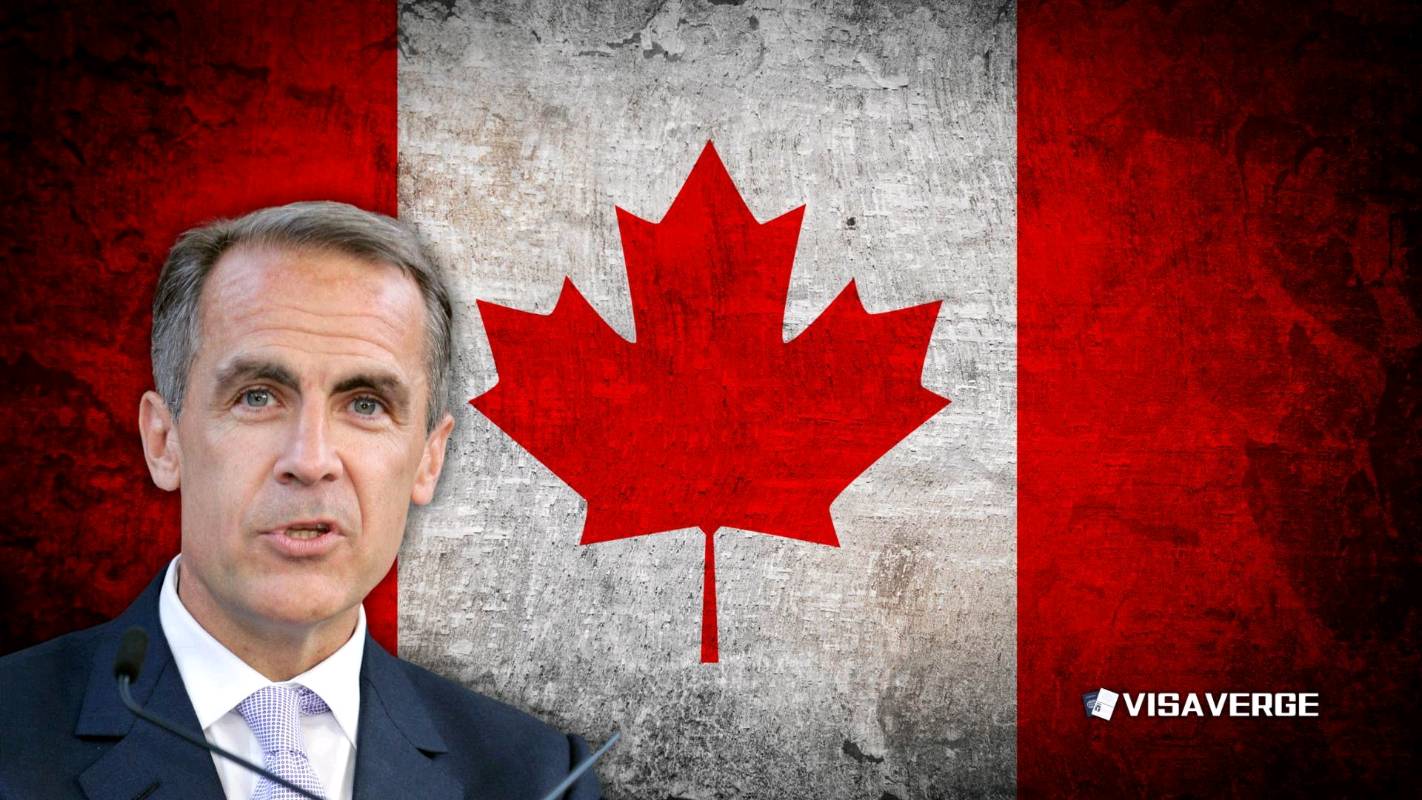
Mark Carney set out a new direction for Canada’s intake of newcomers in November 2025, unveiling a plan that slows population growth while keeping the door open to workers who help the Canadian economy. The strategy centers on immigration limits that cap permanent resident admissions at about 1% of the population and hold the total share of temporary residents to 5% by 2027.
It targets a balance between the pace of arrivals and the country’s capacity to provide housing, healthcare, and other services. Changes are aimed at skilled applicants who already have Canadian experience or strong language skills. Families, students, and employers are watching closely, as the plan reshapes timelines and expectations without walking away from immigration as a driver of growth.

Selectivity and the new focus
Carney’s immigration strategy emphasizes selectivity rather than a hard pullback. Officials plan to favor applicants with clear ties to the labour market, including those who:
Free toolCanada Express Entry Points Calculator- Speak English or French well
- Can show work or study experience in Canada
- Demonstrate skills that match labour-market needs
The stated goal is to lower pressure on services while keeping a pipeline of talent open. The headline figures are blunt: permanent residents near 1% of the population and temporary residents held at 5%. The government portrays these numbers as reset points, allowing time to align planning with real-world capacity and to avoid sudden swings that could unsettle communities or businesses.
Economic and infrastructure rationale
The timing reflects a broader economic adjustment. After years of rapid population growth, the housing market remains tight and hospitals face staffing and funding strain.
Carney’s approach links intakes to infrastructure readiness. The aim is to slow growth to a pace that schools, transit systems, and clinics can handle. Officials have also signaled closer control over the flow of temporary foreign workers and claims for asylum, where demand surged in recent years.
Intake speed must match the ability to deliver services; better pacing supports a healthier Canadian economy over the medium term.
Public opinion and political context
Public opinion appears to have steadied after a sharp turn toward worry in earlier years. Recent surveys show roughly 49–56% of Canadians think current immigration levels are too high, citing stress on housing, healthcare, and public finances. That share has not increased lately, suggesting concern has plateaued.
- Younger Canadians and supporters of the Liberal and New Democratic parties tend to view immigration more positively.
- Supporters of the Conservative Party and the Bloc Québécois remain more skeptical.
The strategy reflects this mix: Canada still needs newcomers, but many voters want a plan that matches arrivals with the ability to settle people well.
What stays open — and what changes
Carney’s approach is a recalibration, not a freeze or reversal. It does not close the door on talent or families but shifts pace and filters.
- Temporary programs will remain, though managed more tightly to reduce short-term spikes.
- Asylum policy emphasizes faster processing and firmer intake management while upholding legal duties.
Taken together, the policies aim to bring predictability to a system that has run hot without undermining Canada’s long-standing openness.
Implications for applicants and categories
For applicants, the plan means competition could rise in the near term even as pathways stay open.
- Those most likely to benefit:
- Skilled workers with Canadian study or work histories
- Applicants with strong language results
- Those likely to face greater challenges:
- People without ties to the labour market or community supports
- Applicants in categories more dependent on high temporary-resident inflows
If the temporary resident share is held at 5% by 2027, inflows of international students and certain categories of temporary workers could flatten compared with recent years. Programs that feed permanent residence for in-demand skills may receive more weight.
Coordination with provinces, cities, and services
The balance with infrastructure runs through every part of the plan.
- Housing: Avoid deepening shortages in large cities while supporting growth across regions.
- Health services: Intake targets must fit staffing realities on the ground.
- Local delivery: Coordination with provinces and cities is essential because service delivery happens locally even when intake decisions are federal.
The government frames this as a shift from headline targets to what community systems can sustain.
Business and employer impacts
Businesses that rely on international recruitment will look for clarity on timelines and criteria.
- The stress on Canadian experience may support employers who train students and temporary workers with an intent to retain them.
- Tighter limits on temporary residents could encourage companies to plan earlier and invest in domestic training.
Carney’s central argument is that steadier pacing, rather than simply raising or lowering numbers, protects the Canadian economy and keeps labour markets healthy. A more predictable system helps employers make long-term decisions and helps newcomers put down roots.
Resources and further reading
Canadians who want to review how intake targets are set can consult the federal government’s official Immigration Levels Plan page:
While Carney’s strategy lays out the broad direction, the fine details will filter into annual plans that adjust by category and region. According to analysis by VisaVerge.com, aligning intake with housing and services is now the core test for public trust; clear caps plus better selection for language and Canadian experience are meant to keep support steady even as the population continues to grow.
Outlook: the next two years
The next two years will show whether slower growth eases pressure in places that have felt the sharpest strain.
- If intakes hold near 1% for permanent residents and 5% for temporary residents, local governments may find it easier to expand transit lines, build clinics, and add school spaces on a predictable schedule.
- For newcomers, the change could mean more stable settlement outcomes and fewer abrupt policy swings.
- For the country, it is a bet that careful pacing will keep Canada ?? open to talent while easing the frictions that fueled concern.
Carney’s immigration strategy sets a clear direction: fewer spikes, firmer immigration limits, and a tighter link between arrivals and the capacity to welcome them.
This Article in a Nutshell
Mark Carney’s November 2025 immigration strategy sets intake limits—permanent residents near 1% and temporary residents at 5% by 2027—while prioritizing applicants with Canadian experience and strong English or French. The policy aims to align arrivals with housing, healthcare and infrastructure capacity to reduce pressure on services. It seeks predictability for communities and employers, keeping pathways open for skilled talent while managing short-term spikes in student and temporary-worker inflows.