The Department of Homeland Security ended automatic work permit extensions for many renewal applicants, including H-4 spouses of H-1B workers, in a final rule published October 14, 2026. The rule took effect that day.
Background: DHS Proposes Scrutinizing H-1B Extensions and Ending EAD Auto-Extensions
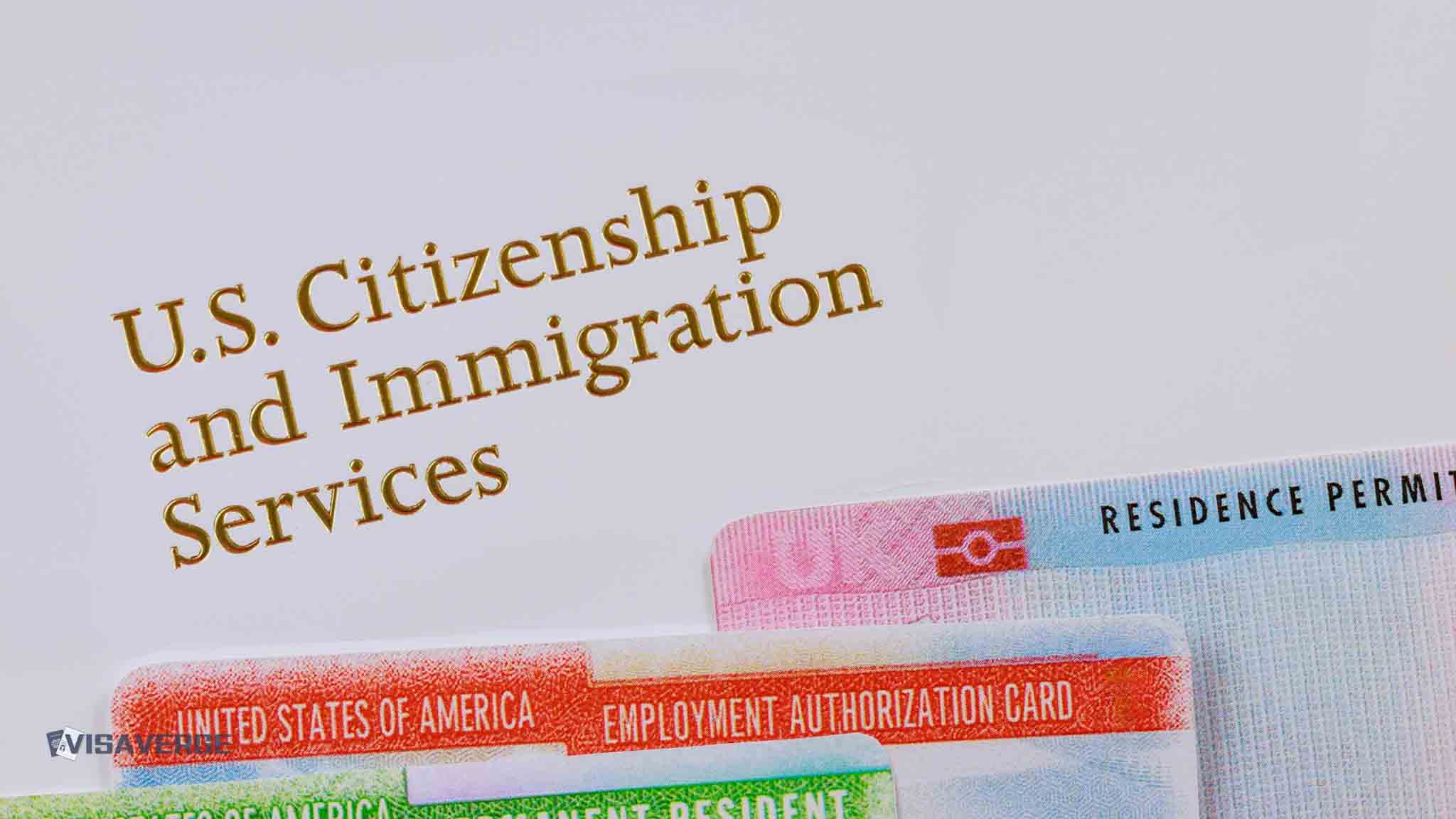
The measure covers Employment Authorization Documents (EADs) in several categories. Renewals filed on or after October 30, 2025 generally no longer extend a worker’s authorization while U.S. Citizenship and Immigration Services reviews the application.
DHS finalized the policy it had introduced in an interim rule, adopting it without substantive change. The measure appears at 91 FR 65306 in the Federal Register.
A pending renewal is no longer a work permit. Workers in affected categories generally need USCIS approval before they can continue working beyond the expiration date on their current card.
| India | China | ROW | |
|---|---|---|---|
| EB-1 | Feb 01, 2023 | Aug 01, 2023 ▲31d | Current |
| EB-2 | Nov 01, 2013 | Oct 01, 2021 | Apr 01, 2025 ▲90d |
| EB-3 | Jan 22, 2014 ▲21d | Jan 22, 2022 ▲14d | Jun 15, 2024 ▲31d |
| F-1 | Jan 22, 2021 ▲366d | Jan 22, 2021 ▲366d | Jan 22, 2021 ▲366d |
| F-2A | Oct 22, 2026 ▲30d | Oct 22, 2026 ▲30d | Oct 22, 2026 ▲30d |
Renewals in five EAD categories lose the bridge to continued work
The cutoff applies to renewals in these categories filed on or after October 30, 2025. A receipt notice by itself does not extend authorization.
| Renewal category | Who it covers | What remains or changes |
|---|---|---|
| (c)(26) | H-4 spouses | No automatic extension under the rule |
| (c)(9) | Adjustment of status applicants | No automatic extension under the rule |
| (c)(8) | Asylum applicants | No automatic extension under the rule |
| (a)(3), (a)(5) | Refugees and asylees | No automatic extension under the rule |
| (a)(12), (c)(19) | Temporary Protected Status beneficiaries | Separate Federal Register notices may provide TPS-specific extensions |
A separate rule leaves F-1 students applying for STEM Optional Practical Training extensions with a 180-day automatic extension after timely filing. E and L spouses also remain employment authorized incident to their status, although an expired card no longer documents that authorization.
Employers must reverify affected workers by the expiration date printed on the current EAD. A renewal receipt does not change that deadline. An unexpired Form I-94 showing qualifying E or L spousal status can document work authorization for those spouses.
Workers must have an approved renewal before the current card expires
An H-4 worker whose renewal remains pending after the current card expires may have to stop working until USCIS issues a new EAD. Filing on time does not, by itself, permit continued employment under the new policy.
A limited transition rule preserves earlier protections for qualifying applications filed before the cutoff. The renewal must be timely, fall in the same category as the expiring card and meet the prior requirements. The former extension could run for as long as 540 days, but that was a maximum, not a guarantee.
H-4 applicants also need a valid H-4 record. An unexpired H-4 I-94 is important to eligibility for the earlier extension; a pending Form I-539 does not substitute for it. Spouses can generally submit an EAD renewal during the 180 days before expiration.
The dependent’s timing can hinge on the H-1B worker’s case. An employer’s delay in filing the worker’s extension may narrow the spouse’s window to coordinate the H-4 status filing and EAD renewal.
The old bridge developed in stages. A 2016 policy allowed eligible applicants up to 180 days beyond card expiration; the government temporarily raised the period to 540 days in 2022 and made that increase permanent in January 2025. The interim rule later withdrew the extension, and the final rule now formalizes that change.
DHS cites screening while commenters warn of work and family disruption
DHS says the change allows USCIS to update eligibility reviews and complete security checks before extending authorization. The final rule says work authorization should not continue automatically before adjudicators complete review and resolve potentially adverse information.
USCIS Director Joseph Edlow defended the policy as a screening measure. “It's a commonsense measure to ensure appropriate vetting and screening has been completed before an alien's employment authorization or documentation is extended. All aliens must remember that working in the United States is a privilege, not a right.”
USCIS’s pending-case figures show the pressure behind the change. As of June 30, 2026, the agency had more than 432,000 EAD renewals pending for at least six months, including more than 91,000 that had waited over 18 months. Most applicants cannot submit renewals more than 180 days before expiration.
DHS estimates that 20,000 to 33,000 EADs could lapse during an 18-month period beginning in May 2027. The agency projects the lapses could affect 1,700 to 2,800 employers and produce $312.1 million in labor turnover costs.
Commenters argued that ending extensions would fall especially hard on women, who make up most H-4 EAD holders, and on families reliant on an H-1B spouse’s status. They warned of lost income and savings, interrupted health insurance for spouses and children, housing payments at risk, medical hardship, psychological stress and extra I-9 work for employers. One asked DHS to allow at least 240 days or exempt the C26 category.
Mitch Wexler, senior counsel at Fragomen, said STEM OPT applicants remain covered by a separate extension provision. The final rule does not eliminate that protection.
A California injunction protects seven plaintiffs as the case continues
A group of H-4 holders challenged the interim policy under the Administrative Procedure Act. On September 10, 2026, a federal district court in the Central District of California granted a preliminary injunction to seven plaintiffs, finding DHS had not followed required procedures when it introduced the rule.
That order does not apply nationwide. Other applicants renewing on or after the cutoff cannot use a receipt notice as proof that they remain authorized to work. The litigation continues.
The H-4 work permit program began in 2015. It allowed certain spouses to seek authorization when the H-1B worker was pursuing permanent residence or had received an extension beyond the usual six-year H-1B limit, a route used by families caught in long employment-based green card queues. The change could affect over a lakh Indian spouses, many of them women.
In September 2026, the administration also signalled a longer-term plan to remove H-4 dependents from the categories eligible for employment authorization. That would require a further policy step beyond this renewal rule.