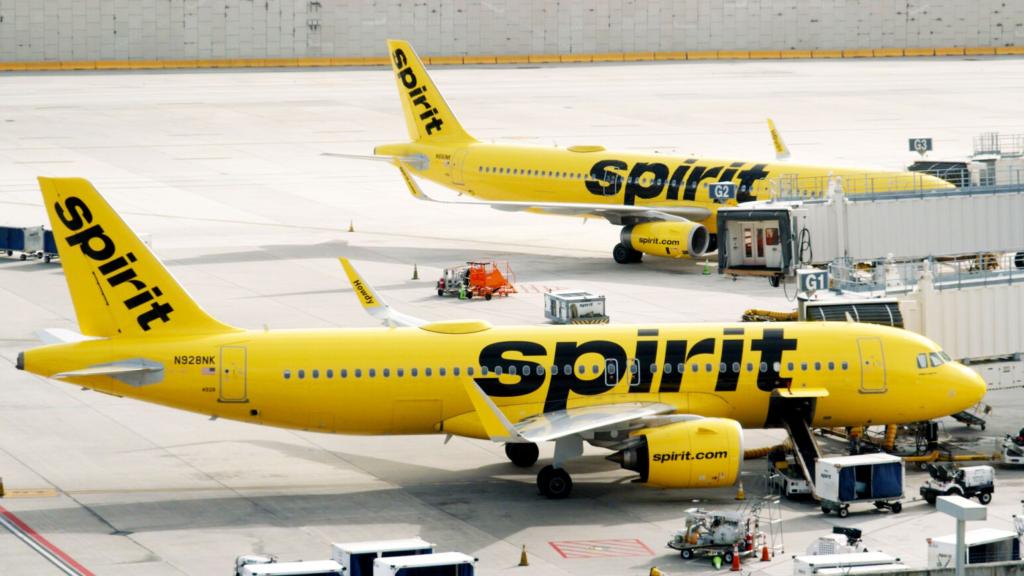
- Google won Spirit Airlines’ bankruptcy auction with a ten million dollar bid, but Micro1 later countered with $12.5 million.
- Judge Sean Lane postponed the approval hearing from August 19 to September 9, 2026, citing privacy concerns.
- The disputed archive contains about 100 million email messages, plus payroll, timekeeping, and employee records.
Spirit Airlines put a vast internal archive on the auction block in its bankruptcy sale, and Google won the August 14, 2026, auction with a $10 million bid. A late $12.5 million offer from Micro1 has since complicated the proposed transfer.
The package contains employee data alongside ordinary workplace material. It covers email, collaboration platforms, payroll systems and internal records accumulated over years.
Free toolH-1B Cost Calculator Online
The Association of Flight Attendants-CWA objected to the transaction in U.S. Bankruptcy Court for the Southern District of New York. President Sara Nelson delivered the union’s position in a short sentence:
Our data simply is not for sale.
U.S. Bankruptcy Judge Sean Lane postponed the approval hearing from August 19 to September 9, 2026. The delay gives the court more time to examine the union’s privacy concerns and the competing offer.
The purchase is not final. Court approval remains pending.
The archive reaches far beyond ordinary business files
The proposed package combines productivity records with personnel and operational information. It includes email, chat, calendars, documents, spreadsheets, knowledge repositories and wikis.
Court filings describe the digital volume in unusually large numbers:
| Category | Records or items described in the filings |
|---|---|
| Email messages | About 100 million |
| Email accounts | 80,000 |
| OneDrive items | 17,082,644 |
| SharePoint items | 20,577,677 |
| Microsoft Teams items | 500 million |
| Time card records | 1,092,000 |
| Employee records | 175,658 |
| Employee tax forms | 148,018 |
| Payroll records | 3,426,618 |
The archive also includes calendars, internal business files, training materials, travel records, recruiting documents, litigation case files and employment contracts. Those categories place the dispute beyond a simple sale of outdated office documents.
The transaction excludes customer and consumer personal data. The proposed protections focus on removing personally identifiable information before the buyer receives the files.
The dispute centers on whether deidentification can protect workers
The union says those protections do not adequately address employee confidentiality. Its objection argues that the proposed transfer would encompass “substantially the entire employment and workplace record of Spirit Airlines, including decades of payroll, timekeeping, training, travel, and recruiting files.”
That archive is interconnected. The union says preserving “referential integrity across the data set” could allow people or small groups to be identified again, even if individual fields were removed.
The concern extends to former workers as well as current employees. Records connected across payroll, timekeeping, training, travel and recruiting could reveal patterns that isolated documents would not show.
The union has asked the court to block the sale. Its objection says the privacy measures were designed around consumer information and do not squarely resolve the risks tied to workplace records.
The court must weigh that objection as part of the approval process. The delayed hearing gives the parties additional time before the judge considers the proposed transaction.
Google says a third party will remove identifying information before transfer
Google has said it does not want personal information from the archive. Gareth Evans, a Google spokesperson, said a third party would process the material before the company received it.
We’re acquiring part of an enterprise dataset from Spirit Airlines, which can be helpful in improving our products and AI models.
Evans also said the information would be “rigorously scrubbed of any personally identifiable information by a third party before receipt.” Google has said it has “no interest” in receiving employee or other personally identifying information.
The company’s stated purpose is product and artificial-intelligence model improvement. The union’s objection focuses instead on whether the proposed screening can prevent reconstruction from connected workplace files.
Customer information sits outside the proposed package. The disagreement concerns the employee and operational material that remains inside it.
Three bids now frame the court’s decision
Google’s $10 million offer won the August 14 auction after beating Mercor’s $7.5 million bid. Micro1 later submitted a $12.5 million bid, exceeding both earlier offers.
The late offer could affect how the estate proceeds. It may prompt a higher-value competing process rather than an immediate approval of Google’s deal.
The auction result therefore does not settle the buyer. The judge must consider the bidding history, the union’s objection and the protections attached to any transfer.
The records themselves have become an asset in the liquidation. That development illustrates how bankruptcy proceedings can place internal corporate archives alongside physical and financial property for sale.
The next hearing will determine whether the proposed transfer moves ahead
Spirit entered bankruptcy and began liquidating assets, including its digital records, as part of the process. The next hearing is scheduled for September 9, 2026.