Vice President JD Vance announced on October 8, 2026, that the Trump administration was suspending Microsoft from the Labor Department’s PERM program, accusing the company of fraud. The action covers eight employers and pauses a required step in employment-based green-card sponsorship.
The announcement did not establish a separate technology-sector visa quota. It targeted labor certification, not the H-1B visa program itself.

Labor Secretary Keith Sonderling said the department would stop accepting new PERM filings and suspend processing of pending applications for the companies while federal investigations continue. Attorney General Todd Blanche appeared with Vance and Sonderling at the announcement.
The pause does not cancel existing H-1B status. Previously certified PERMs and approved I-140 petitions also were not automatically revoked.
Eight employers face the same processing halt
The affected employers are Adobe, Tata Consultancy Services, Infosys, Wipro, HCL Technologies, Cognizant and Capgemini, along with the company named in the announcement. Six of the eight are IT services firms with strong links to India’s technology sector.
| India | China | ROW | |
|---|---|---|---|
| EB-1 | Feb 01, 2023 | Aug 01, 2023 ▲31d | Current |
| EB-2 | Nov 01, 2013 | Oct 01, 2021 | Apr 01, 2025 ▲90d |
| EB-3 | Jan 22, 2014 ▲21d | Jan 22, 2022 ▲14d | Jun 15, 2024 ▲31d |
| F-1 | Jan 22, 2021 ▲366d | Jan 22, 2021 ▲366d | Jan 22, 2021 ▲366d |
| F-2A | Oct 22, 2026 ▲30d | Oct 22, 2026 ▲30d | Oct 22, 2026 ▲30d |
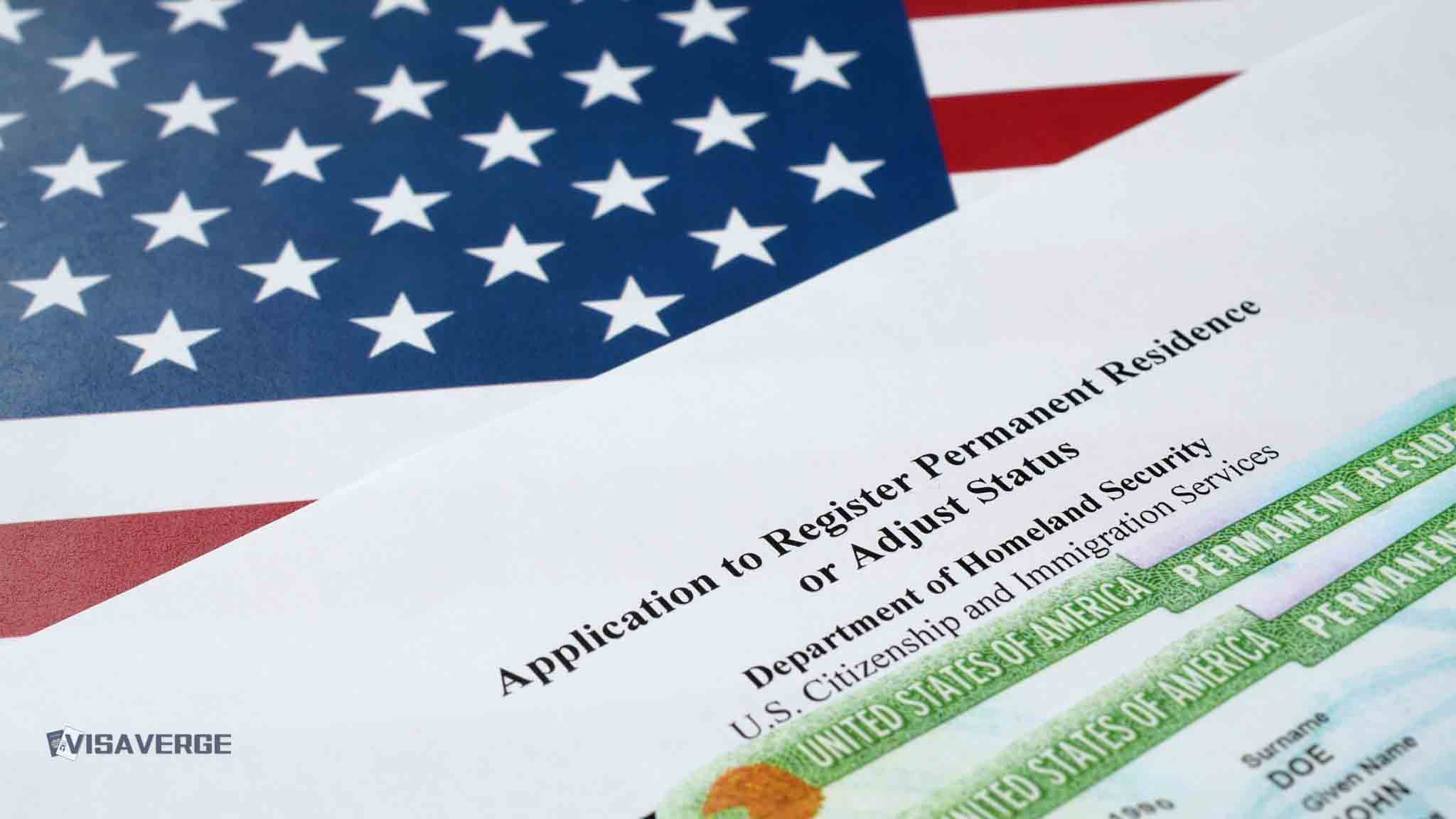
PERM is a Labor Department certification that employers generally need before sponsoring a worker for an employment-based green card. It is a stage in permanent-residency processing, not a visa. The freeze blocks both new filings and cases already awaiting action for the named companies.
Their H-1B employees can continue working under valid visa status, and the freeze does not itself alter the status of dependents. Immigration law firm Reddy Neumann Brown said the action was not a blanket H-1B ban.
Workers nearing the H-1B six-year limit may face added uncertainty. Extensions beyond six years can depend on how long a labor-certification application or immigrant petition has been pending. State Department guidance describes one-year extensions after 365 days.
Vance cited layoffs and visa figures; the company disputed the picture
Vance accused the firm of laying off 6,000 American workers last year while benefiting from 6,300 H-1B visas and nearly 3,000 green cards during the same period. He also used forceful language about foreign employees.
“If you do the math, for every worker that Microsoft laid off, they replaced that worker with one and a half foreign indentured servants”
The company said approximately 6,000 H-1B applications it submitted in the last fiscal year mostly covered people already on its staff. It said 80% sought an extension or a change in status, not a new hire.
The remaining applications for new employees concerned people already legally in the United States who chose to join the company, it said. Those employees represent 1% of its US workforce, and “They are not new arrivals to our country”.
The company said most of its US employees are Americans and that it would provide the administration with more information. It also said it files petitions for people who meet the visa category’s standards, pays H-1B workers the same as colleagues doing comparable work, and pays wages among the highest in H-1B filings.
Sonderling said the eight companies had collectively requested nearly three million foreign workers since 2009. He said they received more than 230,000 H-1B approvals and over 100,000 permanent labor certifications in that period.
Indian officials and industry groups challenged the administration’s framing
Rep. Pramila Jayapal, a Washington Democrat whose state is home to the company, said the freeze undermines legal immigration and the country’s ability to innovate. “You don't fix a broken immigration system by taking a hammer to legal immigration,” she said. She also said PERM lays out steps intended to benefit the economy without harming American jobs.
Vance responded: “‘Socialism’ apparently means fighting like hell to ensure megacorporations have a never-ending flow of cheap labour”.
India’s Ministry of External Affairs said the measures “do not advance the shared ambitions of both countries.” It called the “indentured servants” description “unwarranted,” saying it ignored the education and skills of Indian professionals in the United States. The ministry added that the phrase carried painful historical and colonial connotations and was deeply offensive.
The ministry said talent mobility supports US companies through skilled workers, research, productivity, competitiveness and job creation, as well as creating shareholder wealth. More than 5.2 million people of Indian origin live in the United States, and roughly three-quarters of H-1B approvals go to workers from India.
Nasscom, India’s technology industry body, said immigration and skilled-talent mobility are distinct issues. It said Indian technology firms have expanded local US hiring while reducing reliance on H-1B visas, and that relatively few employees move from H-1B status to permanent residency through PERM. The firms operate in more than 80 countries, it said.
Employers warn of talent losses as critics question the stated rationale
Hector Chichoni, a partner at Greenspoon Marder, said technology companies rely on the H-1B-to-green-card route to keep specialized foreign employees. He warned that affected companies could lose workers to employers not covered by the freeze or see them return to their home countries. Indian professionals already face decades-long green-card backlogs, he said.
Ron Hira, a Howard University political science professor and longtime H-1B critic, called the move “very significant.” He said safeguards requiring employers to show that hiring an H-1B worker would not harm similarly employed Americans are “never” enforced.
Doug Rand, a former senior adviser at USCIS during the Biden administration, called Vance’s announcement “incoherent.” He argued that blocking a path to permanent residency conflicted with the administration’s characterization of H-1B workers as “indentured servants.”
Harish Bijoor, founder of Harish Bijoor Consults Inc., said workers waiting for green cards could seek sponsorship from companies not covered by the pause. He said it remained uncertain when the route might reopen.
Dinesh Pai, vice-president of investments at Zerodha, said the restrictions could reduce remittances, weaken India’s soft power and limit angel investment reaching Indian startups. India receives around $125 billion in remittances each year, with the United States contributing roughly a quarter, he said.
Shobhit Mathur, co-founder and vice-chancellor of Rishihood University, said he had been part of the initial team that built AWS. “There were about a hundred H1B visa holders like me in the initial team of Amazon. Good luck building companies and wealth without these 'indentured servants'”.
The pause has no stated end date
The freeze followed a separate Department of Homeland Security proposal the previous day: a $70,000 fee on schools for each student in the Optional Practical Training program. That proposal concerned schools and OPT, not the PERM cases covered by the Labor Department action.
On the same October 8, President Donald Trump awarded company CEO Satya Nadella the National Medal of Technology and Innovation. KIRO host Ursula Reutin noted that Nadella had come to the United States on an H-1B visa.