- The DV-2027 cycle introduces a mandatory passport upload and a new $1 entry fee.
- Applicants must meet strict education or work experience requirements to qualify for selection.
- Technical compliance, specifically recent digital photo standards, remains the leading cause of disqualification.
(UNITED STATES) The Diversity Visa (DV) Lottery entry is now a fully online process through the Electronic Diversity Visa (E-DV) system at dvprogram.state.gov, and the next cycle adds two new hurdles: a mandatory passport for DV-2027 entries and a $1 fee paid through Pay.gov. For applicants, that means the form is still simple in design, but the rules around eligibility, photos, and identity documents are tighter than before.
The lottery remains one of the few U.S. immigration paths that does not require a family sponsor or employer. Each year, the U.S. Department of State selects up to 55,000 principal applicants and their derivative family members from millions of entries. VisaVerge.com reports that the new passport rule and fee were designed to reduce fraud after more than 2.5 million fraudulent DV-2025 entries forced officials to tighten controls.
Start with eligibility, not the form
The first test is whether you qualify at all. The entry is open only to natives of countries with low recent immigration to the United States. In most cases, that means your country of birth. If your spouse or parent was born in a qualifying country, you may use that country instead, provided the marriage or family rule applies and you lived there before age 18.
Free toolCSPA Age-Out Calculator OnlineThe second test is education or work experience. The principal applicant must have either a high school education or its equivalent, or two years of qualifying work experience in the last five years. That work must match a job that needs at least two years of training. Spouses and children do not need to meet this test on their own.
For DV-2027, the passport rule changes the first screen. Applicants must enter a valid, unexpired passport number, the issuing country, the expiration date, and upload a scan of the biographic page. Stateless applicants and people who qualify for an exemption follow the instructions published for that year. The Department of State’s annual guidance on the Diversity Visa program remains the main official reference point.
Gather documents before the registration window opens
The registration period lasts about 30 days and opens only once a year. For DV-2026, entries ran from October 2, 2024, to November 7, 2024. The next window will open around early October and close in early November, with exact dates posted by the Department of State. Entries are accepted only online through dvprogram.state.gov. Paper submissions are rejected.
Prepare the details before you start. You need your full name exactly as it appears in your passport, date of birth, city and country of birth, country of eligibility, mailing address, email address, and phone number. You also need details for your spouse and all unmarried children under 21, including stepchildren and adopted children where the rules apply. U.S. citizens and lawful permanent residents are not listed as derivative family members.
Photos cause many denials. The State Department says roughly half of photo failures come from noncompliance. Every entry needs a recent digital photo for the principal applicant and each listed family member. The image must be taken within the last six months. It must be square, in color, and free of shadows, glare, or heavy editing. The face must be front-facing, with eyes open and a neutral expression. Glasses are not allowed. Religious headwear is allowed only when it does not hide the face.
Use the official photo tools before uploading. The Department of State’s photo guidance and template helps applicants check size, lighting, and framing. For printed photos used later at interviews, the format is 2×2 inches.
Fill out the E-DV form carefully
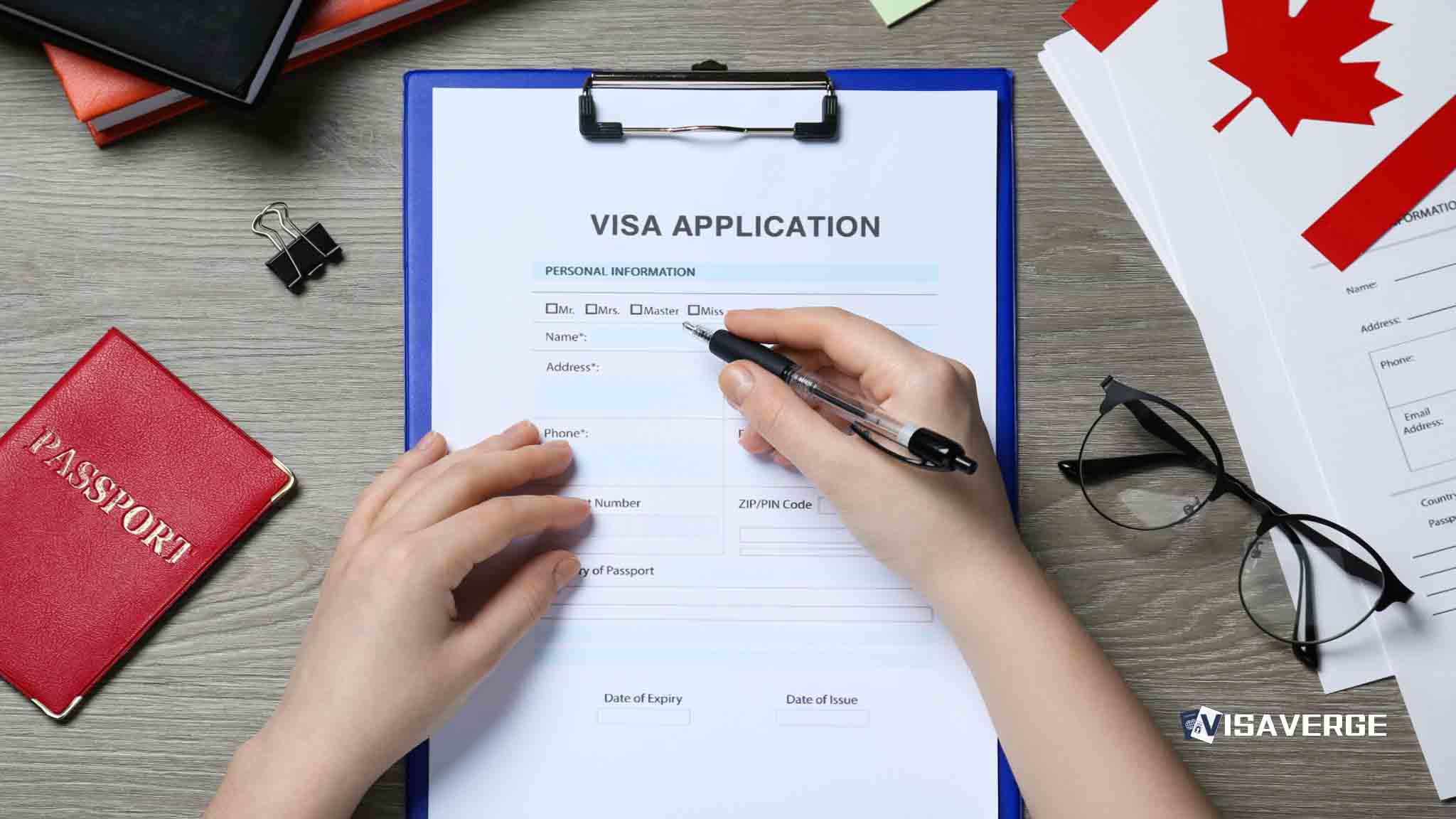
The online form is usually called the DS-5501 entry. It asks for basic identity information, contact details, education history, marital status, and family data. The answers must match your passport and civil documents. Small typing errors can lead to disqualification.
The form begins with applicant information. Enter your legal name, sex, date of birth, city and country of birth, country of eligibility, passport details for DV-2027 and later, and your uploaded photo. Then add your address and contact information. A valid email address matters because the system uses it for confirmation, even though results are not sent by email.
Next comes education and family status. Choose the highest level of education completed. If you qualify through work instead, the Department of State checks that your occupation fits the required training level. List your spouse, if married, and each unmarried child under 21. Every family member needs a compliant photo.
The site allows only one entry per person. Multiple entries in the same year trigger automatic disqualification. The system uses technical screening tools to detect duplicates and fraud patterns. There is no paper backup, no agent shortcut, and no fee beyond the new $1 DV-2027 charge.
Submit, save the confirmation number, and watch the results date
Before clicking submit, review every field. Names, dates, passport numbers, and photos should all be checked twice. Once the form is sent, the system gives a unique confirmation number. Save it immediately. Screenshot it. Print it. If you lose it, recovery is difficult.
That number is the only way to check results. Winners are never notified by email or mail. Status checks open on dvprogram.state.gov starting in May of the following year. For prior cycles, results opened on May 3, 2025. Selectees must then complete the rest of the immigration process, including the DS-260 immigrant visa form, supporting documents, and a consular interview.
Selection does not guarantee a visa. The case still has to move through document review, medical exam steps, and an interview before the fiscal year ends. For DV-2027, that deadline is September 30, 2027. Miss that date, and the opportunity disappears.
At the interview, applicants must prove the same facts they entered online. That includes education records, work history if used for eligibility, passports, birth certificates, and the two physical 2×2-inch photos. Consular officers also check family relationships and identity details carefully.
Avoid the mistakes that end cases early
Most failed entries come from avoidable problems. The biggest ones are photo errors, duplicate entries, missing passport details, and use of third-party “agents” who charge for a free government process. Some applicants also rush at the last minute, when traffic on the site is heaviest and mistakes are more common.
The safest approach is simple: use the official site, follow the annual instructions, and keep every confirmation page. Applicants from countries such as Albania, Argentina, Egypt, Kenya, Nepal, Thailand, Ukraine, and Uzbekistan should still verify the current country list before entering, because the eligible countries change each year.
For people already in the United States on H-1B or J-1 status, filing a DV entry does not by itself affect lawful status. Spouses who each qualify may submit separate entries, and one selection can cover the family if the rest of the case is approved. The DV system remains a rare route to a Green Card, but it rewards precision, patience, and strict attention to the rules.