Key Takeaways
• On May 22, 2025, Harvard’s SEVP certification was revoked, affecting about 7,000 international students.
• Harvard filed a lawsuit claiming violations of the First Amendment and Due Process rights.
• DHS demands student data within 72 hours; Harvard refuses, citing privacy and academic freedom.
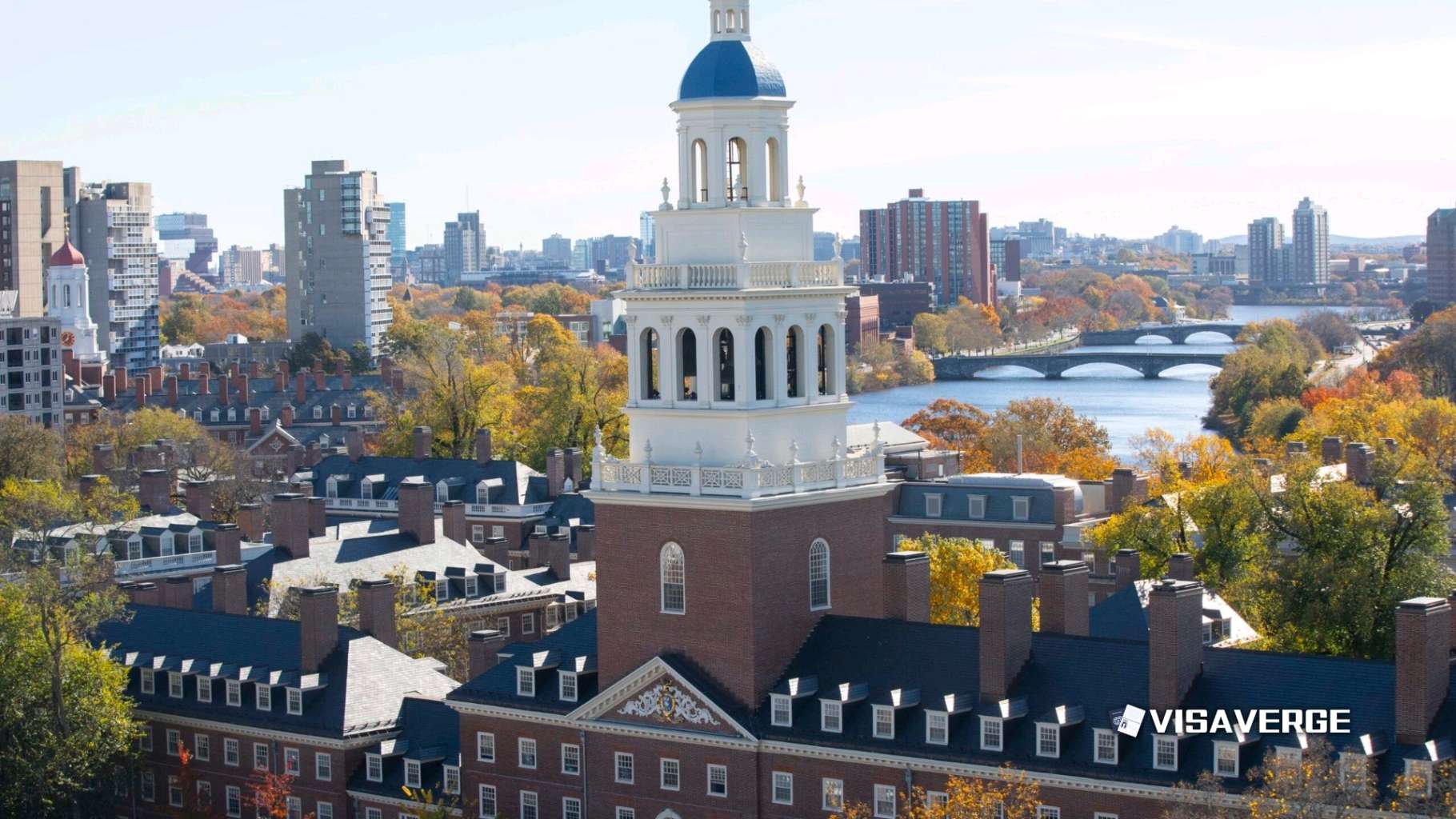
On May 23, 2025, Harvard University filed a federal lawsuit in Boston against the Trump administration. The university is challenging the government’s sudden decision to revoke its ability to enroll international students through the Student and Exchange Visitor Program (SEVP). This move, announced just one day earlier by Homeland Security Secretary Kristi Noem, threatens the academic futures of thousands of students and marks a major confrontation between one of the world’s most prestigious universities and the United States ?? government.
This article explains what happened, why it matters, and what could come next for Harvard, its international students, and the broader landscape of higher education in the United States.

What Happened: Harvard’s SEVP Certification Revoked
On May 22, 2025, Secretary Noem announced that Harvard’s SEVP certification was revoked. This certification is required for any U.S. college or university that wants to enroll students from outside the United States on F-1 or J-1 visas. Without it, Harvard cannot legally admit or keep international students on these visas.
Key facts:
– About 7,000 international students at Harvard are affected, making up roughly 27% of the university’s student body (source: Harvard’s fall 2024 enrollment data).
– Most of these students are graduate students from over 100 countries.
– The revocation would force these students to leave the United States or transfer to another SEVP-certified school.
Harvard President Alan Garber called the action “unlawful and unwarranted,” warning that it “jeopardizes the futures of thousands of students and scholars.” The university immediately filed a lawsuit and is seeking a temporary restraining order to stop the ban from taking effect while the case is heard in court.
Why Did the Trump Administration Take This Step?
The Department of Homeland Security (DHS) claims that Harvard:
1. Created an unsafe campus environment by allowing “anti-American, pro-terrorist agitators” to assault Jewish students.
2. Coordinated with the Chinese Communist Party, including allegedly hosting and training members of a Chinese paramilitary group in 2024.
3. Failed to comply with a DHS records request for information about foreign students.
Secretary Noem stated that Harvard could regain its SEVP certification if it provides all requested records within 72 hours, including:
– Names and details of foreign students involved in protests or “dangerous activity”
– Audio and video footage of such activities
Harvard has refused to comply, arguing that these demands violate student privacy and academic freedom.
Harvard’s Legal Challenge: The Core Arguments
Harvard’s lawsuit claims the government’s action is:
– A violation of the First Amendment (freedom of speech and association)
– A violation of the Due Process Clause (right to fair treatment under the law)
– A violation of the Administrative Procedure Act (federal agencies must follow fair procedures and cannot act arbitrarily)
The university argues that the Trump administration is retaliating against Harvard for exercising its legal rights and for refusing to comply with political demands. According to analysis by VisaVerge.com, this is not the first time Harvard has taken the Trump administration to court; the university previously sued over more than $2 billion in federal funding cuts.
Legal experts widely believe Harvard has a strong case, citing Supreme Court precedents that protect academic freedom and due process for universities and students.
Timeline: How the Conflict Escalated
The dispute between Harvard and the Trump administration has grown quickly:
- April 14, 2025: Harvard refuses to comply with certain government demands. The Trump administration freezes over $2.2 billion in federal research funding.
- April 15, 2025: President Trump posts on Truth Social, suggesting Harvard should lose its tax-exempt status.
- April 16, 2025: Secretary Noem demands Harvard provide information about foreign students possibly involved in violence or protests.
- April 16, 2025: President Trump criticizes Harvard’s hiring practices on social media.
- May 22, 2025: DHS revokes Harvard’s SEVP certification.
- May 23, 2025: Harvard files its lawsuit in federal court.
This timeline shows a pattern of escalating pressure from the Trump administration, with Harvard consistently resisting what it sees as political interference.
What Is the Student and Exchange Visitor Program (SEVP)?
The Student and Exchange Visitor Program is a federal program run by U.S. Immigration and Customs Enforcement (ICE), part of DHS. It certifies schools to enroll international students and manages the SEVIS database, which tracks these students’ status in the United States.
Key points:
– Only SEVP-certified schools can issue the Form I-20 (for F-1 students) or Form DS-2019 (for J-1 exchange visitors), which are required for student visa applications.
– Losing SEVP certification means a school cannot legally host international students on F-1 or J-1 visas.
– Students at a decertified school must transfer, leave the country, or risk falling out of legal status.
For more on SEVP and student visas, see the official DHS SEVP page.
What’s at Stake for Harvard and Its Students?
If the ban is enforced, the consequences for Harvard and its international students would be severe:
For Students
- Immediate loss of legal status: Students would have to leave the United States or transfer to another SEVP-certified school.
- Disrupted education: Many students are in the middle of degree programs, research, or teaching assignments.
- Visa complications: Transferring to another school or reapplying for a visa can be complex and time-consuming.
- Emotional and financial stress: Many students have invested years and significant resources in their education at Harvard.
For Harvard
- Loss of tuition revenue: International students often pay full tuition, contributing hundreds of millions of dollars annually.
- Damage to reputation: Harvard’s global standing relies on its ability to attract top talent from around the world.
- Impact on research: Many international students are involved in cutting-edge research, especially at the graduate level.
- Potential diplomatic fallout: Countries whose citizens study at Harvard may protest or retaliate.
For Other Universities
- Warning effect: Other U.S. universities with large international student populations may fear similar actions.
- Chilling effect: Prospective students may choose to study in other countries, reducing the United States’ appeal as a destination for higher education.
Harvard’s Response: Legal and Institutional Actions
Harvard has responded forcefully to the Trump administration’s actions:
- Filed a federal lawsuit challenging the SEVP revocation and seeking an immediate restraining order.
- Announced support for affected students, pledging to provide legal, academic, and emotional assistance.
- Filed a separate lawsuit over the $2.2 billion in frozen federal funding.
- Reaffirmed its commitment to academic freedom and student privacy, refusing to hand over sensitive records.
President Garber has emphasized that Harvard will not compromise on its “core, legally-protected principles,” even under threat of government retaliation. The university has also highlighted recent efforts to address campus safety and antisemitism, arguing that these steps show its commitment to a safe and inclusive environment.
The Trump Administration’s Position
The Trump administration, through DHS and Secretary Noem, insists that its actions are justified by concerns over campus safety and national security. The administration has accused Harvard of:
– Allowing violence and antisemitism on campus
– Failing to cooperate with federal investigations
– Having improper ties to foreign governments, especially China ??
Officials have stated that Harvard can resolve the issue by providing the requested records within 72 hours. However, Harvard’s refusal sets up a direct legal confrontation.
Legal Experts: Why Harvard Is Likely to Win
Most legal scholars believe Harvard has a strong chance of success in court. Their reasons include:
– First Amendment protections: The government cannot punish a university for speech or association, especially when it involves academic freedom.
– Due process requirements: Federal agencies must follow fair procedures and cannot act arbitrarily or in retaliation.
– Precedent: Courts have previously blocked similar actions against universities, especially when they appear politically motivated.
If the case moves quickly, a judge could issue a temporary restraining order within days, allowing international students to remain at Harvard while the lawsuit proceeds.
Real-World Impact: Student Stories
Consider the case of Maria, a doctoral student from Brazil ?? who has spent four years at Harvard working on cancer research. If the SEVP ban is enforced, Maria would have to abandon her research and return home, losing years of work and potentially derailing her career.
Or Ahmed, a master’s student from Egypt ??, who is the first in his family to study abroad. The uncertainty and fear caused by the ban have left him anxious about his future and his family’s investment in his education.
These stories are not unique. Thousands of students face similar uncertainty, highlighting the human cost of the policy.
What Happens Next?
As of May 23, 2025:
– Harvard’s lawsuit is pending in federal court in Boston.
– The university is seeking a temporary restraining order to block the SEVP ban.
– Secretary Noem’s 72-hour deadline for Harvard to provide records is approaching, but Harvard is unlikely to comply.
The case could move quickly through the courts, especially if a judge sees an urgent need to protect students from immediate harm. If the case raises major constitutional questions, it could eventually reach the U.S. Supreme Court.
Broader Implications for U.S. Higher Education
This case could set a major precedent for:
– Government authority over universities: How much power does the federal government have to control university operations?
– Academic freedom: Can the government punish universities for speech or association it dislikes?
– International education: Will the United States remain a top destination for students from around the world?
According to VisaVerge.com, the outcome will be closely watched by universities, students, and governments worldwide.
Practical Guidance for International Students
If you are an international student at Harvard or another U.S. university, here’s what you can do:
– Stay informed: Follow updates from your university’s international office and official government sources.
– Keep your documents up to date: Make sure your Form I-20 or Form DS-2019 is current. You can find official forms and instructions at the U.S. Citizenship and Immigration Services (USCIS) website.
– Consult with an immigration attorney: If you are affected by a loss of SEVP certification, seek legal advice immediately.
– Explore transfer options: If your school loses SEVP certification, you may be able to transfer to another certified institution.
– Reach out for support: Use campus resources for legal, academic, and emotional support.
Conclusion: What’s at Stake and What to Watch
The fight between Harvard and the Trump administration over the Student and Exchange Visitor Program is about much more than one university. It raises fundamental questions about academic freedom, the rights of international students, and the future of higher education in the United States ??.
As the legal battle unfolds, the outcome will affect not only Harvard’s 7,000 international students but also the ability of all U.S. universities to welcome students from around the world. The next steps in court will be critical, and students, families, and educators everywhere should pay close attention to how this case develops.
For the latest official information on student visas and SEVP, visit the U.S. Department of Homeland Security’s SEVP page.
Word count: 1,515
Learn Today
SEVP → A federal program certifying U.S. schools authorized to enroll international students on F-1 and J-1 visas.
F-1 Visa → A nonimmigrant visa allowing international students to study full-time at certified U.S. institutions.
J-1 Visa → A visa for exchange visitors participating in approved programs for study, research, or cultural exchange in America.
Temporary Restraining Order → A court order that temporarily prevents a party from taking certain actions until a case is decided.
Due Process Clause → A constitutional guarantee ensuring fair treatment through the normal judicial system before depriving rights.
This Article in a Nutshell
Harvard sued the Trump administration after losing SEVP certification, threatening its 7,000 international students’ legal status. The dispute centers on allegations of campus safety and foreign ties. Harvard claims violations of constitutional rights while seeking a court order to protect its students and academic freedom during the legal battle.
— By VisaVerge.com
Read more:
• GNWT urges Ottawa to review immigration processes after quota cuts
• India’s Immigration and Foreigners Bill, 2025 raises concerns over outsiders
• Georgetown scholar details harsh realities of immigration detention
• Republican NJ governor candidates clash over immigration in key debate
• Immigration policies prompt new fears of racial profiling with 287(g)