- Southwest Airlines ended its 50-year policy of free checked bags on May 28, 2025.
- Standard passengers now pay $35 for the first and $45 for the second checked bag.
- Exemptions remain for elite status members, military personnel, and specific premium fare classes.
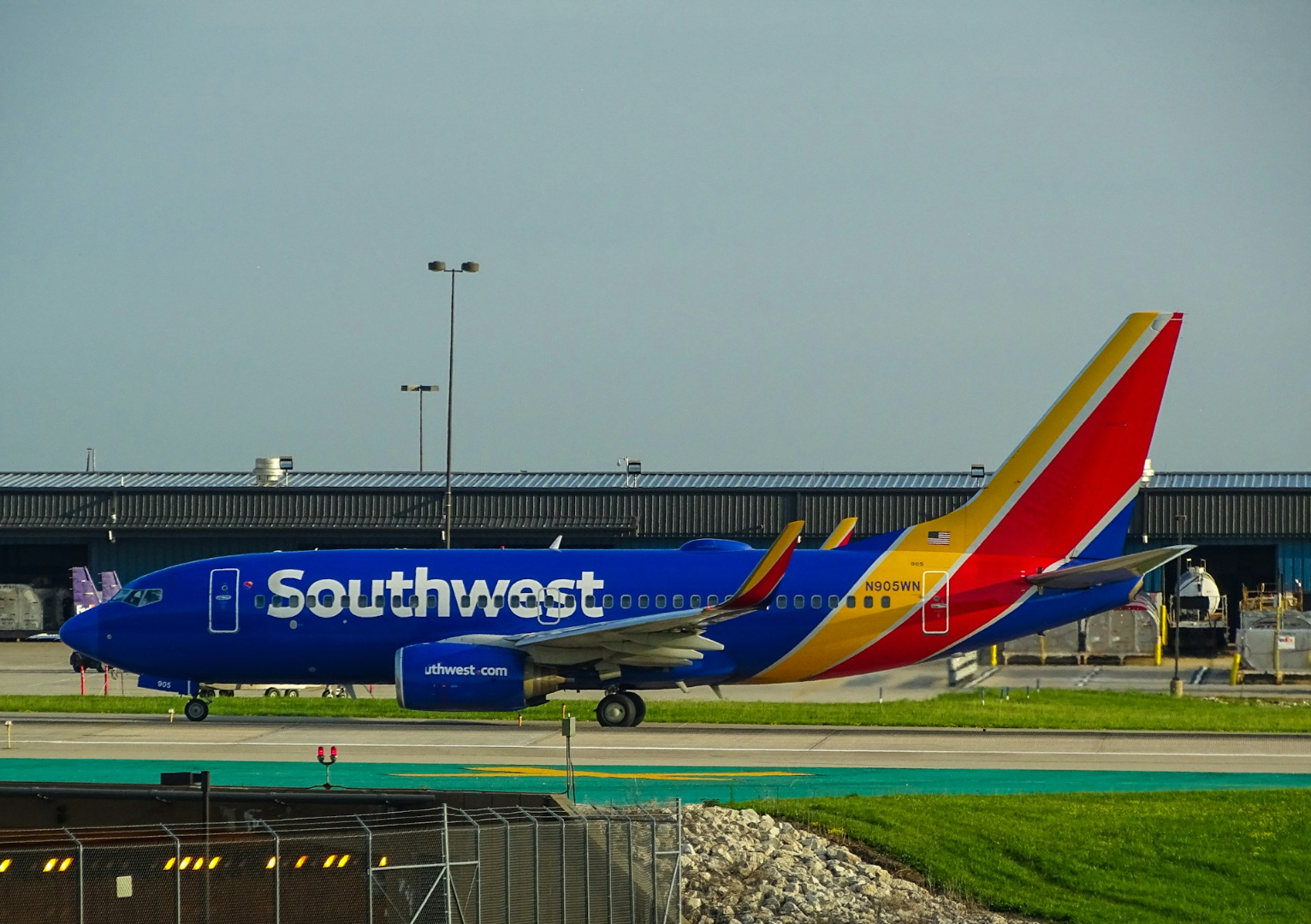
Southwest Airlines ended its long-running “bags fly free” policy on May 28, 2025, charging most passengers $35 for a first checked bag and $45 for a second in a break with a promise that had defined the carrier for over 50 years.
The change applies to all flights booked or changed on or after May 28, 2025. Most travelers now face the same kind of baggage charges long common at rival U.S. airlines, while a narrower group of customers still gets complimentary checked bags through premium fares, elite status or military benefits.
Passengers who still qualify for free checked baggage include Business Select fare travelers, A-List Preferred members, active-duty military personnel and Hawaii residents flying inter-island routes, all of whom receive two free checked bags. A-List members and Rapid Rewards Credit Cardholders receive one free checked bag per flight, and A-List members also get a $10 discount on their second checked bag, paying $35 instead of $45.
Southwest made the move as part of a wider reshaping of its business, not as a stand-alone fee change. The airline estimated the baggage fee program would generate approximately $1.5 billion in annual revenue, though it also projected losing $1.8 billion in business as customers potentially switch to competitors.
For decades, Southwest Airlines used “bags fly free” as a central selling point for budget-conscious travelers. That policy lasted approximately 50 years before the airline announced in early 2025 that it would end the practice and align more closely with the rest of the industry.
Broader Fare and Seating Overhaul
The baggage change arrived alongside a broader overhaul of fare rules and seating. Southwest also rebranded its “Wanna Get Away” fare to “Basic,” effective May 28, 2025, and said assigned seating with premium options would arrive by 2026, dismantling another feature that had long distinguished the airline.
Under the current baggage structure, third and subsequent bags cost $150 per bag, except for active-duty military. Passengers can check up to 20 bags total, provided there are no embargoes for weight or quantity restrictions on their specific flight or destination.
Extra charges apply for bags that exceed Southwest’s standard size or weight limits. Bags weighing 51-70 pounds cost $100 extra, bags weighing 71-100 pounds cost $200 extra, bags measuring 63-80 inches by width, length and height cost $200 extra, and bags that are both overweight and oversized cost $200 extra.
Sporting equipment follows a slightly different structure. Equipment measuring 63-115 inches carries no fee, while overweight sporting equipment follows standard overweight charges.
Carry-on baggage remains free. Each passenger can bring one bag measuring 10 x 16 x 24 inches plus one personal item such as a purse or briefcase at no charge, provided both fit within available overhead bin space and under-seat limits.
Who Still Gets Free Bags
The airline’s new system creates a more layered approach to baggage benefits. Business Select passengers and A-List Preferred members continue to receive two free checked bags per flight, while active-duty military personnel with valid ID also get two free checked bags and waived overweight and oversized fees for their first two checked bags.
Hawaii travelers fall into separate categories. Residents of Hawaii flying inter-island flights receive two free checked bags, while the third bag costs $50. Non-residents flying inter-island routes pay reduced fees of $15 for the first bag, $20 for the second and $50 for the third.
Southwest extended some baggage benefits to companions on the same booking. Those exceptions apply to up to eight additional passengers traveling in the same reservation with the primary account holder, widening the savings for families and group travelers tied to a qualifying member or cardholder.
Fare Rules and Credit Expiration
The fare overhaul changed more than baggage costs. Southwest’s Basic fare, now the lowest-cost option, cannot be changed, though it can be canceled. It also does not include free same-day changes or standby options, and flight credits from those fares expire in 6 months.
Higher fare classes — Classic, Choice Extra and Anytime — keep more flexibility and longer credit validity. For credits issued on or after May 28, 2025, all other fare types carry a 12-month expiration period.
That shorter timeline marks another shift for regular passengers who grew used to broader flexibility. Travelers who once focused mainly on the ticket price now have to weigh fare restrictions, baggage costs, seat choices and credit expiration rules before booking.
Assigned Seating and Premium Options
Southwest also announced plans to introduce assigned seating with premium options by 2026. The shift moves the airline away from its roughly 50-year practice of open seating, where passengers chose any available seat after boarding.
The transition to assigned seating began rolling out in early 2026, with the airline offering premium seat selection for an additional fee. That change adds another paid layer to trips that once stood apart for simpler pricing and a more uniform cabin experience.
Cost Impact for Travelers
For many travelers, the baggage changes raise the total cost of a trip in direct, easy-to-calculate ways. A family of four checking two bags each would now pay $280 in baggage fees alone, compared with zero under the earlier policy.
The pressure is likely to be strongest on leisure travelers, larger families and passengers taking longer trips. Frequent travelers with status or co-branded credit cards, by contrast, now stand to benefit more from loyalty perks that separate them from occasional flyers.
The value of A-List and A-List Preferred status has grown under the new structure. A-List members get one free checked bag and a reduced price on the second, while A-List Preferred members keep the two-bag benefit that many Southwest customers once received automatically.
Rapid Rewards Credit Cardholders also gained a more prominent role in the airline’s sales pitch. The co-branded card provides one free checked bag per flight, and that benefit can extend to up to eight people in the same reservation, making it one of the clearest ways to avoid the standard first checked bag charge.
As checked baggage became a paid service, carry-on-only travel gained appeal. Southwest still lets passengers bring one carry-on bag and one personal item free, but the move toward cabin baggage has also put more pressure on overhead bin space and can lead to more gate-checked bags when bins fill.
That shift means travelers now have to think more strategically about what they pack and how they book. They also have to decide whether paying baggage fees, chasing loyalty status or signing up for a credit card makes more sense for the number of Southwest flights they take each year.
How Southwest Now Compares to Rivals
The change places Southwest more squarely in the broader industry model of unbundled air travel. Delta, American and United charge $30-$40 for first checked bag service, while Southwest now charges $35 for the first checked bag and $45 for the second.
Across the industry, U.S. airlines generated over $6.7 billion from baggage fees in 2022. Southwest’s shift leaves fewer major differences between carriers on basic baggage rules and pushes passengers to compare total trip costs, not just advertised fares.
Some travelers had a temporary cushion when the new policy first took effect. Passengers who booked flights before May 28, 2025, for travel through January 2026 retained two free checked bags, provided they made no changes to their reservations after the policy took effect.
That window has now closed, leaving the new fee structure fully in place for current bookings. For passengers flying Southwest Airlines today, the cost of baggage depends increasingly on fare class, status level, route and whether they hold the airline’s credit card.
Military travelers remain one of the clearest exceptions to the tighter rules. Active-duty military personnel with valid ID receive two free checked bags, waived overweight and oversized fees for the first two checked bags, and no restrictions on the number of bags that can be checked, subject to destination embargoes.
Why Southwest Made the Change
Southwest tied the baggage changes to a wider effort to improve its finances and reshape its product. CEO Bob Jordan said the moves were aimed at “meeting current and future customer needs, attracting new customer segments we don’t compete for today, and returning to the levels of profitability that both we and our shareholders expect.”
The airline faced financial pressure before making the changes, reporting a net loss of approximately $149 million in the second quarter before implementing them. That backdrop helps explain why Southwest chose to alter policies that had long served as part of its public identity.
For travelers, though, the effect is less abstract. The end of bags fly free means the airline’s promise of simplicity now depends far more on which fare passengers buy, whether they hold status, and whether they can avoid paying for that first checked bag at all.