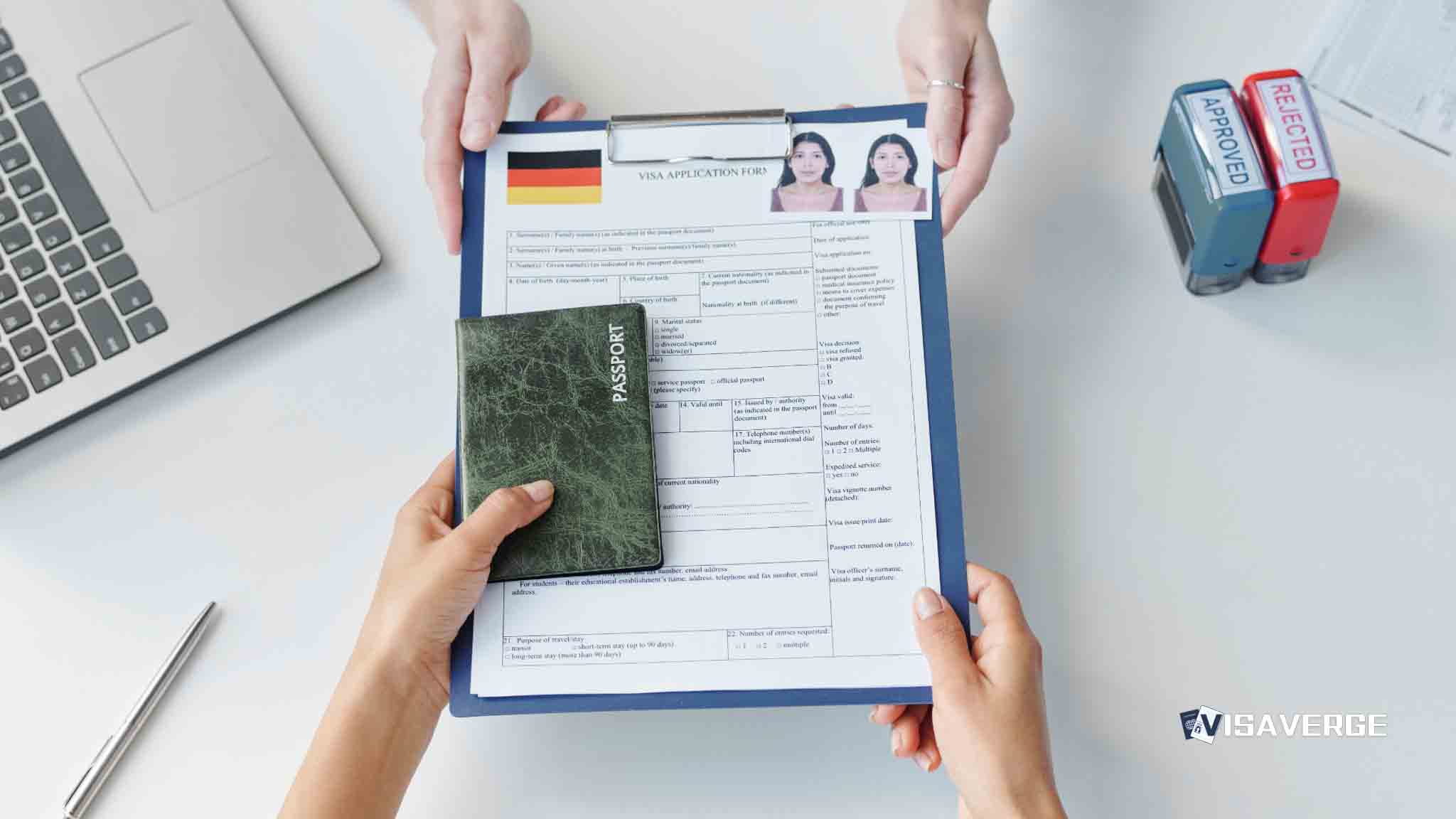
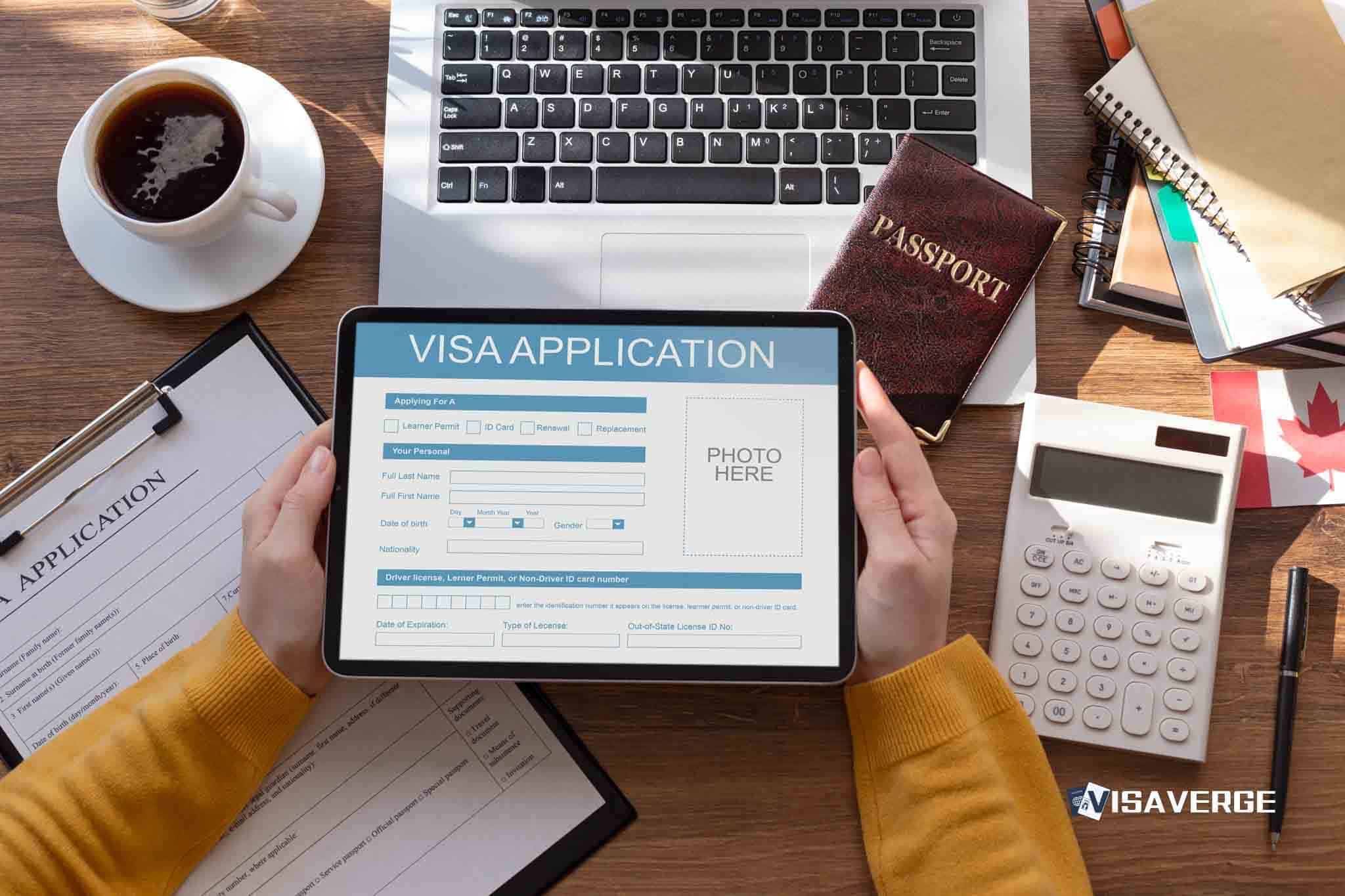
Section 214(b) Requires Visitor Visa Applicants to Show They Will Leave the U.S.
The U.S. State Department applies the existing Section 214(b) standard to B-1, B-2 and combined B-1/B-2 visitor visa applicants, who must show ties abroad and a temporary purpose.
At a glance
- Section 214(b) is an existing requirement, not a newly announced policy.
- It applies now to B-1, B-2 and combined B-1/B-2 visitor visa applications.
- A refusal under Section 214(b) closes that application and cannot be appealed.
Reviewed November 26, 2026 Checked against travel.state.gov
U.S. visitor visa applicants must qualify for temporary visitor status, including by showing they have a foreign residence they do not intend to abandon and a temporary, legitimate reason for the visit. This is the existing requirement under Section 214(b) of the Immigration and Nationality Act, a federal immigration law enacted by Congress, not a newly announced policy. A refusal under this section closes that application and cannot be appealed.
The requirement applies to people applying for a B-1 visa for business, a B-2 visa for tourism or pleasure, or a combined B-1/B-2 visa. Applicants must show that they qualify for the visa they requested and that their planned activities fit that status.

Who has to meet the standard
Section 214(b) presumes most visa applicants intend to immigrate until they establish that they qualify for a temporary, or nonimmigrant, status. The presumption excludes some nonimmigrants in the L and V categories, and some nonimmigrants in the H category.
Applicants must establish their eligibility to the consular officer when applying for a visa. The law also refers to establishing eligibility to immigration officers when applying for admission to the United States. A B-1/B-2 applicant who fails to meet one or more temporary visitor criteria must be refused under Section 214(b).
What officers consider
A consular officer, the official who decides a visa application at a U.S. embassy or consulate, assesses each application individually. The U.S. Department of State, the federal department that handles U.S. foreign affairs and visa services abroad, says officers consider the applicant’s circumstances, travel plans, financial resources and ties outside the United States that support leaving after a temporary visit.
Examples of ties that may support an applicant’s intent to return include:
- A permanent job, a home, and relationships with family and friends.
- Meaningful business or financial connections.
- Close family ties and social or cultural associations.
Evidence of employment or family ties may help show both the trip’s purpose and the applicant’s intent to return home. Applicants must qualify based on their ties abroad or to their home country, rather than assurances from family and friends in the United States.
The proposed visit should have specific, realistic plans for its full duration, and the applicant must establish with reasonable certainty that they will leave when the temporary visit ends. A temporary stay must have a finite limit. A stay longer than six months or a year is not by itself disqualifying if the officer is satisfied that it is limited rather than indefinite.
The State Department says applicants may need to provide information about the trip’s purpose, their intent to depart afterward and their ability to pay the costs. Applicants should complete Form DS-160, the online nonimmigrant visa application and follow the visitor visa application guidance from the U.S. Embassy or Consulate.
Application fee
The visitor visa application processing fee is $185 and is non-refundable, including when an application is refused. The fee increased from $160 to $185 on June 17, 2023. A separate visa issuance fee may also be payable, depending on the applicant’s nationality; the State Department lists fees on its visa services fee page.
What happens after a Section 214(b) refusal
A refusal means the applicant did not sufficiently show that they qualify for the nonimmigrant visa, did not overcome the presumption of immigrant intent by showing strong ties to their home country, or both. The applicant must be told verbally and in writing the reason for denial under the applicable section or sections of law. The State Department’s visa-denial guidance explains Section 214(b) refusals.
The refusal applies to that specific application. Once the case is closed, the consular section cannot take further action, and there is no appeal process. A person may reapply if they have additional information relevant to the decision or significant changes in their circumstances.
To reapply, the applicant must:
- Submit a new application.
- Pay the application fee again.
- Schedule an appointment for a new interview.
The State Department says a new application should include relevant additional information or reflect significant changes in the applicant’s circumstances.
Keep reading
More in B-1/B-2 Visa → B-1/B-2 Visa · Nov 23
U.S. Embassy Issues B1/B2 Visitor-Visa Warnings for Applicants
What do the U.S. Embassy’s visitor-visa warnings mean? Learn about application reviews, B1/B2 work limits, medical costs and I-94 departure dates.
 B-1/B-2 Visa · Nov 18
Department of State Tightens Visa Screening for Three New Applicant Categories
 B-1/B-2 Visa · Nov 15
State Department: Visitor Visa Rules Restrict B-1/B-2 Non-Recreational Study
 B-1/B-2 Visa · Nov 15
U.S. Denies Visas to Palestinian Pastors Ahead of Separate Washington and Atlanta Events
What to do now
- People applying for a U.S. business or tourist visitor visa: Complete Form DS-160 and follow the U.S. Embassy or Consulate’s application instructions.
- People whose visitor visa was refused under Section 214(b): Submit a new application, pay the fee, schedule a new interview, and present relevant additional information or changed circumstances.
Who this affects
Sources
Primary documents and official agency releases referenced in this story.