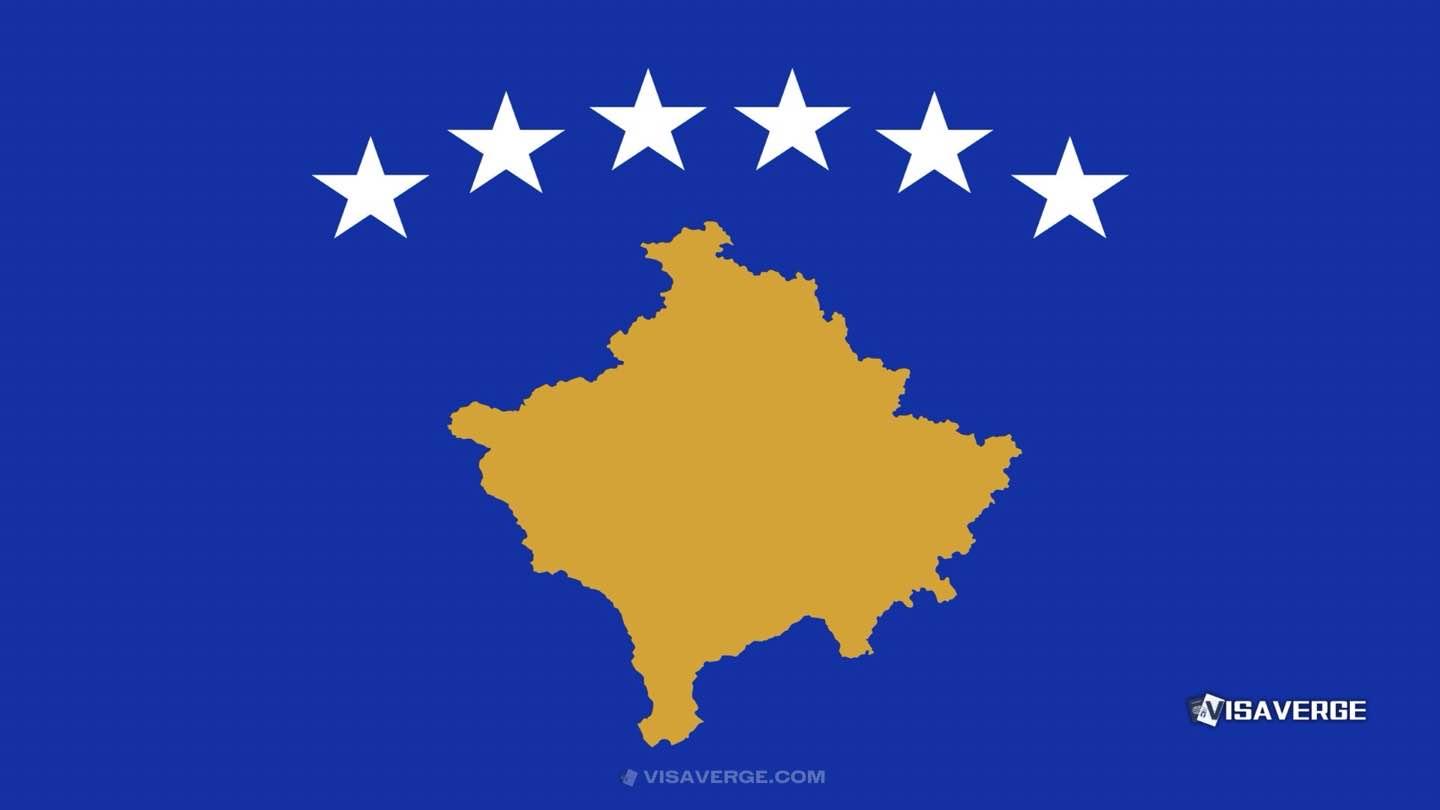
- Kosovo citizens with biometric passports travel visa-free to Schengen for up to ninety days.
- The waiver excludes Ireland but includes twenty-seven EU states plus Iceland, Norway, and Switzerland.
- While EU access expanded, the United States paused immigrant visa issuances starting January twenty-first, twenty twenty-six.
(KOSOVO) – Kosovo entered the EU visa-free travel regime on January 1, 2024, allowing its citizens with biometric passports to travel to the Schengen Area without a visa for short stays.
The change took effect at midnight and remains the base framework for Kosovar travel on June 18, 2026. It covers stays of up to 90 days within any 180-day period and applies to tourism, family visits, business meetings, and cultural events.
Travel without a visa does not create a right to work or to study long term. The system applies to 27 EU member states, excluding Ireland, and to the associated Schengen states Iceland, Liechtenstein, Norway, and Switzerland.
Free toolSchengen Short-Stay Visa CalculatorThijs Reuten, European Parliament Rapporteur, said on January 1, 2024: “At last! After years of utterly unnecessary delays, as of today, visa-free travel for all citizens of Kosovo is effective. This milestone is also an important foundation for the future and ever-closer cooperation between the EU and Kosovo.”
Spain also began recognizing Kosovar biometric passports for visa-free entry from January 2024, even though it does not recognize Kosovo’s independence. That step widened practical access across the European travel zone and removed one of the final political complications around the new regime.
Kosovo had been the last of the six Western Balkan countries to receive a visa waiver. Local officials had long described that status as isolation, and the rule change closed a gap that had shaped travel, family visits, and business movement for years.
Prime Minister Albin Kurti said on January 1, 2024 that the move removed a “great injustice.” Before the waiver took effect, Kosovars reportedly spent millions of euros each year on visa fees, a cost that disappeared for short-term travel once the policy started.
The visa waiver also carried weight beyond airport counters and border posts. A May 2026 progress report described the visa benchmarks as evidence that Kosovo could carry out complex judicial and security reforms, a point that fed into the country’s longer EU membership path.
Another rule change followed in July 2024. On July 22, 2024, the Council of the EU adopted a regulation removing visa requirements for holders of Serbian passports issued by the Serbian Coordination Directorate, a group that effectively includes ethnic Serbs in Kosovo.
That extension aligned travel treatment across the Western Balkans. It also removed a separate track that had left part of Kosovo’s population outside the same visa-free framework that applied to other residents after January 1, 2024.
Even with EU visa-free travel in place, border-free movement is not unconditional. Travelers from Kosovo still need a biometric passport and may need to show proof of sufficient funds, accommodation details, and the purpose of the visit when entering the Schengen Area.
The financial threshold cited for travel runs at about €50-€100 per day, depending on the country. Border officials can also ask for evidence tied to the stay, including where the traveler will sleep and how long the trip will last.
Kosovo authorities and EU agencies have spent much of the period through 2026 warning against misuse of the scheme. Unauthorized work during a visa-free stay can bring fines and entry bans, a message repeated in awareness campaigns as travel patterns adjusted to the new rules.
Those warnings reflect a basic line in the policy itself: short-stay access is not a labor permit. The waiver covers visits, not open-ended residence, and it does not convert visa-free entry into permission for long-term study.
Separate U.S. policy shifted in the opposite direction in January 2026. On January 21, 2026, the U.S. Department of State issued a notice that affected Kosovar nationals seeking immigrant visas.
The statement said: “Effective January 21, 2026, the Department of State paused all immigrant visa issuances to nationals of countries, including Kosovo, whose immigrants have a high rate of collecting public assistance at the expense of the U.S. taxpayer.” The notice appeared through the U.S. Embassy in Kosovo.
That U.S. action did not alter the EU framework, but it sharpened the contrast between Kosovo’s opening toward the Schengen Area and tighter conditions in another migration channel. In Europe, the system in force since January 1, 2024 still governs short visits by Kosovar passport holders.
Official EU guidance has continued to point travelers toward the same core conditions set at the start of the regime. The European Commission and the European External Action Service describe the arrangement as visa-free entry for short stays, tied to biometric passports and normal border checks.
More than two years after entry into force, the change still stands as one of the clearest shifts in Kosovo’s relationship with Europe. A traveler who once had to pay, wait, and apply for a visa can now board with a biometric passport, proof of means, and a lawful purpose, but not with permission to work beyond the limits of the rule.