- Most visitors enjoy 90-day visa-free entry within a 180-day period for tourism and business.
- US citizens can stay up to one year visa-free, making Albania a top digital nomad destination.
- Overstaying your permitted time results in five-year entry bans and substantial financial penalties.
(ALBANIA) Albania keeps one of Europe’s easier entry systems, but the rules still demand close attention. Most visitors get visa-free entry for 90 days in any 180-day period, while longer stays require a visa or residence permits. The biggest change for 2026 is practical, not dramatic: Albania’s digital system now handles most applications, and overstays still carry a five-year entry ban.
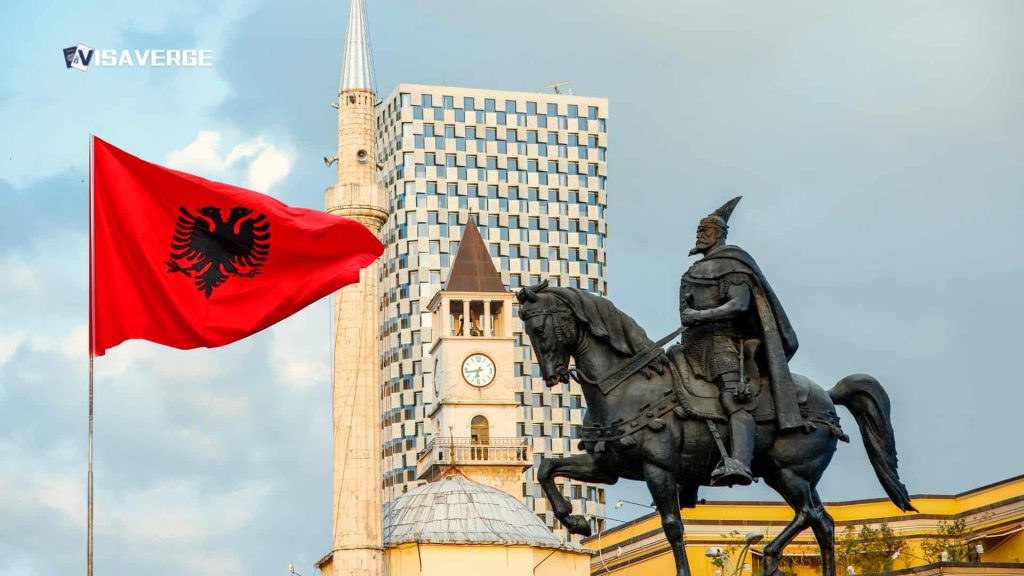
That matters for tourists heading to the coast, remote workers planning a longer stay, and families visiting relatives. It also matters for people aiming for the Albanian Alps, where a late document, missing insurance page, or weak proof of funds can stop a trip before boarding.
Albania’s appeal has grown fast. The country welcomed more than 10 million tourists in 2025, helped by visa-friendly rules and easier digital processing. According to analysis by VisaVerge.com, the combination of broad exemptions, fast eVisa access, and longer stays for some nationalities has turned Albania into a serious long-stay option in the Balkans.
Free toolDS-160 Form Filling Online Helper ToolEntry rules that shape the first 90 days
The main rule is simple. Short-term visitors enter on Type C status for tourism, business, medical care, cultural events, or official visits. That status allows up to 90 days in any 180-day period.
Albania grants visa-free entry to citizens of all EU countries, the US, the UK, Canada, Australia, Japan, and more than 90 other nationalities. The list also covers countries such as Germany, France, Italy, Spain, Poland, Switzerland, Norway, Iceland, Liechtenstein, Andorra, San Marino, Vatican City, Monaco, Argentina, Brazil, Chile, Bahamas, South Korea, New Zealand, Singapore, Malaysia, Taiwan, China, North Macedonia, Montenegro, Serbia, Bosnia & Herzegovina, Kosovo, Turkey, Ukraine, Armenia, Azerbaijan, Kazakhstan, Israel, and others.
US citizens have an extra benefit. They can stay up to 365 days visa-free in some cases. That makes Albania especially attractive for digital workers and long-stay travelers.
Albania also accepts certain documents from third countries. Holders of valid multiple-entry Schengen visas, multiple-entry US visas, multiple-entry UK visas, some EU long-term residence permits, qualifying UAE residence permits, and residence permits from Croatia, Romania, or Bulgaria remain exempt. Airlines check these rules before departure, so the right paperwork matters before you even reach the airport.
The documents authorities ask for at the border
Travelers still need to show they can support themselves. Border officers and airlines look for proof of funds, accommodation, and a return or onward ticket.
The common requirements are:
- a passport valid for at least 3 months beyond return
- 2 blank pages
- one recent passport photo
- completed application form when a visa is needed
- bank statements for the last 6 months
- proof of €50 per day or a sponsor’s affidavit
- health insurance with at least €30,000 coverage
- hotel booking, rental contract, or host invitation
- round-trip or onward flight booking
- parental consent for minors
- invitation letters, enrollment papers, or medical reports when relevant
Albania now requires biometric photos to be uploaded digitally, and paper applications are being phased out at VFS centers. For official entry guidance, travelers should check the Albanian Ministry of Foreign Affairs portal and the eVisa system before booking.
Longer stays move into visa and permit territory
Anyone staying beyond the short visit window needs a different route. Type D visas cover longer stays of up to 12 months and apply to study, work, family reunion, retirement, humanitarian activity, or religious service.
For students, the key document is proof of enrollment. Workers need a job offer and labor market approval. Family reunion applicants need proof of relation and sponsor income above €500 per month. Retirees must show pension income of at least €400 per month plus health insurance.
A newer path is the digital nomad option, piloted from January 2026. It allows a 1-year stay with proof of €3,000 monthly income. That route fits remote professionals who want city life in Tirana and weekend access to mountain trails.
Once a traveler enters on a Type D visa, the next step is a residence permit. Albania requires that application within 30 days of arrival for stays beyond 90 days.
The eVisa process now does most of the work
Albania’s eVisa platform handles most short- and long-stay applications. It launched in 2022 and reached a 98% approval rate in 2025. About 80% of applications now move through the digital route.
The process is straightforward:
- Register on the eVisa portal and select the correct visa type.
- Upload scanned documents as PDFs, each under 5MB.
- Pay the fee online by card or bank transfer and keep the receipt.
- Track the case through email, SMS, or the portal dashboard.
- Print the approved eVisa when issued.
Most decisions take 7 to 15 working days. During peak season, especially June to August, that can stretch to 30 days. An express service, available since March 2026, cuts the wait to 3 days for an extra 50% fee.
Fees are reciprocal. US, UK, and Canadian applicants pay €80. Some nationalities pay €35 to €60, while others pay €30 to €100. The fee is non-refundable.
Residence permits turn a temporary stay into a longer life
For people who want to settle longer, Albania’s permit system sits on the E-Albania portal. Applicants upload legalized documents, including a work contract, €5,000 bank proof, and a health check. They then pay a fee of €50 to €150 and attend biometrics at the local Migration Directorate.
Processing takes about 30 days. Permits usually run for 1 to 5 years and renew when conditions remain the same. Albania issued 45,000 residence permits in 2025, a 25% rise driven by work and study.
That route matters for people who want more than a holiday. It also matters for those building a life between Tirana, the coast, and the Albanian Alps.
Delays, refusals, and the cost of mistakes
Authorities reject many files for the same reasons: fake documents, weak finances, and no proof of ties to the home country. The rejection rate reached 12% in 2025. Appeals must be filed within 10 days through the embassy, with a €20 fee.
Overstays bring serious consequences. Albania applies fines of €100 to €500 and a 5-year ban for stays beyond the allowed period. Border control has tightened too, with digital tracking through e-gates at Tirana Airport from January 2026.
For Schengen travelers, one more change is coming into view. Albania is not in Schengen, but reciprocal travel rules now matter more. Albanian citizens face ETIAS requirements for Schengen travel from Q3 2026, while Albania continues to welcome many Schengen holders without a visa.
The system is open, but it is not casual. Travelers who prepare the right documents move quickly. Those who arrive unprepared face delays, refusals, or bans that can last for years.