- California and Santa Clara County sued the federal government over a proposed ICE facility in Gilroy.
- Plaintiffs allege the project skipped mandatory environmental reviews and local land-use permits required by law.
- Blueprints suggest a detention-capable facility with holding rooms, despite ICE labeling the site as a standard office.
(GILROY, CALIFORNIA) – A coalition of California state and local authorities filed a high-stakes lawsuit challenging the federal government’s plan to establish an ICE facility near Gilroy, alleging environmental review failures, skipped local consultation, and unlawful land use.
California and Santa Clara County filed the case on June 10, 2026, in the U.S. District Court, Northern District of California. The suit is County of Santa Clara et al v. United States Immigration & Customs Enforcement et al, Case No. 5:26-cv-05604.
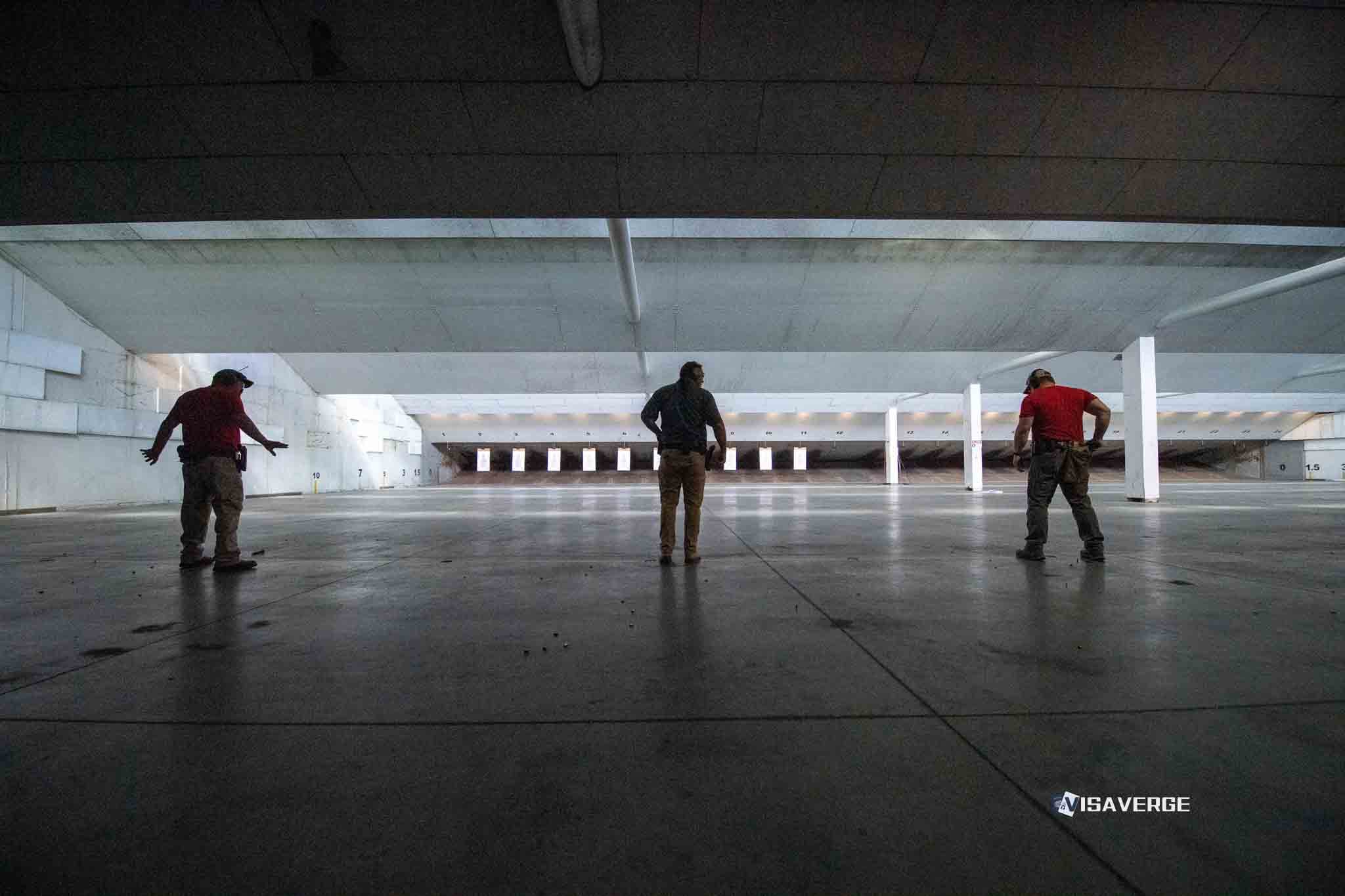
The complaint targets a proposed federal site at 7240 Holsclaw Road in Gilroy, California, on unincorporated agricultural land. State and county officials say the project advanced without county permits and without environmental assessments required for a major federal action.
Free toolI-94 Expiration Calculator OnlineAt issue is how the project should be described. ICE has called it an “ICE office,” while the plaintiffs describe a detention-capable facility that fits into a wider buildout of immigration infrastructure under the Trump administration.
Blueprints cited in the dispute run 111-page blueprints and are dated September 17, 2025. They describe detention and detainee processing areas, interview and holding rooms, visitation space, rooms for mothers with infants, tactical equipment storage, and weapons rooms.
Santa Clara County says those features are hard to square with a standard office project. The state’s filing argues that the design points to a site capable of holding people, even if DHS and ICE use narrower terms.
⚠️ Note that the site is described by officials as an ‘ICE office’ but plaintiffs describe it as a mass detention-capable facility; this distinction guides framing and sourcing.
The legal claims span federal procedure and state land-use law. Plaintiffs allege violations of the National Environmental Policy Act, the Intergovernmental Cooperation Act of 1968, the California Williamson Act, and the Administrative Procedure Act.
Under the National Environmental Policy Act, or NEPA, the complaint says ICE and DHS failed to complete the environmental review required for a major federal project. Under the Administrative Procedure Act, or APA, plaintiffs argue the agencies acted arbitrarily and capriciously by bypassing required steps.
The suit also says the federal government failed to consult state and local governments as required by the Intergovernmental Cooperation Act of 1968. On the land-use side, it argues the site has been limited to exclusive agricultural use since the 1960s under California’s Williamson Act.
| Allegation / Statute | Claim by plaintiffs | Authority cited |
|---|---|---|
| Environmental review / NEPA | Federal agencies allegedly moved ahead without the review required for a major federal project. | National Environmental Policy Act |
| Local consultation / Intergovernmental Cooperation Act of 1968 | Plaintiffs say state and local governments were not consulted before work advanced. | Intergovernmental Cooperation Act of 1968 |
| Agricultural land use / Williamson Act | The complaint says a non-agricultural federal facility is being placed on land restricted to agricultural use. | California Williamson Act |
| Agency process / APA | Plaintiffs allege arbitrary and capricious action in bypassing procedural requirements. | Administrative Procedure Act |
California Attorney General Rob Bonta cast the case as a challenge to detention expansion in the state. “President Trump‘s mass detention and deportation campaign has led to cruel, inhumane, and unacceptable conditions at immigration holding and detention facilities across California,” Bonta said.
Bonta said the administration was trying to “jam through” a new site on a community that does not want it. He added that some ICE offices have functioned as “mini-detention centers,” despite not being equipped for long-term holding.
Santa Clara County Counsel Tony LoPresti focused on process and local effects. “This is the wrong place and the wrong process for this facility,” LoPresti said, adding that the federal government ignored effects on water, roads, and protected farmland.
An ICE spokesperson rejected the detention label. “We have no new detention centers planned at this location,” the spokesperson said on June 10, 2026, while describing the project as an “ICE office.”
| Person/Office | Statement summary | Date |
|---|---|---|
| California Attorney General Rob Bonta | Criticized the administration’s detention approach and said the Gilroy site was being pushed through despite local opposition. | June 10, 2026 |
| Santa Clara County Counsel Tony LoPresti | Said the federal government failed to consult local authorities and ignored effects on water, roads, and farmland. | June 10, 2026 |
| ICE spokesperson | Said no new detention centers are planned at the location and called the project an “ICE office.” | June 10, 2026 |
The dispute has already widened. On June 11, 2026, Santa Cruz County joined the legal effort, adding to a regional coalition opposing expansion of detention-capable federal infrastructure on the Central Coast.
That regional response follows reports that construction had started without county permits or environmental review. If those claims hold up in court, the case may shape how far DHS and ICE can go before state and local controls apply.
The complaint also points to effects beyond the project boundary. Research cited by the plaintiffs says nearby ICE facilities are often associated with increased arrests and removals, a pattern that may deepen fear in immigrant communities.
Local impacts described in the suit include pressure on sewer systems and drinking water, along with contamination concerns tied to land conditions and facility use. Santa Clara County argues those questions belong in public review, not after construction begins.
The case may also test a recurring dispute in immigration law: whether the federal government can press ahead with immigration infrastructure while sidestepping local zoning and state environmental protections. Courts often give federal agencies broad authority, but procedural statutes still apply unless Congress says otherwise.
Official updates may be checked through the California Department of Justice newsroom at oag.ca.gov/news, Santa Clara County releases at news.sccgov.org, the DHS newsroom at dhs.gov/news, and court records through cand.uscourts.gov.
✅ For readers affected by policy or local impacts, reference official government sources for updates: oag.ca.gov/news, news.sccgov.org, dhs.gov/news, cand.uscourts.gov
Any ruling on early motions may affect construction, permitting disputes, and how the Gilroy ICE facility is classified in court filings. The docket in Case No. 5:26-cv-05604 is the next place to watch.
This article discusses ongoing legal action and regulatory questions; statements reflect official sources as cited and may be subject to change.
Legal analyses should avoid definitive conclusions about outcomes; readers should consult primary legal documents and court filings.