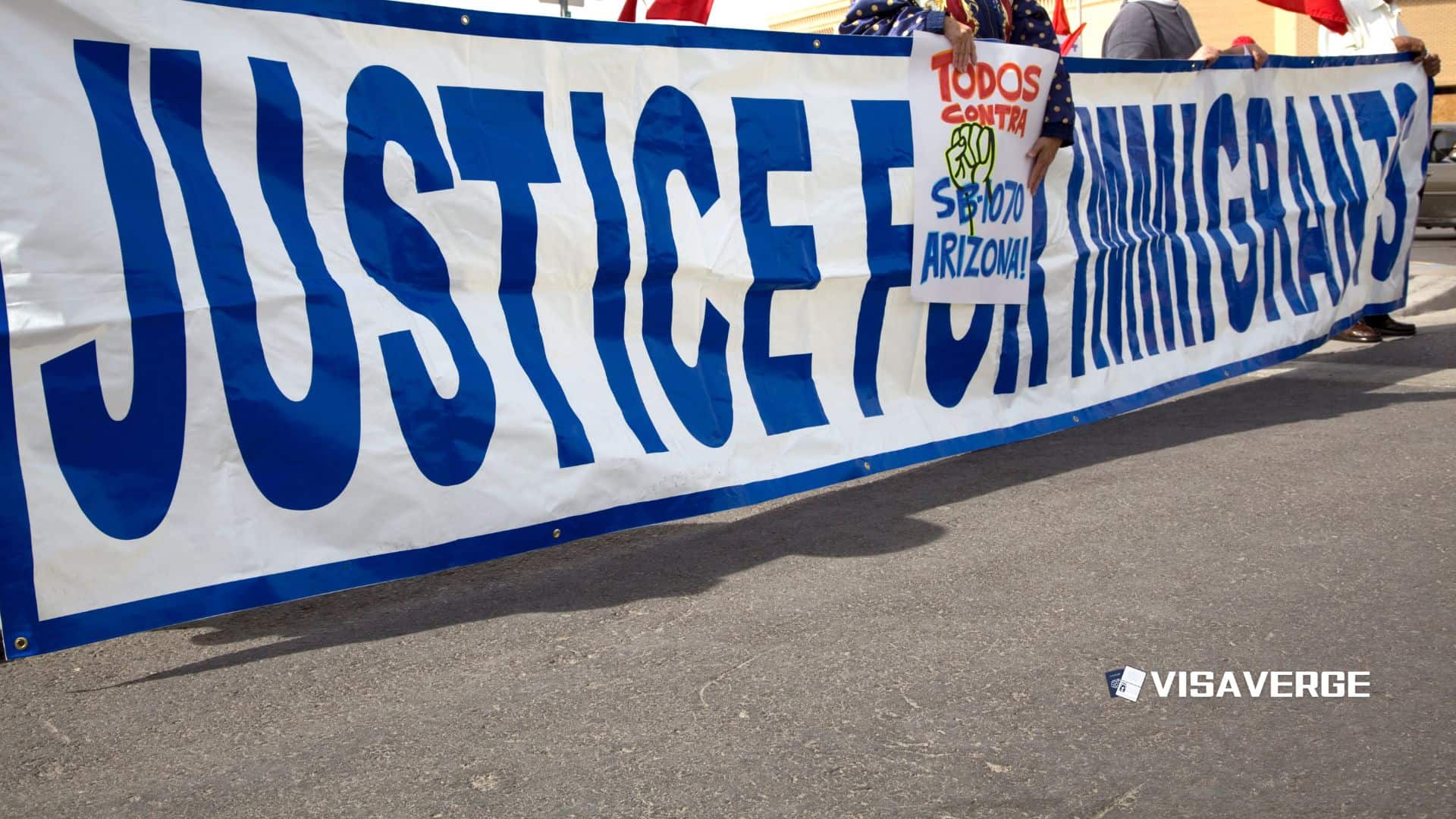
U.S. District Judge Brendan A. Hurson ordered the agency to give unaccompanied child asylum applicants and their lawyers at least 21 days' written notice before interviews. The temporary restraining order was issued October 30, 2026.
Background: Lawsuit Challenges Fast-Track Deportations of Immigrant Children in the Door V. Edlow
Hurson issued the order at noon in Greenbelt, Maryland. It blocks the shortened-notice policy while the lawsuit proceeds.
The case, The Door v. Edlow, was filed October 15 in the U.S. District Court for the District of Maryland. Court filings identify it as No. 8:26-cv-04326, also listed as 8:26-cv-04326-DLB.
Interviews may continue. The order applies to unaccompanied children seeking asylum through the agency, not adult applicants or all immigration court hearings.
The order restores scheduling protections for child interviews
The judge also suspended the policy requiring “exceptional circumstances” to reschedule an interview. Under the restored practice, a child may seek one rescheduling as a matter of course. Later requests can be granted for good cause.
When assessing good cause, the agency must consider whether counsel can attend, scheduling conflicts, the time needed to prepare evidence, the child's ability to appear and whether the notice was adequate. The agency and the other defendants must report on compliance within 48 hours.
The order does not automatically postpone every appointment. It does not grant asylum or end removal proceedings. Families, guardians and lawyers who receive a short-notice appointment should keep the notice and follow the agency's current rescheduling process rather than simply miss the interview.
Hurson connected interview preparation to child-protection law
Hurson found at this temporary-relief stage that the shortened notice policy likely conflicts with protections for unaccompanied children under the Trafficking Victims Protection Reauthorization Act of 2008. He reasoned that those protections cover preparation before the interview, including time to work with an attorney. He also concluded the rescheduling policy likely violates the Administrative Procedure Act. These are preliminary findings, not a final judgment on every claim.
The judge wrote:
“An unaccompanied child only has one chance to have a non-adversarial asylum adjudication.”
The law gives an asylum officer initial jurisdiction over an unaccompanied child's claim, even after deportation proceedings begin. If the interview does not resolve the claim, or the child misses it, the case can proceed to immigration court, where a Department of Homeland Security trial attorney opposes the claim. The interview offers a chance to present an asylum claim, not a guarantee of asylum.
The agency's guidance for minor children applying for asylum by themselves describes interviews that account for a child's age, language development, background and sophistication. Officers may ask whether a parent or guardian allowed the application, and can delay a case if they need more information. A child may use this process if under 18, without lawful immigration status, and without a parent or legal guardian in the United States available to provide care and physical custody.
The complaint also points to agency guidance: a Children's Claims Lesson Plan revised December 6, 2024, and the Asylum Officer Basic Training materials from February 2025. The materials describe procedural adjustments for interviewing children; the 2025 manual establishes a strong preference for in-person interviews.
The complaint describes rapid scheduling and overlapping appointments
The organizations say interview scheduling accelerated in 2026, particularly from July onward. Lawyers received as little as 18 hours' notice, and referrals were issued within 24 hours of interviews. Some attorneys said they received telephone notice in September that a child was scheduled for the next business day. Children in federal custody can now attend only virtually, the complaint says.
An August 21 policy limited rescheduling to “exceptional circumstances,” according to the lawsuit. Attorneys allege that requests were rejected or ignored, including when multiple children's interviews were scheduled for the same time. The complaint also challenges a requirement to submit supplemental asylum evidence 14 days before an interview. A child could receive an appointment notice after that filing deadline had passed.
The six plaintiff organizations say they received more than 600 interview notices for their clients since August 1, 2026. That count covers their clients, not the country as a whole. Immigrant Defenders Law Center says it represents 1,900 children; the Amica Center says it represents more than 850.
The complaint says attorneys were expected to cover simultaneous interviews, leaving less time to prepare children who could be returned to the countries they fled. The plaintiffs also challenge a separate instruction from the Executive Office for Immigration Review requiring detained unaccompanied children's cases to be completed by January 31, 2027. That instruction limits continuances to three weeks regardless of circumstances. Hurson's temporary order does not reach that deadline.
The plaintiffs are Amica Center for Immigrant Rights, The Door, Florence Immigrant and Refugee Rights Project, Galveston-Houston Immigrant Representation Project, Immigrant Defenders Law Center and Jewish Family and Community Services Pittsburgh. Their counsel includes the Center for Gender and Refugee Studies, National Center for Youth Law, National Immigration Law Center and Trial Impact Project.
Defendants include agency Director Joseph Edlow, Homeland Security Secretary Markwayne Mullin, acting immigration-court director Sirce Owen and Attorney General Todd Blanche. The Department of Homeland Security, the Executive Office for Immigration Review and the Department of Justice are also named. The plaintiffs allege violations of the Administrative Procedure Act, the 2008 trafficking law, the Immigration and Nationality Act and the Fifth Amendment's due process guarantee.
When the suit was filed, agency spokesperson Zach Kahler called it “another meritless effort” to obstruct enforcement of immigration laws. The administration said children's cases were not being fast-tracked and that officials were prioritizing timely completion. The plaintiffs seek to set aside the interview policies, restore the prior notice practice, permit one rescheduling as a matter of right and use a good-cause standard for later requests. They also want the detained-children deadline invalidated.
The temporary order is set to expire November 13
The temporary order lasts 14 days and is set to expire at noon on Friday, November 13, 2026, unless Hurson extends or replaces it. He could extend the order, issue a preliminary injunction or let it expire. The government may appeal and can contest the claims as the lawsuit continues.
The next stage may bring a ruling on whether to issue a longer-lasting injunction. The October 30 order provides temporary relief; it does not resolve the broader lawsuit.
This article provides general information and is not legal advice. Consult a qualified immigration attorney about your specific case.