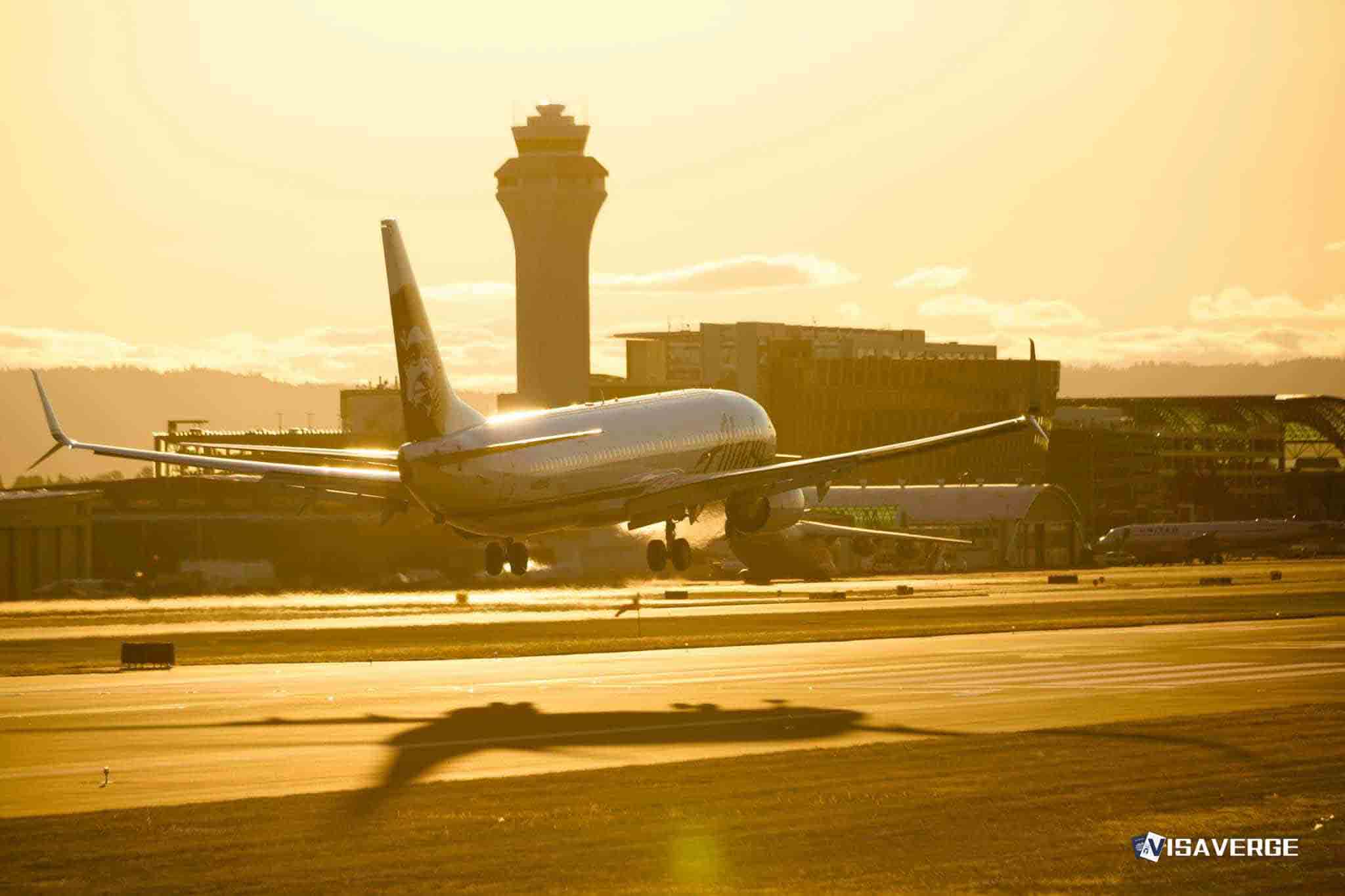
- The FAA installed its 100th Surface Awareness System at air traffic towers to reduce runway incursions.
- The agency plans 44 more airports by the end of 2026, moving toward a 220-airport goal.
- Recent installations include airports in five states: Michigan, Montana, Mississippi, South Carolina, and Texas.
The Federal Aviation Administration has installed its 100th Surface Awareness System, putting the technology in operation at 100 air traffic control towers as the agency works to reduce runway incursions.
U.S. Transportation Secretary Sean P. Duffy announced the milestone in Washington, D.C. The FAA says the program gives controllers more information about aircraft and vehicles moving across airport surfaces.
The agency plans to add the system at another 44 airports by the end of 2026. Its broader target covers 220 airports and 100 active air traffic control towers.
The equipment is designed to help controllers follow surface traffic in real time. It can provide that view during poor weather and when aircraft or vehicles cannot be seen from the tower.
The system draws on Automatic Dependent Surveillance-Broadcast data transmitted by aircraft and vehicles. Controllers use those data to see surface activity and improve their awareness of movements near runways. The FAA describes the program as an effort to improve runway safety and efficiency.
The FAA identified five airports among the recent installations. They include facilities in Michigan, Montana, Mississippi, South Carolina and Texas.
Five airports recently joined the network
| Recent installation | Airport |
|---|---|
| Michigan | Ann Arbor Municipal Airport |
| Montana | Billings-Logan International Airport |
| Mississippi | Gulfport-Biloxi International Airport |
| South Carolina | Greenville-Spartanburg International Airport |
| Texas | Corpus Christi International Airport |
The expansion places the program at nearly half of its stated airport goal. The planned additions would extend the equipment beyond the 100 towers currently operating it.
The FAA is pairing surface tracking with two other safety tools
The agency has also accelerated Approach Runway Verification deployments. The FAA said it tripled the pace of those installations, which now operate at more than 260 air traffic facilities.
A separate Runway Incursion Device operates at more than 56 air traffic control towers. Together, the programs form a wider effort to improve controllers' awareness of aircraft and vehicles on airport surfaces.
The surface system focuses on traffic that may be difficult to track through direct observation alone. Its coverage during poor weather and when traffic is out of sight from the tower addresses two conditions that can limit a controller's view.
The FAA's next expansion target is specific: 44 more airports by the end of 2026. The agency's program goal remains 220 airports and 100 active air traffic control towers.