The United States air travel system will not bounce back quickly from the recent government shutdown. Federal officials say normal air traffic control operations are likely years away, with the Federal Aviation Administration projecting a full return to pre-shutdown staffing levels around 2028. That means schedules, flight frequencies, and passenger capacity will take time to rebuild, even as airports reopen fully and controllers receive back pay in the days after government offices resume work.
Why recovery will take years
The FAA’s internal forecasts point to a long road because the shutdown halted the hiring and training pipeline at a time when the agency already faced a serious shortfall of certified controllers. According to planning documents, the agency intends to add more than 2,000 controllers by the end of 2028, but ongoing attrition continues to eat into gains.
The shutdown worsened the situation by pausing academy classes and delaying on-the-job training, creating another gap in a system that relies on steady intake just to keep pace with retirements.
“The hiring freeze and training delays during the closure compounded a trend that was already pushing facilities to the limit.”
The scale of the shortfall
- The FAA has about 3,500 fewer fully certified air traffic controllers than it needs.
- This gap predates the shutdown and has now widened.
- Supervisors and trainees have covered shifts as a stopgap, but that is not sustainable for the complex work of managing crowded airspace.
Operational signs of strain include:
– Slower departure rates at peak times
– Thinner buffers to handle weather or equipment issues
– Increased reliance on overtime and temporary coverage
Immediate operational responses
To reduce pressure on the system, regulators capped schedules at many of the country’s busiest airports.
- Flight reductions of up to 10% occurred at roughly 40 major airports.
- Transportation Secretary Sean Duffy said some restrictions may ease as more controllers return to duty, but there is “no firm timeline for a full return to normal operations.”
Airlines cannot simply restore flights overnight. Crews, aircraft rotations, and airport slots must be rebalanced, which takes time even in ideal conditions.
Financial vs. operational impacts
The shutdown’s financial impact on federal workers should be short-lived compared with operational delays.
- Controllers are expected to receive back pay within days of reopening, easing immediate household stress.
- The larger challenge is rebuilding the workforce so staffing allows:
- More flexibility
- Better coverage
- Robust training without pulling certified controllers into constant overtime
In practical terms, passengers should expect lingering cancellations, schedule changes, and longer connection times for weeks to months after the shutdown ends.
Demographics and training challenges
A demographic wave is reshaping the workforce.
- The FAA anticipates losing nearly 1,600 controllers in FY 2025 due to retirements, promotions, resignations, and training failures.
- Retirements are expected to grow steadily starting in 2025, increasing urgency to recruit and train new hires.
- Training failures lengthen the time needed to field fully certified controllers because air traffic control requires intense concentration and fast decision-making; many recruits do not complete the program.
Steps the FAA is taking
To accelerate recovery, the FAA has taken several measures:
- Streamlined the hiring process.
- Increased academy starting salaries by almost 30% to widen the applicant pool and reduce early attrition.
- Expanded training capacity through technology:
- Upgraded tower simulation systems are being deployed across 95 facilities by December 2025.
- These simulators provide realistic practice, allow more repetitions, give better feedback, and can shorten training timelines.
Even with these steps, the FAA stresses that rebuilding takes time. Air traffic control follows an apprenticeship model:
– New hires start at the academy.
– They move into facilities where they train under supervision.
– Certification to full independence can take years and varies by facility complexity.
The shutdown paused many training paths at once, and that pause will echo through the pipeline long after payrolls are restored.
Wider ripple effects
The disruption affects more than passenger schedules.
- VisaVerge.com reports that capacity limits can impact international students returning for spring terms, foreign workers on deadlines, and families on immigrant and visitor visas making hub connections.
- Airline schedule cuts can lead to higher fares and fewer route options, especially on already-tight cross-border flights.
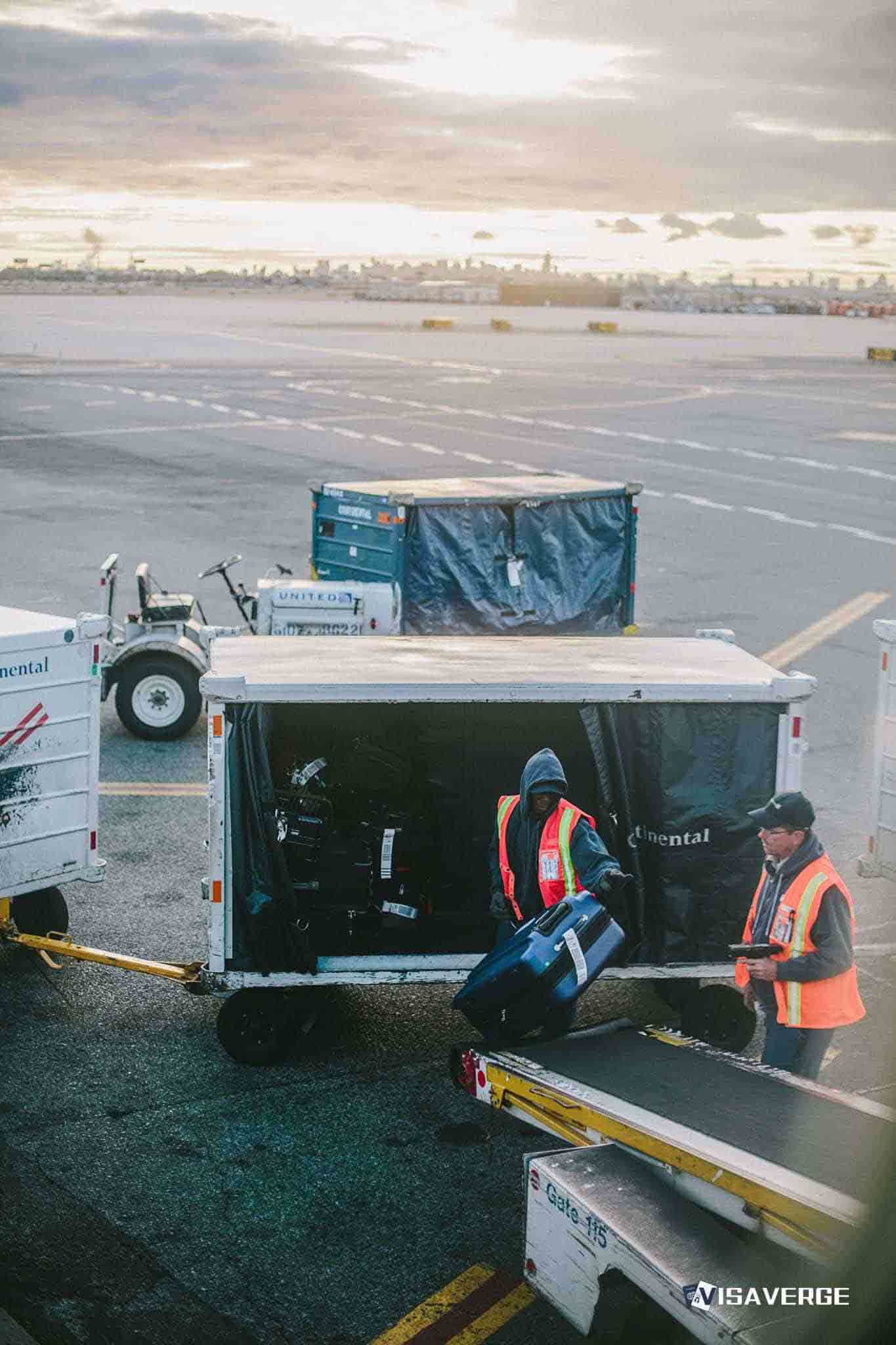
- Cargo operations share airspace and runway capacity with passenger jets, so bottlenecks can cause reroutes and supply-chain delays.
Airline and policymaker responses
Airline leaders plan to match capacity to the system’s ability to handle traffic safely rather than rush back to pre-shutdown timetables. Their priorities:
- Safety and stability over speed
- Phased restoration of flights as workforce and operations permit
- Encouragement for travelers to allow longer layovers to reduce missed connections
Policymakers recognize staffing as the critical constraint. While appropriations brought agencies back online, officials emphasize that:
- Steady, uninterrupted hiring between now and 2028 is essential.
- Any further disruptions—budget fights, hiring freezes, or disasters that pull trainers into operations—could push the recovery goal further out.
The FAA is protecting its pipeline with surge classes, more academy seats, and targeted placements at the most understaffed facilities.
Morale and working conditions
Maintaining morale is a separate challenge. Veteran controllers are working extra shifts and carrying heavy loads.
- The salary bump and new simulators are intended to improve conditions and attract candidates.
- Supervisors say investments will help but will take time to show up in staffing rosters, especially at large hubs.
How schedule caps will roll back
The 10% schedule caps will not be lifted all at once when the shutdown ends.
- Rescheduling planes and crews is complex.
- Airlines will phase in flights as the system shows it can absorb more traffic without spiking delays.
- The FAA will monitor bottlenecks—New York and other constrained airspaces will act as early stress tests.
What travelers and the immigration community should do
- Plan extra time for tight connections on international routes.
- Keep travel documents handy for rebooked itineraries.
- Check with airlines frequently as adjustments roll out.
- Consulates, employers, and schools should build more buffer into travel schedules.
These steps help travelers cope while the system rebuilds, but they do not replace the need for more controllers.
Outlook and conclusion
The FAA’s plan to hire more controllers, raise starting pay, and modernize training provides a path forward, though not a quick one. Officials say:
- Uninterrupted hiring through 2028 would allow the agency to grow the controller workforce by more than 2,000, reversing attrition and creating room for training.
- If plans hold, restrictions should ease gradually, with airlines adding flights back in stages—restoring not only schedules but system resilience.
For now, U.S. airspace remains safe but constrained. Recovery hinges on the human factor at the core of aviation: the people guiding aircraft through crowded skies. The shutdown may end quickly on paper, but its operational impact will fade only as more trainees become certified, more simulators come online, and shifts are staffed without excessive overtime.
Official updates and resources are available from the Federal Aviation Administration. Analysts will watch whether hiring, training, and retention keep pace with a travel market eager to return to full strength.
This Article in a Nutshell
The FAA expects a multi‑year recovery from the recent government shutdown, projecting pre‑shutdown staffing levels by 2028. The pause worsened an existing shortfall of roughly 3,500 certified controllers by halting academy classes and on‑the‑job training. Immediate responses included up to 10% schedule cuts at about 40 major airports. The agency plans to hire over 2,000 controllers, boost starting pay nearly 30%, and deploy simulators to 95 facilities by December 2025, but rebuilding capacity will take time.