January 3, 2026
- Updated title to reflect 2026-focused coverage and renamed guide to ‘Cyprus Visa Essentials’
- Added 2026 Schengen integration details: EES starting October 12, 2026 and ETIAS expected late 2026
- Included specific ETIAS fee (€7), validity (3 years), and approval timeline (up to 96 hours)
- Added EES biometric registration requirement and reminder to use the same passport per trip
- Added detailed 2026 fees and timelines: Type C visa fees (€90/€45/free under 6) and Golden Visa processing (6–9 months)
- Added Cyprus Golden Visa requirements: €300,000 minimum investment and income thresholds (€50,000 + family supplements)
(CYPRUS) Cyprus is keeping its own entry rules in early 2026, but travelers and long-term residents should prepare now for Schengen-linked checks that start later in 2026. If you’re planning a short visit, a work or study stay, or the Cyprus Golden Visa, the main task is matching the right route to your timeline and documents.

Cyprus sits in the European Union but still operates outside the Schengen Area’s border-free zone for now. That has two practical results. First, a Cyprus Visa is not a Schengen Visa, so it doesn’t open travel across Schengen countries. Second, a valid multiple-entry Schengen Visa lets many travelers enter the Republic of Cyprus without applying for a separate national visa.
Free toolB1/B2 Tourist Visa Stay Calculator onlineWhat changes in 2026: Schengen entry systems are coming to Cyprus
Cyprus plans to join the Schengen Area in 2026, and two EU-wide systems are tied to that shift.
- The first is the Entry/Exit System (EES), starting October 12, 2026. EES registers many non-EU visitors with fingerprints and a photo at first entry, then tracks the 90 days in any 180-day period rule automatically. Use the same passport each trip, because EES links stays to that document and flags overstays.
-
The second is ETIAS, expected in late 2026, which adds an online travel authorization for visa-exempt visitors, including Americans from the United States ?? and Canadians from Canada ??. The fee is €7, and approval usually arrives quickly, though it can take up to 96 hours. ETIAS is valid for 3 years or until the passport expires, and it applies even to some transit situations.
According to analysis by VisaVerge.com, these two systems push more screening to the “before you fly” stage, so small paperwork mistakes are more likely to stop a trip at the airline check-in desk.
Key takeaway: expect more pre-travel checks and biometric registration at first entry once EES and ETIAS are active.
Choose the right Cyprus Visa track before you book flights
Start by deciding whether you need a short-stay permission, a long-stay entry visa that converts into a residence permit, or an investment-based residence route.
- Short-stay (Type C) Cyprus Visa: tourism, business, family visits, medical reasons. It allows up to 90 days in any 180-day period.
- Long-stay (Type D) Cyprus Visa: for stays over 90 days, usually linked to work, study, or family residence. After arrival, it leads into a residence permit process.
- Golden Visa (permanent residency by investment): a fast track to permanent residency for non-EU/EEA/Swiss nationals through €300,000+ qualifying investment.
For nationality rules, official requirements, and where to apply, use the Republic of Cyprus Ministry of Foreign Affairs visa information and application resources:
Short stays: what border officers and airlines check
Nationals with visa-free access, including many visitors from the United States ??, can enter Cyprus for up to 90 days in any 180-day period for tourism or business. Cyprus does not offer a visa on arrival for Americans, so entry is still a document check at the border.
Expect to show:
– A passport with strong remaining validity (the guide recommends 6+ months beyond departure).
– Proof of where you’ll stay (hotel booking or host invitation).
– Return or onward ticket.
– Proof of funds, often described as about €50/day minimum (it varies by nationality and circumstances).
– Travel medical insurance with €30,000+ emergency coverage.
Even with a valid visa, border officials can refuse entry, and airlines can deny boarding when documents don’t match the rules. Build extra time into your trip for these checks, especially as EES preparations tighten screening.
Long stays: how Type D turns into a residence permit
A long-stay plan starts with a Type D entry Visa and then shifts to residence steps after arrival.
- Students typically need an acceptance letter from a Cypriot institution.
- Workers need a job offer and employer support.
- Family-based applicants rely on marriage and birth certificates.
Two paperwork rules trip people up most often:
1. Non-English and non-Greek documents need certified translation and an apostille.
2. Keep copies of every document you submit, because the same evidence often appears again during the residence permit stage.
After entry, long-stay residents also face local registration steps, including an Alien Registration Certificate, listed with a €70 fee in the guide. Treat this as a scheduling task, not an afterthought, because missing local deadlines can block later renewals.
Step-by-step application process with realistic timeframes (2026)
This flow covers both standard visas and the early stages of long-stay planning. Keep it tight and sequential.
- Confirm your visa requirement and category.
– Check whether you need a national Cyprus Visa, can use visa-free entry, or can enter with a valid multiple-entry Schengen Visa.
- Collect your core documents and complete the application form.
– The guide notes that applicants should skip Schengen fields 25/26/29 on the Cyprus form, which reduces avoidable errors.
- Book an appointment and attend in person.
– Cyprus embassies and consulates take applications and, for many third-country nationals, capture biometrics.
– In the United States ??, the guide cites Washington for most residents and New York for the Northeast.
- Submit the application and pay fees.
– For Type C visas, the guide lists €90 (adult), €45 (ages 6–12), and free for children under 6, with payment rules that can include money orders at some posts. Fees are non-refundable.
- Wait for a decision and protect your travel dates.
– Standard processing is 10–15 days.
– Apply 1–3 months early if you have fixed travel or a complex file.
The Cyprus Golden Visa: the 2026 “permanent residency by investment” route
Cyprus ended its citizenship-by-investment program after a scandal-driven collapse, and the residency-by-investment track became the headline option. The current Cyprus Golden Visa targets non-EU applicants who want a stable base on the island with lighter physical presence rules.
The core deal is straightforward: make a qualifying investment of €300,000 (ex-VAT) and meet income, insurance, and background checks. Processing in 2026 is listed at 6–9 months, which matters if school schedules or property handovers drive your timing.
Investment choices that meet the €300,000 rule
The guide lists four qualifying paths:
– Residential property: €300,000 (ex-VAT), typically new build, with €200,000+ paid initially, and no Cypriot mortgage.
– Commercial property: offices, shops, or hotels at €300,000 (ex-VAT).
– Cypriot company shares: €300,000, and the company employs 5+ Cypriot or EU citizens; the investor can serve as a director.
– CySEC-regulated funds: €300,000 in a Cyprus presence structure such as AIF/UCITS/RAIF.
Personal requirements that come with the Golden Visa
- Applicants must show €50,000 annual foreign income, plus €15,000 for a spouse and €10,000 per child.
- Health insurance is required.
- The program does not allow local work, except that the investor can act as a director under the rules described in the guide.
- Family coverage includes spouses and children under 18, plus selected 18–25-year-olds who are unmarried students.
- The residence card is issued for 10 years and is renewable.
- Physical presence is light: visit at least once every two years.
Fees and other costs people forget to budget
Beyond the investment itself, the guide flags government and transaction costs. For a family of four, it estimates €1,380–€2,380 in fees, plus VAT (5–19% depending on the transaction), transfer fees (3–8%), and legal costs. Small line items add up fast, so keep a written budget before signing a purchase contract.
What to expect once EES and ETIAS start affecting Cyprus travel
EES changes the border experience. Many travelers who previously handed over a passport and walked through will be routed to biometric capture at first entry, then checked against recorded entries and exits later. That matters for business travelers rotating in and out, because the system tracks days with less room for “good faith” explanations.
ETIAS changes planning discipline. A visa-exempt visitor who forgets to apply won’t fix it at the airport with a quick stamp. The trip starts online, and approval is part of being allowed to board.
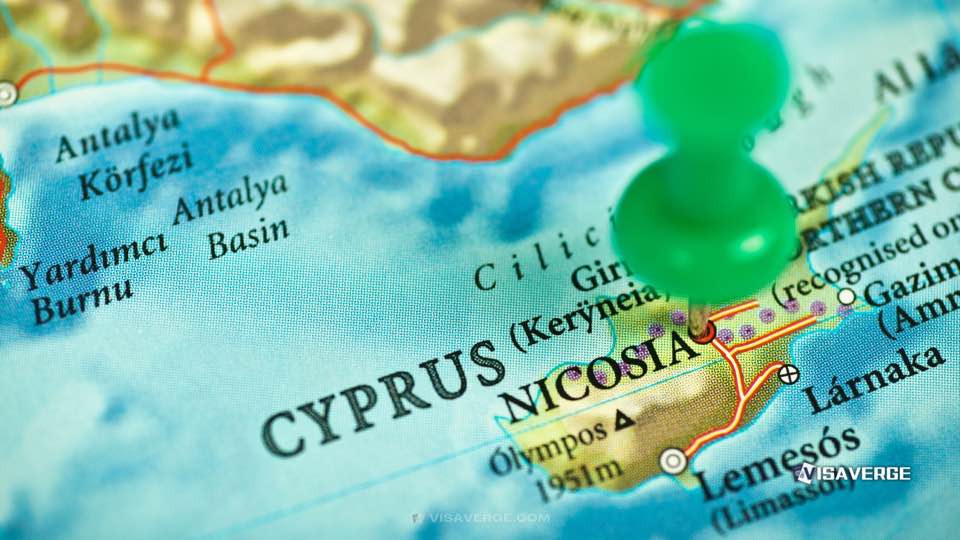
Finally, keep the island’s political map in mind. The Republic of Cyprus rules do not cover the Turkish-occupied north, and the guide warns travelers to avoid getting northern stamps that complicate entry on the Republic side.
Cyprus is transitioning toward Schengen Area integration in 2026, introducing the biometric EES and the ETIAS digital authorization. Travelers must distinguish between national Cyprus visas and Schengen visas, as they are not currently interchangeable. The article details entry requirements, the permanent residency investment track (Golden Visa), and the importance of document certification and biometric registration for future visitors and long-term residents.