India has formally updated its aviation fuel rules on 17 April 2026, expanding the Aviation Turbine Fuel (Regulation of Marketing) Order, 2001 to allow SAF-blended ATF, including fuel co-processed in refineries and blends that meet Indian standards. The change is aimed at cutting emissions and reducing import dependence, while India continues moving toward its international SAF targets.
- The Ministry of Petroleum and Natural Gas issued the amendment by notification dated 17 April 2026, making the shift a notified regulatory change rather than a policy statement.
- The revised definition of aviation turbine fuel now covers ATF blended with synthetic hydrocarbons and SAF, including fuel co-processed under IS 1571 and SAF conforming to IS 17081 blended with ATF meeting IS 1571.
- The government said the amendment was issued as an administrative measure to bring SAF-blended fuel under the ATF Control Order.
- India has announced indicative SAF blending targets for international flights of 1% in 2027, 2% in 2028, and 5% in 2030, with no immediate mandatory blending target in the notification.
(INDIA) — India is preparing to require SAF blending for international flights, starting at 1% by 2027 under ICAO’s CORSIA framework, with a broader roadmap toward 2% by 2028 and 5% by 2030.
1) Overview: India’s SAF adoption ahead of global mandates
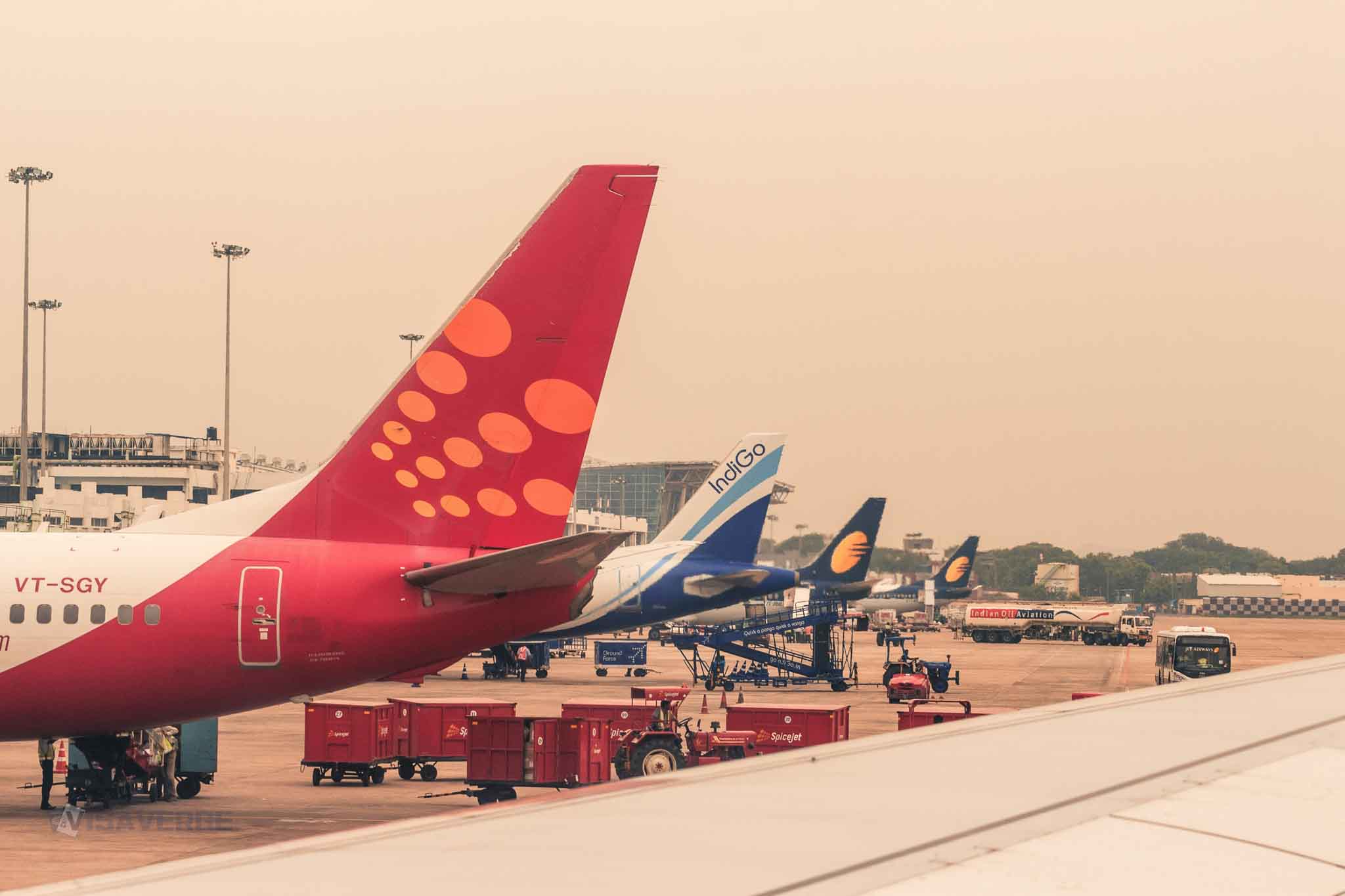
Sustainable Aviation Fuel (SAF) is a drop-in replacement for conventional jet fuel that can cut lifecycle emissions, depending on how it is made and verified. Think of it like a “cleaner batch” mixed into the same fuel system, rather than a new engine technology.
Free toolSubstantial Presence Test CalculatorIndia’s plan centers on international flights because that is where global rules bite first. ICAO’s Carbon Offsetting and Reduction Scheme for International Aviation (CORSIA) becomes mandatory from January 2027 for member states, creating a compliance reason for airlines to either buy eligible emissions units or use eligible SAF to reduce reported emissions.
India also opted out of CORSIA’s voluntary phase that started January 2025. That choice adds urgency for a clear domestic blending rulebook ahead of 2027.
2) Blending roadmap and targets
A blending mandate sets a minimum share of SAF that must be mixed into aviation turbine fuel for covered flights. For airlines, it works like a “floor” on SAF usage rather than a one-off pilot program.
India’s phased targets for international flights are designed as a ramp, not a jump. The numbers are modest at first, then rise as supply chains mature.
Table 1: SAF targets and timeline (international flights)
| Target | Year | Notes |
|---|---|---|
| 1% | 2027 | Intended to align with CORSIA becoming mandatory from January 2027 |
| 2% | 2028 | Next step in the phased ramp-up for international operations |
| 5% | 2030 | Longer-step target aligned with rising global SAF demand |
A second piece of the roadmap is total volume. To meet CORSIA obligations through 2030, India’s aviation sector is projected to need about 0.72 billion liters of SAF on a cumulative basis. That figure matters for producers and refiners because it frames the scale of plants, feedstock contracts, and airport blending systems.
3) Feedstock readiness and production pathways
SAF isn’t one fuel made one way. It is a category of fuels made from different inputs (called feedstocks) and conversion methods, each with its own cost and scaling limits.
India’s near-term advantage is feedstock availability that can support more than one route to SAF:
- Surplus ethanol can support Alcohol-to-Jet (ATJ), where alcohol is converted into jet-range hydrocarbons.
- Biomass can support additional biofuel supply chains that, in many cases, already have domestic experience from other fuel-blending programs.
Deepak Ballani of ISMA – Indian Sugar and Bio-Energy Manufacturers Association has pointed to biomass availability as scalable. That matters because SAF growth tends to stall when feedstocks are scarce or contested by other uses. Ethanol surplus also helps ease a common worry: that SAF will crowd out domestic blending needs in other transport fuels.
4) Infrastructure, supply chain, and industry collaboration
Mandates live or die at airports. A refinery can make SAF, but airlines still need it certified, transported, stored, blended, and delivered through existing hydrant systems without operational headaches.
In India, aviation turbine fuel (ATF) supply already relies on major fuel players. Airports such as Delhi International depend on supply chains involving IOCL – Indian Oil Corporation Ltd., BPCL – Bharat Petroleum Corporation Ltd., and HPCL – Hindustan Petroleum Corporation Ltd. That existing network is a starting point for SAF blending, because the same parties often manage fuel logistics and quality control.
Land and storage constraints are a practical barrier. Industry discussions have included using Memorandums of Understanding (MOUs) to address land constraints tied to new tanks, blending skids, and supporting infrastructure near airports.
A concrete signal arrived with the Air India–IOCL MOU for SAF supply, dated August 19. MOUs do not guarantee volumes or prices, but they can accelerate coordination on specifications, delivery points, and timelines.
5) Policy development and regulatory framework
Regulation is the “instruction manual” for a blending mandate. Without it, airlines and producers face avoidable risk: uncertain compliance rules, unclear eligible fuel pathways, and unclear documentation requirements.
India’s Ministry of Civil Aviation is finalizing a National SAF Policy aimed at providing regulatory certainty and investment signals. The indicative 1% blending level is being treated as a starter step that can be enforced and audited, while still leaving room for scaling.
✅ Readers should monitor policy updates from the Ministry of Civil Aviation for the final National SAF Policy and 1% blending mandate implementation timelines.
A well-written policy typically clarifies which international flights are covered, what counts as eligible SAF, how emissions benefits are claimed under CORSIA, and how penalties or corrective actions may work. Specific details may evolve as the policy is finalized.
6) Economic outlook and market opportunity
SAF usually costs more than conventional jet fuel because it is newer, produced in smaller volumes, and often requires extra processing and certification. Blending mandates spread that premium across the fuel pool, which can soften the immediate impact per flight, though outcomes vary by market and procurement terms.
⚠️ Heads up on premium SAF cost: initial costs may be higher, but expected to moderate as production scales.
Industry expectations in India are that blended ATF costs can remain manageable as domestic production expands, similar to how other clean-energy technologies tend to become cheaper with scale. Still, price paths depend on feedstock costs, plant financing, and global demand pressures.
India has framed the upside as a $3 billion SAF market opportunity, supported by biomass resources and refining capabilities. For fuel suppliers, that is not just a climate story. It is also a new product category with export relevance if domestic certification and traceability meet international buyer requirements.
7) Global context and comparative mandates
CORSIA is the immediate global driver for international routes. From 2027, it requires airlines to address emissions above 2019 levels, typically through eligible offsets and eligible SAF claims.
ICAO has also pointed to a 5% emissions reduction via SAF by 2030 as a global direction of travel. Countries are reacting with mandates that start small and rise over time, using blending requirements to build supply.
Table 2: Global context and regional comparison
| Region/Country | Initial Mandate | Key Targets |
|---|---|---|
| EU (ReFuelEU) | 2% from 2025 | 6% by 2030, 70% by 2050 |
| Singapore | Voluntary to 2026, then mandatory | Starts January 1, 2027 |
| Brazil | 1% annually from 2027 | 10% by 2037 |
| UK | 2% from 2025 | 10% by 2030, 22% by 2040 |
| India | 1% by 2027 (international flights) | 2% by 2028, 5% by 2030 |
India’s decision to opt out of the voluntary phase starting January 2025 makes the domestic runway shorter. The policy and supply build-out needs to be ready for a mandatory world in January 2027.
8) SAF pathways and production outlook
Near-term global SAF production is dominated by a few conversion routes, largely because they are commercially ready and have clearer certification histories.
Table 3: Pathways and share of production
| Pathway | Share of near-term output |
|---|---|
| HEFA | 66% |
| ATJ | 23% |
HEFA (often made from oils and fats) accounts for 66% of near-term output. Alcohol-to-Jet (ATJ) sits around 23%, and it links directly to India’s ethanol position.
For India, the production outlook is shaped by two parallel realities. Global demand is rising fast due to mandates, and domestic blending targets are being set on a predictable ladder. That combination can support investment cases, provided the final policy defines eligibility, sustainability criteria, and credible tracking of emissions benefits under CORSIA.
9) Strategic vision: Green Flight Path and Net Zero 2070
India’s SAF plan sits inside a wider aviation decarbonization story. The stated strategic direction is a “Green Flight Path” that connects SAF growth with 2G biofuels and government–industry coordination.
Net Zero by 2070 is the long-term marker, but the near-term test is simpler: can India build a reliable SAF supply chain for international flights before January 2027, and then scale to 2% and 5% without bottlenecks?
For airlines, fuel suppliers, and airport operators, the most time-sensitive step is aligning procurement and infrastructure planning with the final National SAF Policy timeline—because mandates only work when compliant fuel can be delivered where aircraft actually refuel.
—
This article discusses policy developments and market projections for SAF in India. Figures are based on industry and government statements and may change with policy updates.
Readers should consult official government sources for the latest policy timelines and regulatory guidance.
India Prepares Sustainable Aviation Fuel Push Ahead of Corsia Rules
India’s aviation sector is transitioning toward sustainability with a phased SAF blending mandate for international flights beginning in 2027. By leveraging domestic agricultural residues and ethanol, the country plans to meet rising global emissions standards while fostering a new $3 billion industry. Success depends on finalizing the National SAF Policy and upgrading airport infrastructure to handle blended fuels efficiently before mandatory global deadlines arrive.