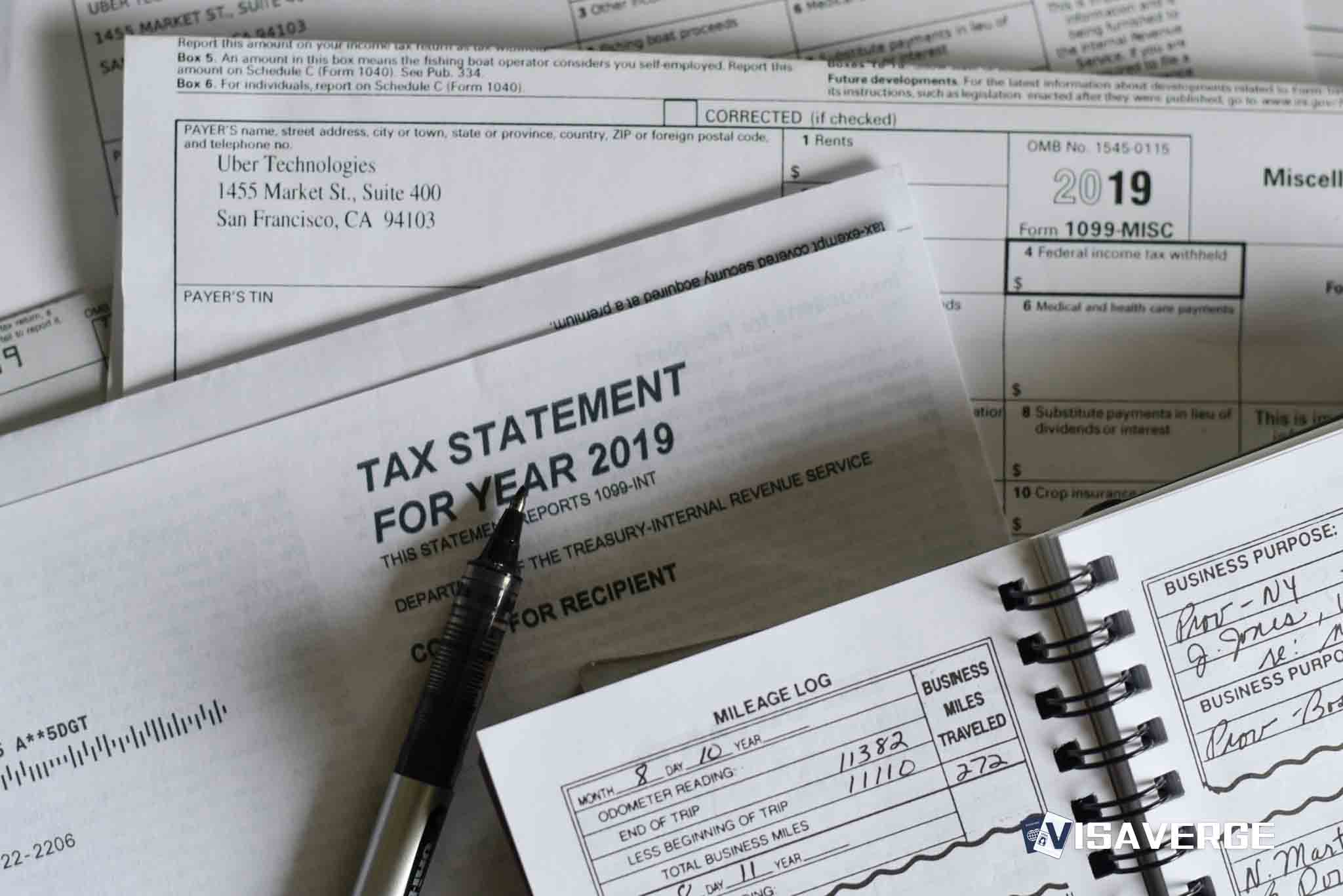
For tax year 2026, filed in 2027, holding cryptocurrency as its value rises generally does not create taxable income by itself. Selling, swapping or spending it can trigger a reportable gain or loss. Staking and other rewards may count as income when the taxpayer gains control, even before selling.
Checked against the IRS
For tax year 2026, filed in 2027, a rise in a cryptocurrency’s value generally does not create a tax bill while the asset remains unsold. The IRS treats digital assets as property. An unrealized gain is not taxable merely because a market price rose.
The IRS explains in Publication 550: “The general tax principles that apply to property transactions apply to transactions using digital assets.” That rule separates a change in value from a transaction that realizes income or gain. For filers, crypto tax usually turns on what they did with an asset, not its quoted price.

Bitcoin illustrates the difference. It rose from about $64,083 on July 24, 2026, to about $84,185 on October 22, a 31% increase. A holder who kept the coins did not generally owe tax on that appreciation alone. Bitcoin was also down 22% over the previous year.
The activity, not the wallet balance, decides whether a transaction counts
The digital-asset question on the return covers transactions, not simply whether someone owns cryptocurrency. The 2026 instructions distinguish actions that generally do not require a “Yes” from those that do.
| Situation | Answer | Why or condition |
|---|---|---|
| Keeping a digital asset in a wallet or account | No, by itself | Holding alone generally does not create taxable income. |
| Moving assets between wallets or accounts you own or control | No, by itself | A transfer between your own accounts is not a taxable disposal. |
| Buying digital assets with U.S. or other real currency | No, by itself | The instructions include purchases through platforms such as PayPal and Venmo. |
| Receiving digital assets for property or services, as a reward or award, or through mining or staking | Yes | Receipt may create income, depending on the transaction and when you gain control. |
| Receiving assets from a hard fork | Yes | The instructions identify this as a reportable event. |
| Selling, swapping, spending or otherwise disposing of a digital asset | Yes | The asset given up may produce a taxable gain or loss. |
| Giving crypto as a gift | Yes | The instructions include gifts; a gift may also require Form 709, United States Gift Tax Return. |
Every filer must answer the digital-asset question with “Yes” or “No,” even if they do not own digital assets. The response cannot be left blank. A “Yes” answer does not by itself establish that tax is owed; it flags activity that may need to be reported.
A swap or a purchase with crypto can count as a sale
Trading one coin for another is a disposal of the coin surrendered. The tax result can arise even when the transaction produces no dollars in the taxpayer’s bank account.
Someone who bought one Bitcoin for about $64,083 in July 2026 would have a paper gain of roughly $20,100 by late October, based on the cited price example. Swapping that Bitcoin for Ethereum is treated as a sale of the Bitcoin, potentially triggering tax even though the holder received another digital asset instead of cash.
Spending crypto also disposes of it. Using Bitcoin to buy a laptop exchanges the Bitcoin for property, so the transaction can create a taxable gain or loss. Paying for services with crypto is reported on Schedule C of the return.
Losses follow the same realization principle. A person who bought one Bitcoin for about $107,586 in October 2025 and saw its value fall by about $23,400 cannot claim that loss while still holding it. The loss becomes reportable only after a sale or other taxable disposal.
Staking rewards can be income before the tokens are sold
Staking is a major exception to the idea that tax waits until a sale. Under Rev. Rul. 2023-14, the IRS says validation rewards enter gross income for the tax year in which the taxpayer gains dominion and control over them. Their value is measured at that time.
The Tax Court upheld that approach on June 4, 2026, in Paschall v. Commissioner, T.C. Memo 2026-46. The court held that a cash-method taxpayer had to include staking rewards in gross income upon receipt. The taxpayer had control over the tokens, faced no restriction on selling them and could convert them to cash.
“the fair market value of the validation rewards received is included in the taxpayer's gross income for the taxable year in which the taxpayer gains dominion and control over the validation rewards.”
The case concerned Cardano tokens staked through eToro’s service, which launched October 1, 2020. The taxpayer received monthly rewards in Cardano and petitioned over a deficiency and accuracy-related penalty tied to failing to report $33,354 in other income.
The receipt rule also applies to crypto received for goods or services and to mining, under Notice 2014-21. The fair market value is included in gross income for the year the recipient obtains dominion and control. The same notice treats convertible virtual currency as property for federal income tax purposes.
For staking income not captured elsewhere, the instructions direct filers to Schedule 1, line 8v. A gift can require Form 709. Those reporting requirements are separate from any later gain or loss when the recipient sells or disposes of the tokens.
Filers should answer the digital-asset question and match each disposal to records
A “Yes” answer is generally required if a filer received digital assets for property or services, mined or staked crypto, received a hard-fork asset, sold or exchanged an asset, or made a gift. The return should reflect the specific transaction, not simply the answer to the question.
For assets held as capital investments, the filing steps depend on a disposal:
- Record the asset received or disposed of, the transaction date and its value.
- Use Form 8949 to calculate the capital gain or loss from a disposal.
- Report the result on Schedule D.
- Keep records of cost basis, including where assets moved between platforms.
Crypto held more than a year may qualify for lower long-term capital-gains rates. Assets held a year or less are taxed at ordinary income rates. The holding period and basis therefore affect the result even when the return reports the same kind of transaction.
Broker statements may not supply all the information needed. During the 2025 filing season, brokers generally had to report proceeds on Form 1099-DA but not cost basis. They had to send taxpayers the same information reported to the IRS by Feb. 17, 2026, and most statements for 2025 transactions did not include basis.
That left filers to calculate gains and losses themselves. In an August survey of 1,000 U.S. crypto investors, Awaken Tax found that 21% of respondents who had filed or planned to file an extension were still waiting for information from an exchange or platform. A further one in five said their statement was incomplete or they were unsure it accurately reflected their transactions.
Chris Herbst, managing director of CountDeFi tax reporting, said active traders may see reported proceeds far exceed their real gain when each sale appears without its cost. One client’s statement showed under $100,000 in stablecoin proceeds despite more than $300,000 in trades.
The 2026 rules will require basis reporting for “covered” assets, but transfers from other platforms may still leave gaps. CoinTracker’s 2026 data found that only 49% of users knew selling cryptocurrency can trigger capital-gains tax.
Congress is considering changes, but current rules still apply
On October 22, the Blockchain Association sent a letter urging bipartisan legislation to the top four congressional leaders: John Thune, Chuck Schumer, Mike Johnson and Hakeem Jeffries. The lobbying group represents more than 100 members and cited an estimated 67 million Americans who hold or use digital assets.
The association asked lawmakers to treat stablecoins as cash for tax purposes, tax mining and staking rewards only when sold, exempt small transactions through a de minimis rule, and limit broker reporting to intermediaries that hold customer assets. Those proposals would change the treatment described above; they are not current law.
The House Ways and Means Committee approved the Digital Asset Tax Certainty Act, H.R. 10357, on September 16 by a vote of 38 to 5. The bill would direct the Treasury Secretary to establish a voluntary disclosure program within 12 months of enactment. Eligible taxpayers could correct past violations through amended returns and pay outstanding tax, interest and applicable penalties.
Participants generally would have 24 months from the program’s establishment to file amended returns. A taxpayer who certified under penalty of perjury that a violation was neither fraudulent nor intentional and filed within the first 12 months would face a 0% penalty on tax due up to $25,000 per year and a 5% penalty above that amount. Without that certification, the proposed penalty tiers would be 25% and 40%; additional tax increases would follow after the initial window closed.
The bill also proposes civil-penalty exemptions for taxpayers who disclose required information, including protection from criminal referral within the scope of those disclosures. It still needs approval from the full House and Senate and the president’s signature. The bipartisan ADAPT Act, which mirrors the industry’s requests, is also advancing in Congress amid lobbying ahead of the November elections.
Neither proposal changes the treatment of transactions now. This article is for informational purposes only and does not constitute tax advice. Consult a qualified tax professional or CPA about your specific situation.