President Donald Trump announced a $25 million federal fund for fraud tips on October 20, 2026, as Texas Attorney General Ken Paxton pursued a separate H-1B visa crackdown. The Department of Justice will administer the Fraud Whistleblower Incentive Program, or WHIP, which invites Americans to report suspected fraud involving government programs.
Texas officials have not described Paxton’s investigation as part of the new federal reward program. His office says its inquiry targets suspected H-1B fraud at businesses allegedly operating “ghost offices.”

The announcement also came amid a separate congressional push to raise penalties for H-1B violations. U.S. Representative Beth Van Duyne introduced a bill, but Congress has not enacted it.
Texas investigators target alleged H-1B ghost offices
Paxton’s office said it issued Civil Investigative Demands to nearly 30 North Texas businesses. The ongoing inquiry concerns suspected abuse of the H-1B program, including allegations that some firms falsely represented active offices to sponsor workers.
The businesses named by the office include Tekpro IT LLC, Fame PBX LLC, 1st Ranking Technologies LLC, Qubitz Tech Systems LLC, Blooming Clouds LLC, Virat Solutions, Inc., Oak Technologies Inc, Techpath Inc., and Techquency LLC. The allegations remain under investigation.
The federal reward amount and eligibility rules remain unsettled
The administration directed Americans to report suspected government-program fraud through Fraud.gov and America.gov/fraud. It advertised rewards of up to $30,000, calculated as a 1 percent commission on the total dollar amount of fraud uncovered through a tip.
A White House official said payment would depend on a successful prosecution or government enforcement action. Another description of the program said tips must lead to a verifiable prosecution or plea agreement. Trump appeared to suggest at the announcement that rewards would have no limit, leaving the advertised cap in doubt.
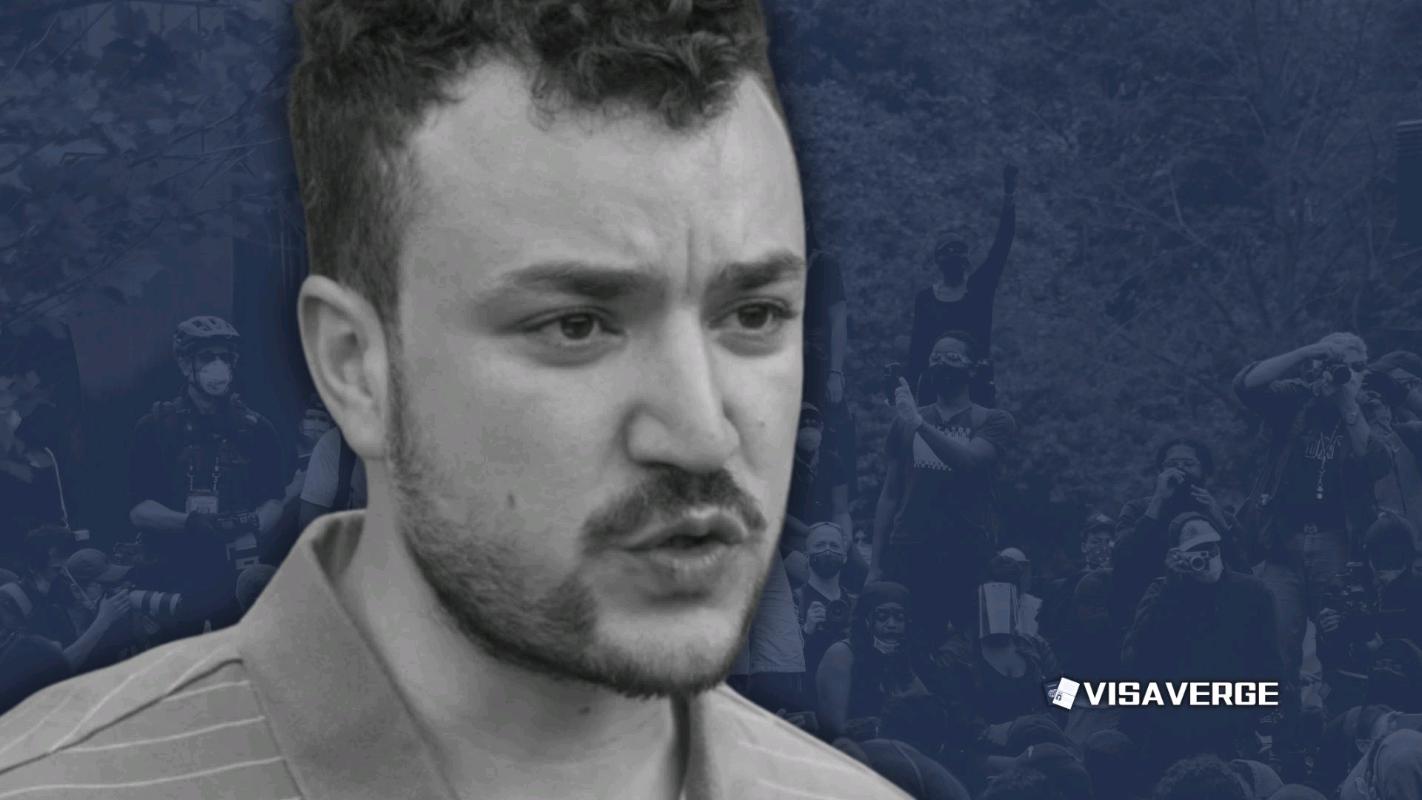
Nick Shirley, an independent journalist known for a viral video alleging day care fraud in Minnesota, was due to receive the first $10,000 check. A woman featured in the video was later charged with fraud. Shirley attended the announcement and said:
“There's never been an incentive for anyone to ever expose fraud”
Vice President J.D. Vance, who leads the White House anti-fraud task force, said the administration wanted people who help recover money to share in the benefit. He argued the False Claims Act does not cover most of the fraud the administration says it is finding.
“Over 99 percent of the fraud that we're finding in the federal government isn't covered by the False Claims Act.”
The Justice Department already has a whistleblower route under that law. It allows individuals to file civil lawsuits on the government’s behalf and potentially receive part of its recovery. White House spokeswoman Lauren Bis said the task force was targeting taxpayer-fund abuse and pursuing accountability.
Van Duyne’s bill proposes steep new penalties for H-1B violations
Van Duyne, a Republican representing Texas’s 24th District, introduced H.R. 10643 on October 5, 2026. The proposal would increase civil fines, extend bans on future sponsorship, and strengthen penalties for immigration-document fraud.
| Violation | Proposed penalty or change |
|---|---|
| Covered willful H-1B violations, such as misrepresenting a job or underpaying a worker | Maximum civil penalty rises from $5,000 to $100,000 |
| Willful displacement of U.S. workers | Maximum civil penalty rises from $35,000 to $250,000 |
| Serious, willful violation | Minimum H-1B sponsorship ban rises from two years to five years |
| Violation involving worker displacement | Minimum sponsorship ban rises from three years to ten years |
| Covered immigration document fraud | $1,000 to $10,000 per document; after a prior order, $20,000 to $50,000 per document |
The bill would give federal enforcement agencies stronger tools, reserving the highest H-1B penalties for cases involving displacement of U.S. workers. It is co-sponsored by Texas Republicans Brian Babin, Pat Fallon, Brandon Gill, Keith Self, and Pete Sessions.
Van Duyne said the existing maximum fine could be treated as a business expense by employers willing to break the law. “When a business can lie to the government and push American workers aside for cheaper labor, and the worst it faces is a $5,000 fine, many view that as the cost of doing business. The H-1B Visa Fraud Crackdown Act changes the penalties. American jobs should go to American workers, and fraudsters should face real accountability for their actions”.
She also said she welcomed the administration’s response and argued employers who break the law to undercut workers should face major penalties. The measure remains a proposal.
Trump’s task force promoted fraud claims and enforcement actions
At the White House event, Trump credited his administration with uncovering $260 billion in fraud, a figure he said was “peanuts compared to what the real number is.” He cited Minnesota, saying 115 people had been arrested and charged, 75 had been convicted, and authorities had issued 2,700 fraud-related subpoenas.
Trump called Minnesota Gov. Tim Walz “100 percent guilty,” then accused him of being “a fraud,” “a thief,” and “a crook.” Those were the president’s accusations. He also said the administration had waged an “unprecedented war on corruption and fraud.”
Trump listed actions his administration said it had taken: removing 160,000 dead people from food stamps and 275,000 undocumented immigrants from Social Security; identifying 562,000 fraudulent small-business loans; stopping funding to hospice facilities estimated to have stolen $1.4 billion; and eliminating $125 billion in Obamacare subsidies. He argued that stopping fraud could help reduce the federal deficit.
Federal Trade Commission Chair Andrew Ferguson, the task force’s vice chair, and Centers for Medicare and Medicaid Services Administrator Mehmet Oz also attended, as did White House Deputy Chief of Staff Stephen Miller. Oz said the Department of Health and Human Services was deferring $1.2 billion in California funding in response to the state’s Stop Nick Shirley Act, which Trump described as protecting fraudsters.
Ferguson said authorities had filed to seize property covering half a city block in Minneapolis, alleging it was bought with SNAP funds intended for hungry residents. He said the administration had proposed two fraud bills to Congress, including one that would establish mandatory-minimum sentencing. Miller argued that middle-class taxpayers had spent years paying for fraudsters and scammers.
North Texas findings sit alongside wider visa investigations
Earlier this year, Van Duyne joined Reps. Pat Fallon, Ronny Jackson, and Brandon Gill in asking Vance, Secretary of State Marco Rubio, then-Acting Secretary Sonderling, and Secretary Markwayne Mullin to investigate suspected H-1B fraud in North Texas.
Van Duyne said Mullin confirmed that, as of June 2026, nearly 60% of nationwide employer H-1B fraud investigations were concentrated in North Texas. In August, Labor Department Inspector General Anthony D'Esposito visited the region and found nearly 500 instances of likely H-1B fraud in one building. At addresses he visited where H-1B applications had been approved, no one answered the door.
The inquiries extend beyond H-1B. Vance said Microsoft and seven other companies had been suspended from a program that lets businesses seek permanent residency for foreign workers. D'Esposito also said he was investigating possible visa fraud at nine universities, including allegations involving J-1 visas, wage practices, and foreign researchers.