


- Recent 2025-2026 memos expanded ICE enforcement authority for administrative warrants and warrantless arrests.
- Crucial differences exist between judicial warrants and Form I-205, which lacks entry authority without consent.
- Growing scams use fake credentials to demand immediate cash payments from vulnerable families and businesses.
ICE raids, worksite audits, and home enforcement have become harder to tell apart from scams, and that confusion now carries real risks for immigrant families and employers. In 2025 and 2026, ICE expanded I-9 audits, site visits, and residential enforcement, while impersonators used fake badges and threats to steal money or personal data.

The biggest change is the use of Form I-205 (administrative warrants) in more forceful home entries after a May 12, 2025 memo from Acting Director Todd Lyons. A January 2026 memo then lowered the threshold for warrantless arrests, allowing officers to detain suspected undocumented people when they believe flight risk exists.
VisaVerge.com reports that those shifts have raised the stakes for every knock on the door and every unannounced visit at work.
Enforcement pressure has changed the first question people ask
Before anyone opens a door or hands over records, the first task is verification. Real ICE operations follow federal procedures. Scams do not. That difference matters because the consequences are immediate: a mistaken home entry can lead to detention, a bad workplace response can trigger fines, and a fake raid can strip a family of savings in minutes.
The enforcement climate also affects employers in construction, hospitality, and other industries that have seen more audits and compliance checks. Worksite actions now include I-9 audits and H-1B or L-1 visa compliance visits. A Notice of Inspection starts the record review, and employers get 3 business days to produce the forms.
What real agents usually show
Authentic agents identify themselves, but their appearance is not always the same. Some wear vests or jackets marked “ICE” or “POLICE.” Others wear plain clothes during audits or site visits. The key is not clothing alone. The key is documentation and conduct.
Real agents should show federal credentials with a photo, name, badge number, and DHS or ICE seal when asked. They do not demand on-the-spot cash. They do not ask for “fines” at the door. They do not need to shout or threaten people to make lawful contact.
Group size also helps. Raids and audits often involve several agents. Scammers more often work alone or in pairs. That pattern is not a guarantee, but it is a warning sign.
Form I-205 and judicial warrants are not the same
A major source of confusion is the difference between Form I-205 (administrative warrants) and a judicial warrant. They are not interchangeable.
Administrative warrants can authorize arrest or detention for immigration violations. They do not give private entry into homes or nonpublic business areas without consent. A judicial search warrant, by contrast, is signed by a federal judge or magistrate and can authorize entry into the places listed on the warrant.
That distinction matters because the May 2025 ICE memo changed how agents use administrative warrants in homes with final removal orders after knock-and-announce procedures. Reports in summer 2025 described forced entry in some cases. A January 2026 memo widened arrest authority again. Those changes make careful document checks essential.
A real judicial warrant usually includes:
- A judge’s signature
- A specific address
- A date range
- A clear description of the place or person covered
An administrative warrant usually shows DHS or ICE markings, but no judge’s title. If the paper lacks judicial approval, it does not allow entry into a private home.
Red flags that point to a scam
Impersonators often rely on fear. They use fake badges, forged papers, and urgent threats to push people into opening doors or paying immediately.
Common warning signs include:
- No credentials, or credentials that look fake
- Demands for cash, “fees,” or payment right away
- Yelling, rough behavior, or pressure to act fast
- A warrant with no judge’s signature
- Inconsistent answers about office, badge number, or purpose
- A demand to enter before any papers are shown
A scammer may sound official. That is the point. The safest response is to slow the interaction and ask for proof.
What to do during an encounter
The safest approach is simple and calm.
- Stay quiet and keep hands visible. Say, “I want to see a warrant and speak to my lawyer.”
- Ask for identification and the warrant. Note names, badge numbers, vehicles, and the number of agents present.
- Read the paper carefully. Check for a judge’s signature, exact address, and date.
- Verify independently. Call the local ICE office using a number from ICE’s official website, not a number given by the agents.
- Write everything down. Record time, place, actions, and witnesses.
For homes, the rule is direct: do not open the door without a judicial warrant or consent. For workplaces, a trained point person should handle the documents, call counsel, and keep staff calm.
Rights that apply in homes and workplaces
People have the right to remain silent. They also have the right to ask for a lawyer. Those rights apply even when the agents are real.
ICE cannot search beyond the scope of a valid judicial warrant. In private homes, an administrative warrant alone does not open the door. In workplaces, employees can remain in public areas, but private spaces need proper authority. U.S. citizens and mixed-status families have those same core protections.
People should not hand over answers, passports, or other documents without first deciding what the agents are asking for. Silence is often the safest answer until a lawyer is involved.
Why employers need tighter records now
The rise in I-9 audits means employers need cleaner files and faster responses. Errors in a Form I-9 can lead to penalties that run into the thousands of dollars per violation. Repeated mistakes can become much more expensive.
Employers should keep records in one place, train staff on reverification, and assign one person to verify identities and warrants during any visit. Many businesses also use quarterly self-audits to catch errors before the government does. The current version of Form I-9 is the baseline document for that work.
Families are planning for the worst
Families are also changing daily habits. Many now keep lawyer numbers written down, store copies of immigration papers in safe places, and teach children not to open the door. Some post signs that say no entry without a judicial warrant.
Those steps do not stop enforcement. They do reduce panic. They also reduce the chance that a scammer can pose as ICE and force a family into paying money they do not owe.
The pressure from Form I-205 (administrative warrants), expanded home enforcement, and more I-9 audits has created a sharper line between lawful action and fraud. Knowing how to check that line is now part of daily safety planning for many immigrant households and businesses.



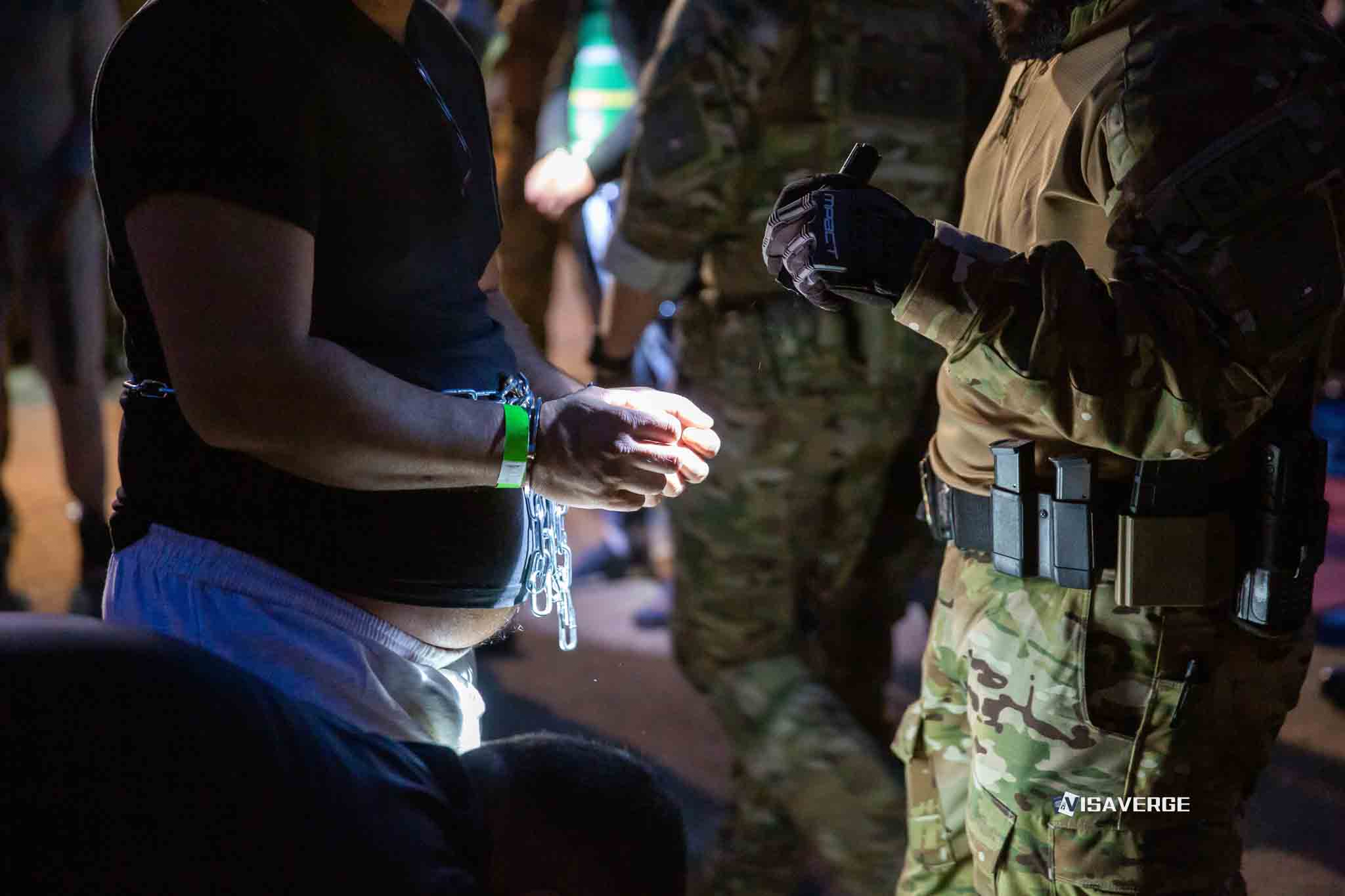





Mr. Pyne, have you watched any of the ICE raids and arrests? They are posted on Facebook, Instagram and TicTok so you cannot miss the inhumane treatment that is happening to not only immigrants and American citizens. Based on your article none of these ICE arrests are legit. What about the face mask that these agents wear to hide their faces to scare and cover their ID because they are threating, assaulting, using stun guns even thou they are not resisting. They are just grabbing brown skin people and kidnapping them. ICE has never asked the immigrates their names or to show their ID & Green Card. All that matters is their skin being brown to these thugs because they are being paid bonus. When they are asked to see a warrant, they say they do not have one. When demanded to see their ID and badge numbers, they reply they don’t have one. If they are wearing a badge, it does not have a name or ID number on it. Most of the time when bystanders demand to see the warrant and for them to ID themselves. ICE threats to arrest the bystander. What your article may have been helpful with a different administration that respects the constitution. Since this administration deported people without due process, it is important that you write how immigrates can protect themselves during these unlawful arrests.