


- Verify identity by asking for names and badge numbers to avoid rising impersonation scams.
- Distinguish between judicial and administrative warrants before allowing any residential entry.
- Exercise your constitutional right to remain silent and refuse consent to searches without legal counsel.
ICE encounters now hinge on two things: identity checks and warrant checks. That matters because impersonation scams rose sharply in 2025, while ICE also expanded pressure on people to accept Form I-205 administrative warrants during residential entries.

For immigrants, employers, and families, the danger is not only arrest. A fake agent can steal money, force a rushed signature, or enter a home by exploiting fear. VisaVerge.com reports that the new mix of masked officers, administrative warrants, and copycat scams has made calm verification more important than panic.
First signs at the door, on the street, and at work
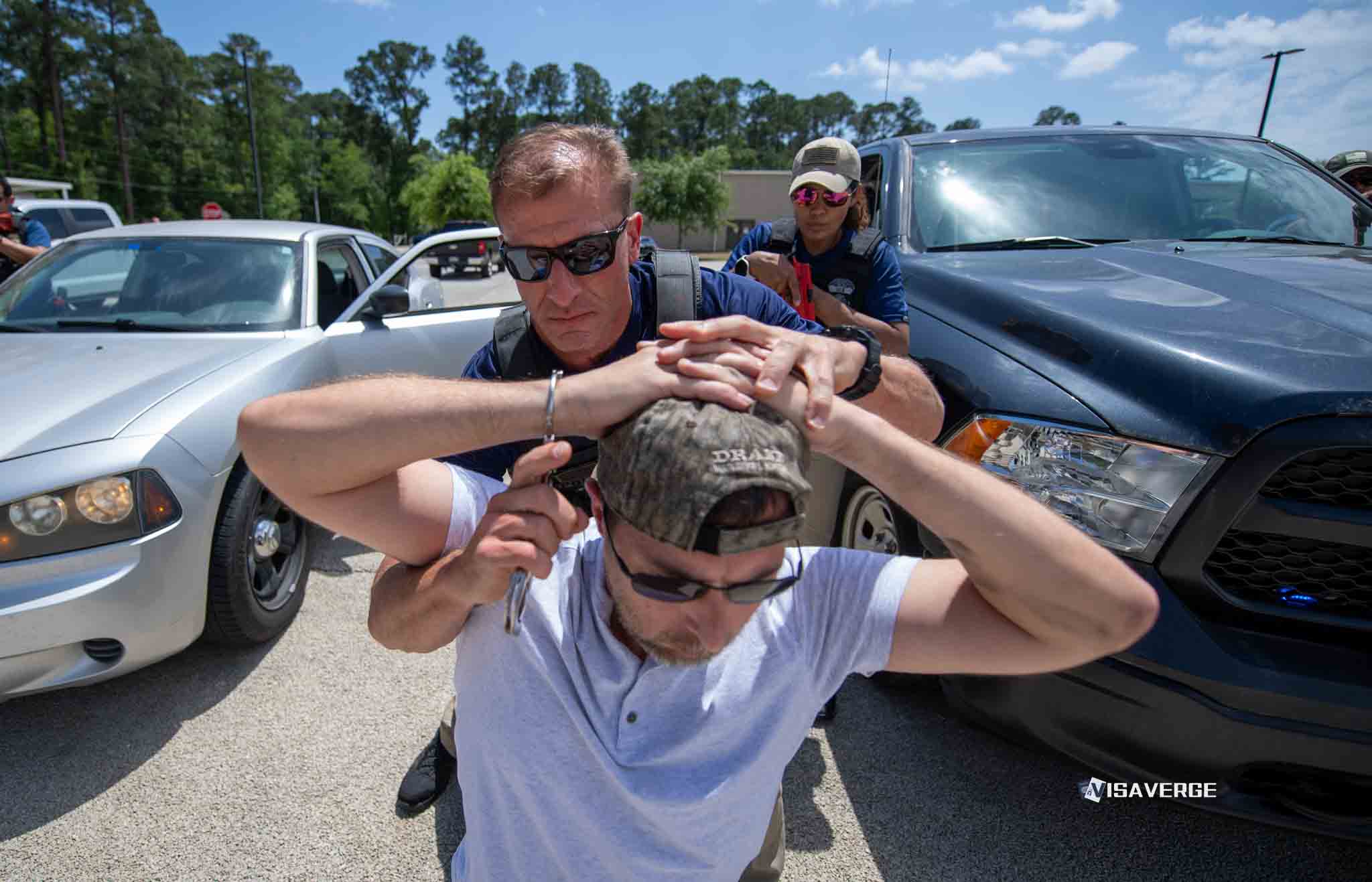
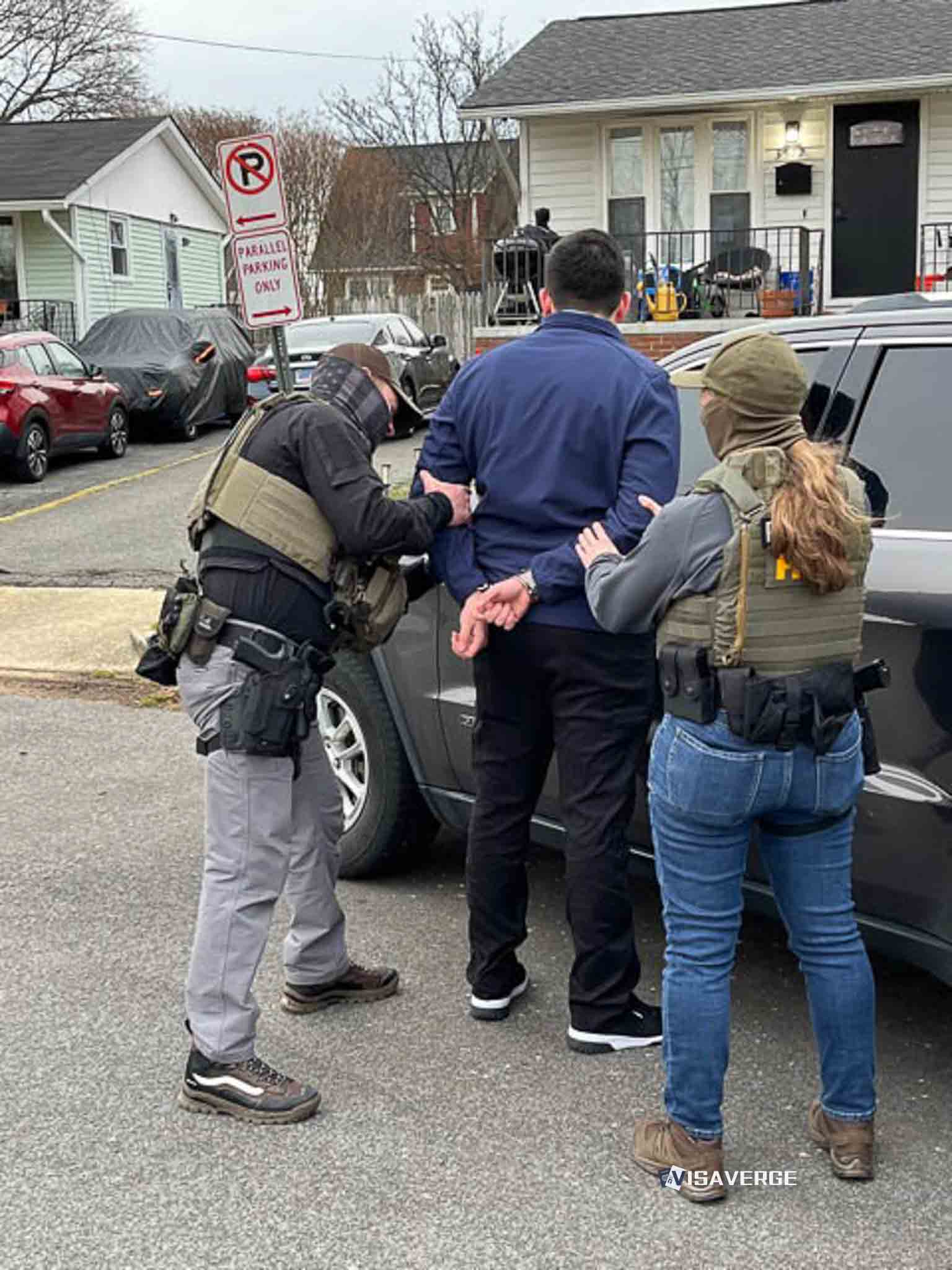
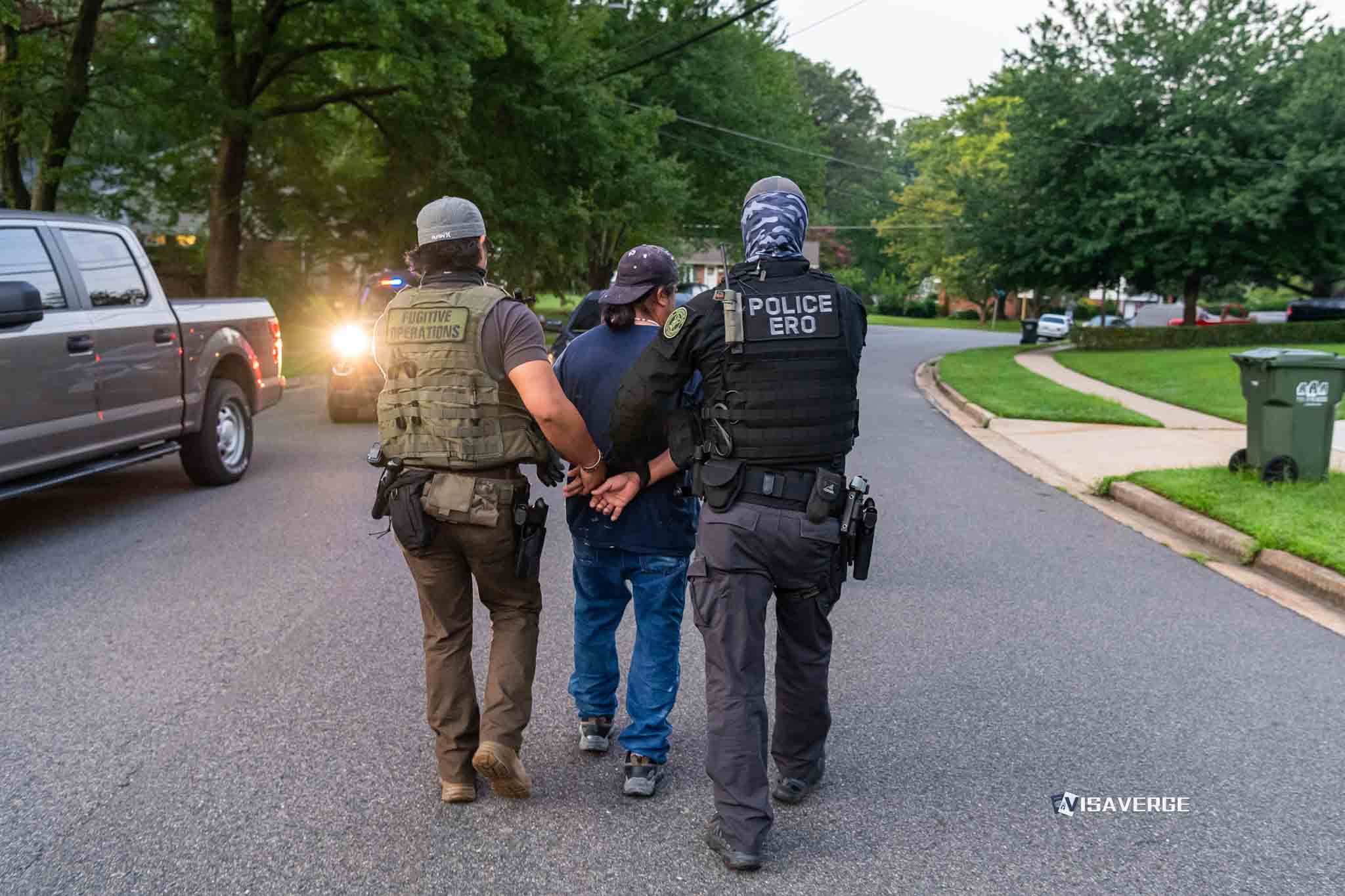
Real ICE officers often wear plain clothes with black vests marked ICE, HSI, or Department of Homeland Security. Some wear masks. Some do not. That makes visual checks useful, but never enough on their own.
Start with direct questions. Ask: “Which federal agency are you from?” Then ask for the person’s name, badge number, and purpose. Legitimate officers should answer clearly. Record the answers exactly as given.
Look for these clues:
- A shield or badge with a unique number
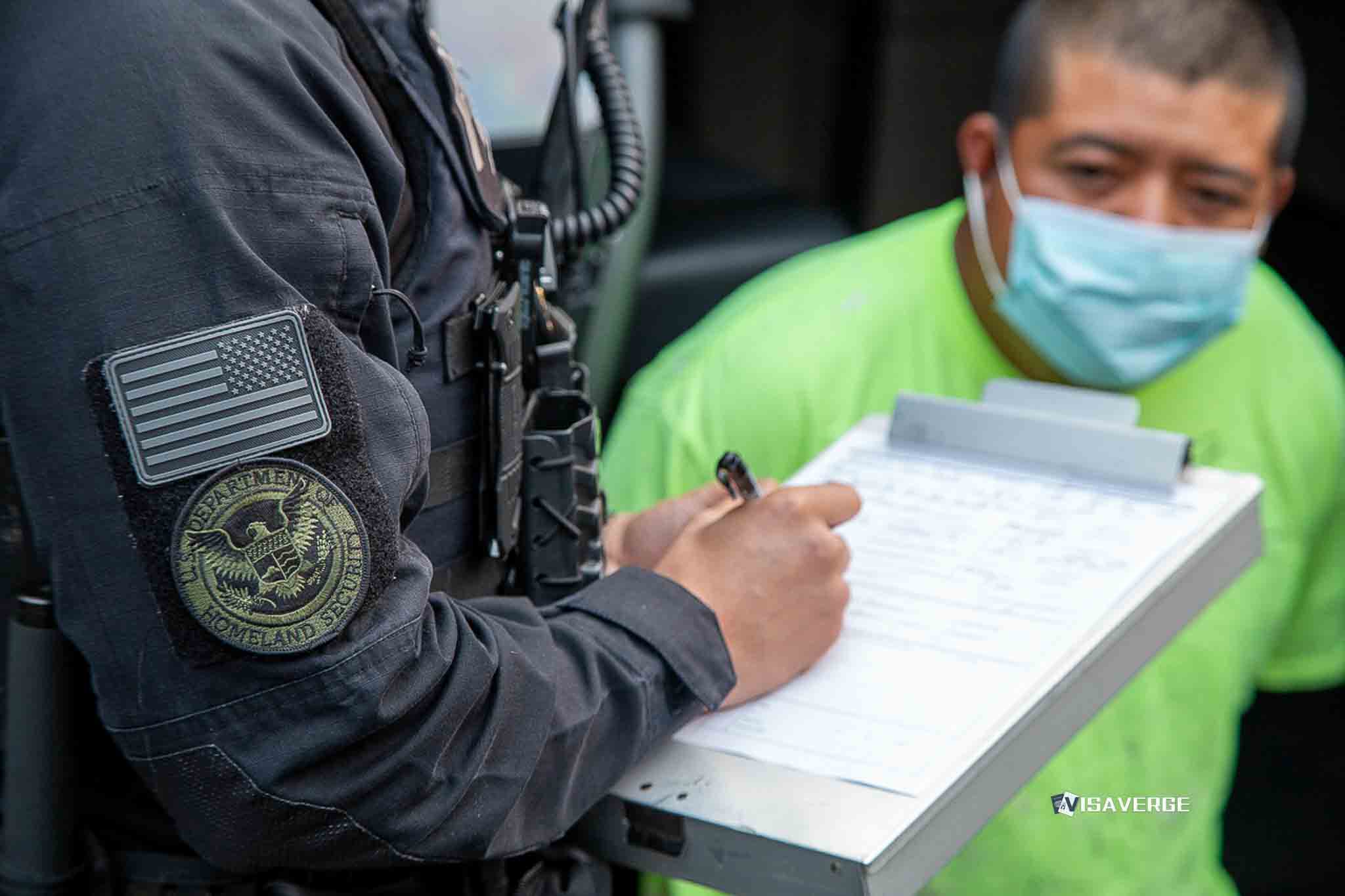
- A DHS credential card with a photo, full name, title, and expiration date
- Federal markings on a vehicle, when present
- A business card with official contact details
Do not rely on a vest alone. Local police, Border Patrol, and scammers can copy the look. That is why plainclothes raids and masked operations have caused so much confusion in 2025 and early 2026.
The credentials ICE must show
When an officer knocks at your home, you can ask to see identification through a closed door or window. Federal agents are expected to identify themselves, and the documents matter.
Inspect the following:
- Badge: check the photo, number, and agency marking
- DHS credential card: check the name, title, seal, and expiration date
- Business card: check the agency name and contact details
If the photo does not match the person, or if the card looks altered, treat that as a warning sign. If it is unsafe to take the card, look at it from a distance and take a photo if possible.
Never use the phone number the officer gives you to confirm identity. Call ICE through a known number from the official website or contact the Department of Homeland Security Office of Inspector General at 1-800-323-8603. For general ICE information, use the official ICE website.
Why Form I-205 changed the stakes
The biggest policy shift in 2025 came from a May memo issued by Acting Director Todd Lyons. Before that memo, ICE administrative warrants, including Form I-200 and Form I-205, did not authorize forceful entry into a home without a judge-signed warrant.
The memo said ICE could use administrative warrants for residential entries after “knock and announce.” That meant officers began relying on Form I-205 administrative warrants in ways that alarmed immigrants, lawyers, and civil rights groups.
A judicial warrant is different. It is signed by a federal judge, names the person and address, and authorizes entry or search. An administrative warrant is signed by ICE. It does not carry the same authority, even though ICE’s 2025 memo tried to expand its use.
If officers present a paper at your door, keep the door closed. Ask them to slide it under the door. Read it carefully. A judicial warrant should show a judge’s signature, your name or address, and a recent date. If it is only an ICE document, do not open the door.
ICE forms mentioned in this context include Form I-205, Warrant of Removal/Deportation and Form I-200, Warrant for Arrest of Alien.
What to say, and what not to do
Your rights do not depend on immigration status. They also do not disappear because the officer sounds forceful or because other people are watching.
Use short, clear statements:
- “I am exercising my right to remain silent.”
- “I want to speak to a lawyer.”
- “I do not consent to entry or a search.”
- “I will not sign anything without legal advice.”
If you are a passenger in a car, you do not have to answer questions about status. The driver should show a license if asked. If you are a U.S. citizen, show proof of citizenship if needed, such as a valid passport or other accepted identification.
At work, ICE raids often begin with a Notice of Inspection for I-9 records. Employers should stay calm, designate one person to speak with officers, and document what happens. Workers do not have to volunteer immigration details.
How to document the encounter
The most useful record starts immediately. Write down the date, time, and location. Note badge numbers, names, vehicle details, and what the officers said. If you can do it safely, take photos or video of the badge, credential card, and warrant.
Witnesses also matter. A neighbor, coworker, or family member can help confirm what happened. This record becomes important later if you need a complaint, a defense, or proof that the people at the door were not who they claimed to be.
After the encounter, contact a lawyer or accredited legal aid group. You can also call the ACLU Know Your Rights hotline at 888-391-6032. To report misconduct, use the DHS OIG hotline at 1-800-323-8603. For complaints involving suspected fraud or threats, local police and FBI tips lines are also being used more often.
Why impersonation scams spread so fast
ICE’s public profile has made it a target for criminals. In 2025, impersonation cases reached record levels, with reports of masked fake agents, traffic stops, robbery attempts, assaults, and phone scams demanding payment.
The warning signs are consistent:
- Calls or texts demanding cash or gift cards
- Threats of immediate arrest without any documents
- Email addresses that are not .gov
- Websites that charge money for free immigration forms
- Vests marked only “POLICE,” with no ICE or DHS identification
California officials have described impersonation as a felony. The FBI has also warned that criminals use ICE’s visibility to scare people into compliance. The safest response is simple: slow down, verify, and never hand over money or documents without proof.
What the 2026 fight over visibility means
Lawmakers and civil rights groups are pushing back with bills that require visible names, badge numbers, and fewer masks during enforcement. Supporters say those rules protect the public from confusion and abuse. Critics inside DHS say officers need more protection after doxxing incidents and public leaks of personal data.
That fight will shape the next phase of ICE enforcement. For now, the practical rule is the same at every door, checkpoint, and workplace: verify the person, verify the paperwork, and do not open the door for an administrative warrant alone.



Can you confirm if ICE agents are allowed to refuse to identify themselves. I’ve seen many videos of people asking for identification and in many of those videos, the alleged agents respond with, “I don’t have to,” or something along those lines. If this is the case, there is no way for someone to know if they are actual ICE agents, volunteers with ICE, or a mugger. Are ICE agents and volunteers with ICE legally required to show ID? And if they don’t, are we legally protected if we defend ourselves/others being kidnapped by these people?
Hey there! I totally get your concern—it’s super important to feel safe and informed in these situations. ICE agents are definitely required to show official identification when asked. If someone claiming to be an ICE agent refuses to show their ID, that’s a big red flag. Always ensure they provide a government-issued badge and official credentials like a photo ID with an agency seal. If they don’t comply and you feel threatened, it’s within your rights to deny entry and contact local authorities for assistance. Stay safe, and don’t hesitate to ask for help if needed. ?
This just happened again in Seattle. A citizen asked an agent for his ID and the agent said he didn’t have to show any. The citizen disagreed, and the agent asked the citizen to show him the law requiring proof. The citizen didn’t have “the law” on him and the agent said, “I thought so.” Is there a law that can be printed and shown to an alleged ICE agent performing a traffic stop?