- New USPS rules delay postmark dates until mail reaches automated sorting facilities rather than collection times.
- Late postmarks can trigger IRS penalties and interest for taxpayers who mail paper returns on deadline day.
- Filers should request manual round-date postmarks at retail counters to guarantee proof of timely submission.
(UNITED STATES) — USPS changed its postmark rule on December 24, 2025, shifting the date used on mailed tax returns to when a piece first reaches an automated sorting facility and raising the risk that paper filings sent by a deadline will appear late.
The change affects the long-used tax doctrine known as the USPS postmark rule, or “timely mailed is timely filed,” because Internal Revenue Code § 7502 treats a return as on time if the envelope is postmarked on or before the filing deadline.
Free toolSubstantial Presence Test Calculator
Under the revised standard, the postmark no longer reflects when a taxpayer drops a return in a mailbox or hands it to a carrier. It reflects when the mail is first processed through USPS automation. A return deposited on April 15 can now receive a postmark dated April 16 or later.
USPS formalized the shift through a final rule, FR Doc. 2025-20740, in the Domestic Mail Manual. The revision codified an operational practice already in place at USPS facilities, where mail often receives its dated mark only after entering automated processing.
That practical change carries legal weight for tax filers because the timely mailed is timely filed rule depends on the date shown by USPS, not the date a taxpayer intended to mail the return. If processing happens after the deadline, the envelope can bear a late date even when the documents were sent before the cutoff.
Paper filers who wait until the last day face the sharpest risk. A return mailed before midnight on the due date can still end up with a later USPS date, placing the filing outside the protection of Internal Revenue Code § 7502.
The result can be costly. The IRS can impose penalties for late filing and late payment, and interest charges continue without a cap. A taxpayer who believed a paper return was safely mailed on time can end up disputing penalties tied to the postmark alone.
The problem does not stop with delayed processing. USPS postmark machines sometimes fail to apply a postmark at all, leaving the envelope without the dated imprint that taxpayers usually rely on to prove timely mailing.
Electronic filing avoids that issue entirely. An electronically filed return does not depend on a mail stream date, and it produces immediate confirmation that the submission reached the system.
Taxpayers who must file on paper have a narrower set of protections. The strongest step is to go to a post office retail counter and request a manual “round date” postmark, rather than dropping the envelope in a collection box. That hand-applied mark reflects the date the item is presented at the counter and is often treated as the “gold standard” for proving timely mailing.
Certified mail and registered mail add another layer of evidence because they generate a dated receipt showing when USPS accepted the documents. A Certificate of Mailing serves a similar purpose by documenting the mailing date on a receipt kept by the sender.
Timing now matters more than it did under the older understanding of the USPS postmark rule. Mailing paper returns 3-5 business days before April 15 gives the item time to move through automated processing before the deadline passes, reducing the chance that a return sent near the due date will receive a later mark.
That advice applies with particular force to forms that still cannot be filed electronically. `Form W-7`, the Application for IRS Individual Taxpayer Identification Number, and `Form 706`, the United States Estate and Generation-Skipping Transfer Tax Return, remain paper-only filings that depend on the mail system.
For those submissions, a dated counter postmark and a receipt are not minor precautions. They are the clearest evidence available if the filing date is later questioned.
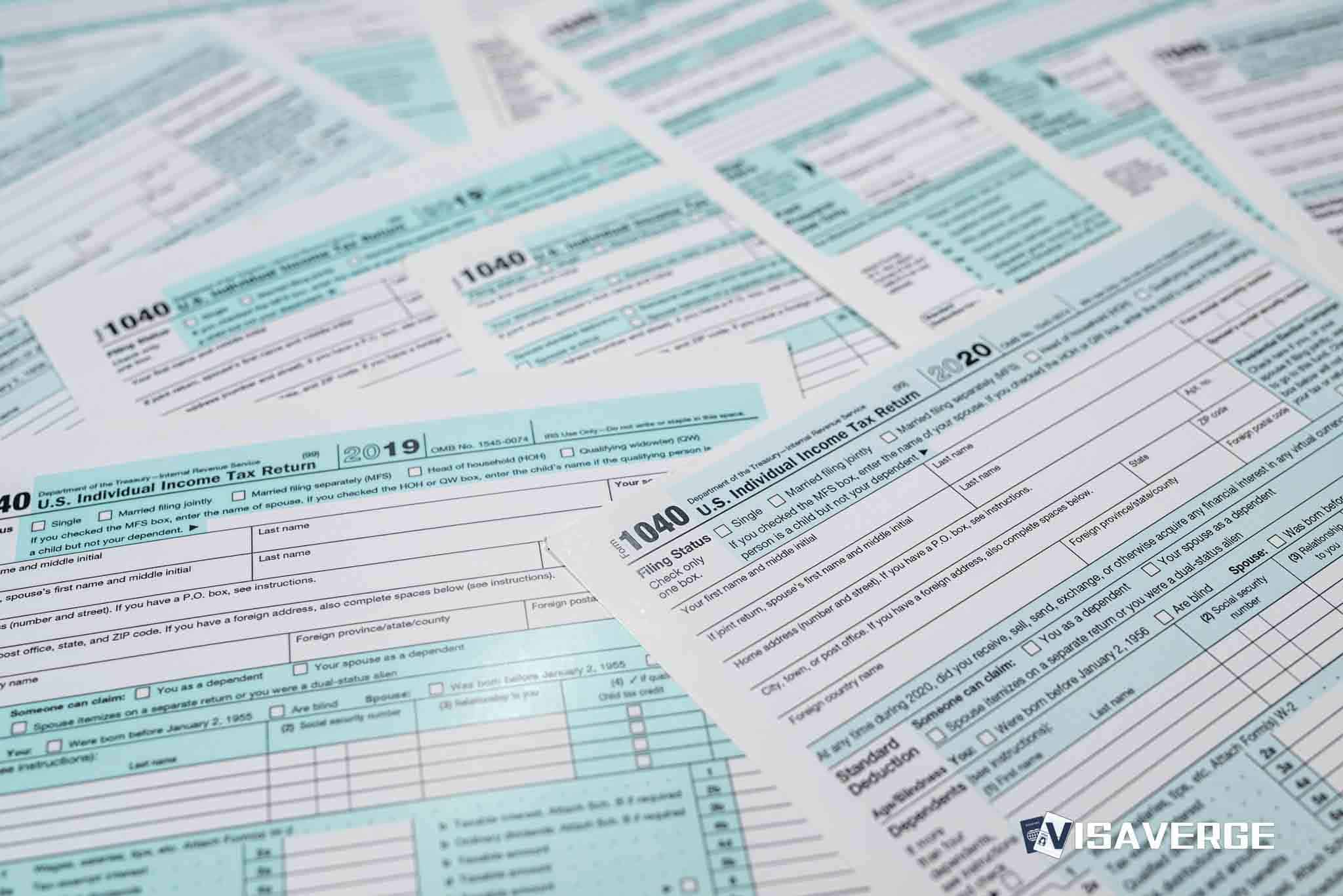
The number of affected filers remains large even as electronic filing dominates individual tax season. In 2025, the IRS received more than 10 million paper-filed `Form 1040` returns and more than 75 million paper-filed returns and forms overall.
Those figures mean the rule change reaches well beyond a small group of holdouts. Millions of taxpayers, estates, and applicants who still rely on paper submissions now face a system in which the postmark can trail the act of mailing by one to three days.
The old shorthand, timely mailed is timely filed, still exists in law. What changed is the date that USPS places behind it.
That leaves paper filers with little margin for error as deadlines approach. A trip to the counter, a receipt in hand, or an earlier mailing date now carries more weight than the mailbox at the corner.