Key Takeaways:
- An American woman spent $718K on fake Indian jewelry, only worth $4, deceived by fraudulent hallmark certificates in Rajasthan.
- The shopkeeper denied wrongdoing; the US embassy helped Cherish file a complaint, leading to police investigations uncovering the scam.
- The scam involved selling silver with gold polish and moonstones as diamonds; main suspects are still at large.
Why Did a US Woman Spend $718K on Fake Indian Jewelry?
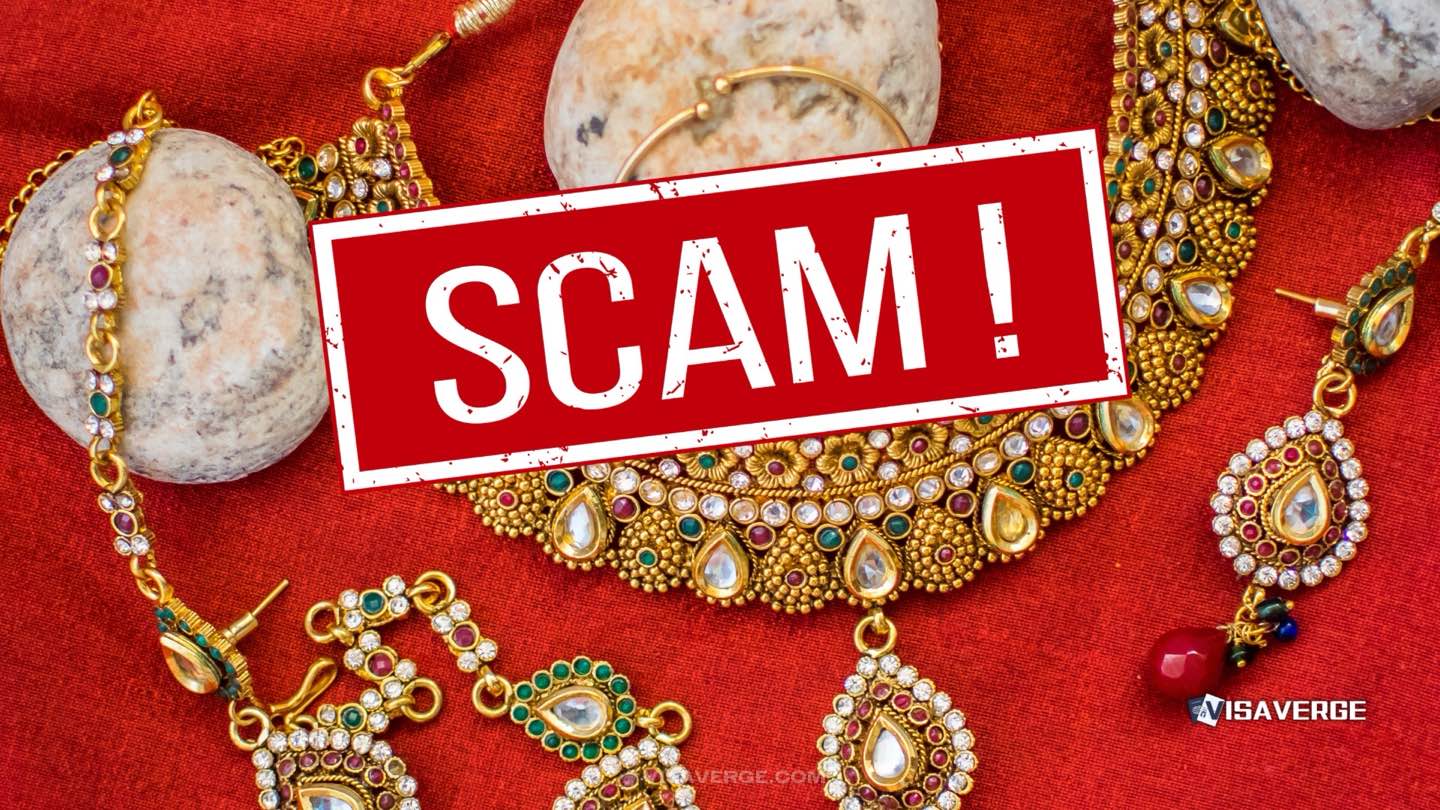
An American woman named Cherish made headlines after discovering that the Indian jewelry she purchased for $718,000 was worth only $4. Let’s dive into the details of this shocking incident that took place in Johri Bazaar, Rajasthan nearly two years ago.
How Did Cherish Get Duped into Buying Fake Jewelry?
Cherish, believing she was buying genuine jewelry, was lured into purchasing items thanks to a hallmark certificate verifying their authenticity. She spent a staggering $718,000 on what she thought was high-value gold and diamond jewelry. Her nightmare began when she displayed the pieces at an exhibition in the United States. Experts tested the pieces and revealed that the gold was merely silver with a gold polish, and the supposed diamonds were just moonstones.
What Was the Reaction of the Shopkeepers?
Upon discovering the fraud, Cherish returned to Jaipur to confront the shopkeeper, Gaurav Soni, only to find him denying the allegations. He not only dismissed her concerns but also refused to acknowledge any wrongdoing. This prompted Cherish to inform the US embassy in Delhi, who then assisted her in filing a police complaint against Gaurav and his father, Rajendra Soni.
What Did the Police Investigations Uncover?
Jaipur police took immediate action by sending the jewelry for testing. The findings were astounding: the supposed 14-carat gold pieces were only two carats, and the so-called diamonds were actually moonstones. “Nand Kishore, who issued the fake hallmark certificate, was arrested,” confirmed Jaipur police’s deputy chief, Bajrang Singh Shekhawat. However, the main accused, Gaurav and Rajendra Soni, are still on the run. Special police teams have been formed to locate them.
How Did Cherish Initially Get Connected with the Shopkeepers?
Cherish first contacted the Sonis via Instagram in 2022. She claims that they have been systematically cheating her and other designers by sending low-quality gold and moonstones instead of the promised 14-carat gold and natural diamonds. Along with the jewelry, fake certificates were issued, indicating a premeditated scam.
What Are the Broader Implications of This Scam?
This case sheds light on the dangers of buying high-value items from unfamiliar sources. Cherish’s case isn’t isolated; other designers have also come forward with similar allegations against the Sonis. The incident serves as a cautionary tale, emphasizing the need for buyers to verify the authenticity of valuable purchases through reliable means.
What Steps Can You Take to Avoid Such Scams?
To avoid becoming a victim of an Indian jewelry scam or similar frauds:
– Always buy from reputed and certified jewelers.
– Verify hallmark certificates through authorized agencies.
– Conduct independent testing of jewelry pieces, especially if buying in bulk or spending large amounts.
– Use secure payment methods that provide buyer protection.
The Jaipur police continue their search for the absconding shopkeepers, and the case remains under active investigation. For those interested in understanding the legal frameworks and support systems available, consider visiting the official US embassy website, which offers detailed information on assistance for US citizens abroad.
Conclusion
The story of Cherish is a stark reminder of how deceptive appearances can be and underscores the importance of vigilance when making substantial purchases. As the investigation progresses, it may lead to further insights into how such fraudulent schemes operate, helping others avoid similar pitfalls.
By staying informed and cautious, you can significantly reduce the risk of falling victim to scams, ensuring your investments are as solid as gold—literally.
Learn Today:
Glossary of Terms
- Hallmark Certificate:
An official document certifying the authenticity and quality of precious metals and gemstones, such as gold and diamonds. In this context, a hallmark certificate was falsely used to verify fake jewelry as genuine. -
Moonstones:
Semi-precious gemstones often used as a less expensive alternative to diamonds. In this incident, moonstones were dishonestly passed off as natural diamonds. -
Johri Bazaar:
A popular and historic marketplace in Jaipur, Rajasthan, known for selling jewelry, particularly traditional Indian ornaments. It was the location where Cherish purchased the fraudulent jewelry. -
US Embassy:
The official diplomatic mission of the United States located in a foreign country. In this case, the US Embassy in Delhi assisted Cherish in filing a police complaint against the fraudulent shopkeepers. -
14-Carat Gold:
A gold alloy consisting of 58.3% pure gold mixed with other metals to enhance its strength and durability. The jewelry sold to Cherish was falsely claimed to be 14-carat gold, while it was actually composed primarily of silver.
This Article In A Nutshell:
An American woman named Cherish spent over $718,000 on Indian jewelry that turned out to be fake. Promised genuine gold and diamonds, she received low-value silver and moonstones instead. The scam was uncovered at a U.S. exhibition, highlighting the importance of verifying valuable purchases meticulously.
— By VisaVerge.com
Disclaimer: The information provided in this article is for informational purposes only. If you reference or use any content from this article, please attribute it to VisaVerge.com by including a link to the original source. We appreciate your adherence to our content usage policies and your commitment to giving proper credit.
Read More
- Chinese Student Rescued in Thailand from Million-Dollar Scam Threat
- Shock Twist: Texas Gas Station Robbery Exposed as Immigration Scam
- Canada Visa Scam: Four Charged in ₹5 Crore Fraud
- Six Indians Charged in Chicago Armed Robberies and Visa Scam
- Man Jailed for Acceptance Letter Scam on Indian Students
- Chinese Students Targeted by Kidnapping Scams in Australia
- Immigration Firm Scam in India: Owners Charged for Cheating on Study Visa