Key Takeaways:
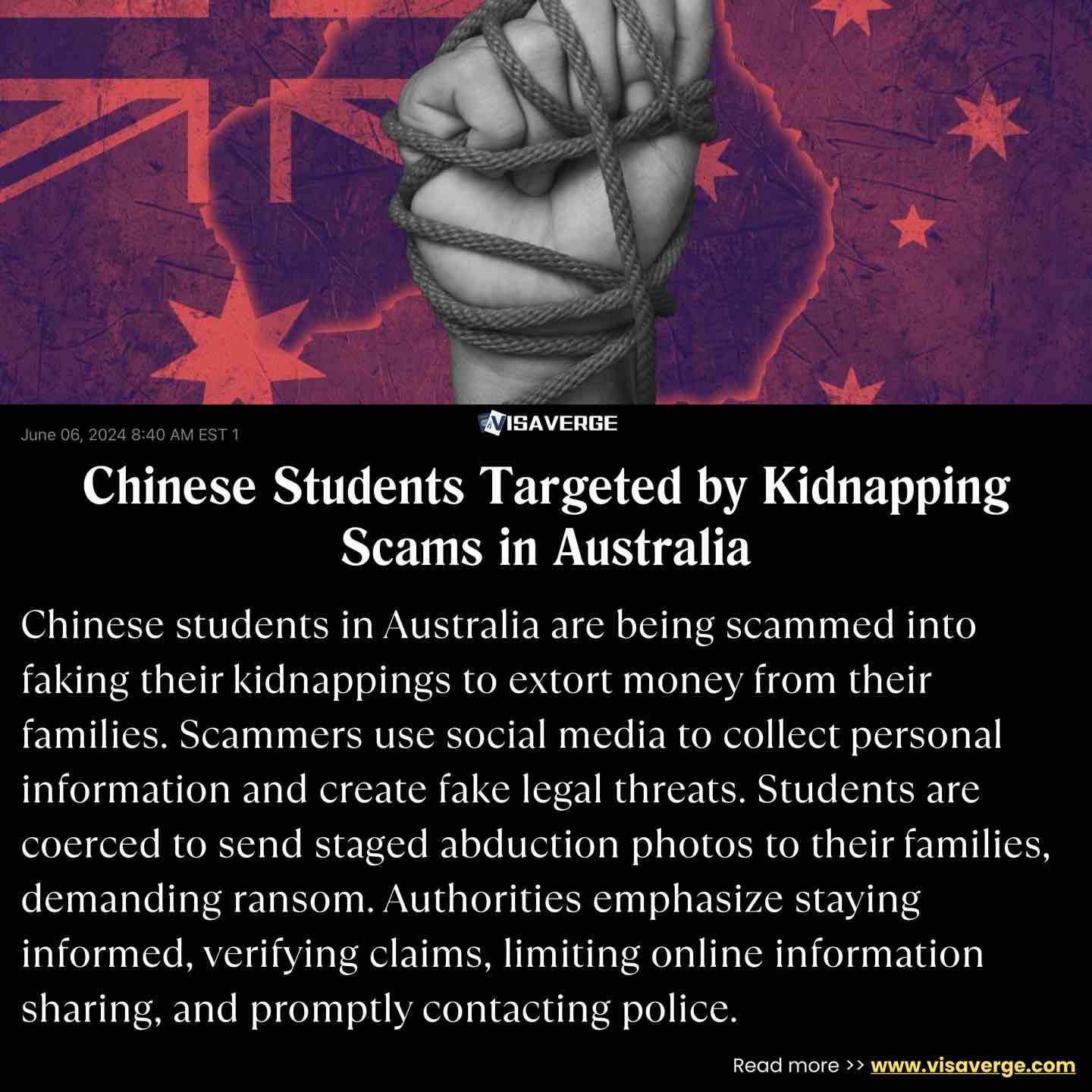
- Chinese students in Australia are being manipulated into fake kidnappings to extort money from their families in China.
- Scammers use social media to gather personal information and fabricate legal threats to coerce students into staging kidnappings.
- Authorities advise students to minimize sharing personal info online, verify claims, and contact police if threatened or scammed.
What is this New Scam Targeting Chinese Students in Australia?
Recently, a distressing trend has emerged in Australia where Chinese students are being manipulated into staging their own kidnappings. These scams aim to extort large sums of money from their families back home. Since early August, at least four students in Perth, aged between 18 and 22, have fallen prey to this technique. This concerning practice relies on the use of social media information to create fake documents and convince the victims they are being pursued by authorities.

How Do the Scammers Operate?
The process begins with scammers gathering personal information from social networks. They then forge documents, making the students believe they are implicated in a crime on Australian soil. They’re threatened with extradition to China, or prosecution if they do not pay a large sum of money. This tactic plays on the fear of deportation or legal trouble.
Once the students are manipulated into believing the fabricated charges, they are advised by the scammers to stage their own kidnappings. This involves sending alarming photos of themselves with their hands and feet bound to their families. The goal is to extort money by making the family believe the student is in real danger.
What Happens When Parents Receive Ransom Demands?
Earlier this year, a case involving a 17-year-old student in Perth illustrated this disturbing trend. The student’s parents received a WeChat message showing him bound, alongside recordings and demands for 215,000 Australian dollars (143,000 U.S. dollars) to be transferred to a Chinese bank account. Concerned for their son’s safety, they promptly reported the incident to the police.
How Did Authorities Handle the Situation?
Thanks to the quick response from the student’s family, Perth detectives were able to locate the teenager in a hotel within a few hours. The investigation revealed that the student was not kidnapped but was coerced into faking his abduction as part of the scam.
“Scammers take advantage of their vulnerability and exploit the distance between victims and their families,” explained Peter Foley, Manager at Perth Police Station. “It is virtually impossible for families to confirm that the victim is safe and well and that no charges have been laid against them by overseas authorities. Feelings of helplessness and shame discourage victims from contacting the police after being scammed.”
Where Else is This Happening?
This issue isn’t confined to Australia. Similar incidents have been reported globally. In January, Kai Zhuang, a 17-year-old Chinese student in the USA, was reported missing near Salt Lake City. He was found days later in the mountains north of the city. In this instance, crooks posed as Chinese police officers to extract ransom from his family, demanding $80,000.
Further reports from Canada in February and Japan last summer highlight the widespread nature of these scams. Chinese students in both countries have fallen victim, leading local authorities and even the Chinese embassy to issue warnings.
How Are Fake Kidnappings Fuelled by Technology?
Cybersecurity experts have noted that while specific data on the number of these scams isn’t readily available, the frequency appears to be rising. Advances in technology, particularly in artificial intelligence (AI), have made it easier for scammers. AI-generated “deepfakes” can create convincing false audio and visuals, making it harder to discern real from fake.
What Can Students and Families Do to Protect Themselves?
Authorities across various countries, including Australia, have issued recommendations to safeguard against these scams. Here are some actionable steps:
- Stay Informed: Students should be aware of this scam and share information with peers.
- Verification: Always attempt to verify any alarming claims. Use official channels to confirm any legal issues.
- Contact Police: If threatened with deportation or legal action, contact local police immediately. Australia’s government website here offers reliable resources.
- Limit Information Sharing: Be cautious about what personal information is shared online.
- Family Communication: Maintain regular contact with family members to ensure they are aware of your safety and whereabouts.
What Should You Do If You Fall Victim?
If you or someone you know becomes a victim of these scams, it’s crucial to report it to local authorities immediately. Delaying out of fear or shame can give scammers more opportunity to exploit the situation. Remember, the quicker the response, the higher the chances of resolving the issue without financial loss or emotional distress.
China’s Ministry of Foreign Affairs often releases travel safety tips for Chinese nationals abroad, which can be another useful resource. Students and families should familiarize themselves with these to better prepare and protect against such scams.
Conclusion: Staying Vigilant
The rise in kidnapping scams targeting Chinese students in Australia and other parts of the world underscores the importance of vigilance and awareness. Students should remain informed and cautious, while families should establish regular and open communication lines. Working together, it’s possible to thwart these deceptive practices and ensure safety and peace of mind for everyone involved.
Learn Today:
Glossary of Immigration Terms
- Extradition: The legal process by which one country formally requests the surrender of an individual from another country to face charges or serve a sentence for a specific crime.
-
Deportation: The act of removing a foreign national from a country, typically due to violations of immigration laws or other legal issues.
-
Ransom: A sum of money or other payment demanded or paid for the release of a hostage, commonly involved in kidnapping situations.
-
Deepfake: Advanced technology using artificial intelligence to create realistic but fake audio, video, or images, often used to deceive and manipulate individuals.
-
Scam: A fraudulent scheme or deception designed to steal money or personal information from unsuspecting victims.
This Article In A Nutshell:
A new scam in Australia targets Chinese students, coercing them to fake their own kidnappings to extort money from their families. Scammers use social media data to create fake legal threats. Authorities urge students to verify claims and report threats immediately to prevent falling victim.
— By VisaVerge.com
Disclaimer: The information provided in this article is for informational purposes only. If you reference or use any content from this article, please attribute it to VisaVerge.com by including a link to the original source. We appreciate your adherence to our content usage policies and your commitment to giving proper credit.
Read more:
– US Announces New Visa Restrictions on Chinese and Hong Kong Officials
– Australia: Top Destination for Chinese Students
– Chinese Student Rescued in Thailand from Million-Dollar Scam Threat
– Chinese Students Abroad Face Climate of Fear: Amnesty Report
– Chinese Tourists Switch to Student Visas to Stay Longer in Philippines