- UAE authorities have restored only exceptional operations following recent disruptions at major international airports.
- Officials denied rumors of a formal plan to immediately resume eighty daily flights across the country.
- Airlines urge passengers to await direct confirmation before traveling to terminals to avoid further crowding.
(UNITED ARAB EMIRATES) — UAE aviation authorities and major airlines resumed a tightly limited set of flights across the country on March 2 and March 3, but officials have not confirmed claims circulating online about a next reopening phase of “80 flights per day.”
UAE authorities and airlines including Emirates, Etihad and flydubai restored only exceptional operations rather than normal commercial schedules, focusing on special, repatriation, repositioning and cargo services through Dubai International, Al Maktoum International and Zayed International.
As of Tuesday, March 3, 2026, no official UAE announcement confirmed a phase of 80 flights per day as the next stage of any gradual reopening plan, even as some departures restarted and airlines began moving aircraft and passengers through constrained routings.
The disruption began after Iranian missile strikes on February 28 damaged Dubai International, causing minor infrastructure damage and several injuries, while an attack on Zayed International caused one fatality and seven injuries.
Dubai International matters for global connections because it sits at the center of long-haul transfer flows, while Al Maktoum International plays a role in Dubai’s wider capacity and recovery options. Zayed International in Abu Dhabi anchors the capital’s international network, and its restart pace has shaped onward travel for passengers connecting across the region.
UAE General Civil Aviation Authority messaging to passengers has stayed focused on what is operating now, not on a staged daily-flight target. In a March 2 statement, the authority said: “Exceptional flights are now operating at UAE airports. Do not proceed to the airport until your airline contacts you with confirmed schedule.”
That instruction has been repeated by airlines and by the Dubai Media Office, as carriers work through rolling approvals, aircraft positioning and changing routings. Officials and airlines have emphasized that travelers should act only on confirmed airline schedules, and not on general claims about how many flights might operate on a given day.
Emirates and flydubai resumed limited flights starting March 2, with operations shaped by earlier bookings and constrained airport and airspace conditions. Five Emirates A380s departed Dubai International on March 3 to Jeddah, Manchester, Paris, London and Frankfurt, and initial destinations included Mumbai and Chennai.
Etihad Airways operated departures from Abu Dhabi across March 2 and March 3, with at least 16 flights leaving Zayed International for Islamabad, Paris, Amsterdam, Mumbai, Moscow and London. The airline also kept a wider pause in place, with all scheduled commercial services suspended until 14:00 UAE time on March 4.
Air Arabia maintained a suspension through 15:00 UAE time on March 4, while allowing for the possibility of limited flights with authority approval. Those approvals and the shifting flight environment have made “exceptional flights” different from normal schedules, as rebookings can change quickly and passengers can see last-minute updates as permissions and routings evolve.
Operational disruption remained severe on March 2, when more than 80% of Dubai flights and more than half of Abu Dhabi flights were canceled. The backlog has stretched beyond any single airport because missed connections can cascade, and the restart requires aircraft, crews and passengers to line up again across multiple cities.
Across seven major Middle East airports, total cancellations exceeded 12,300 since February 28, affecting around 20,200 UAE passengers. Airlines have warned that those figures translate into long rebooking queues, pressure on hotels, missed onward travel, and potential delays in baggage handling as flights restart unevenly.
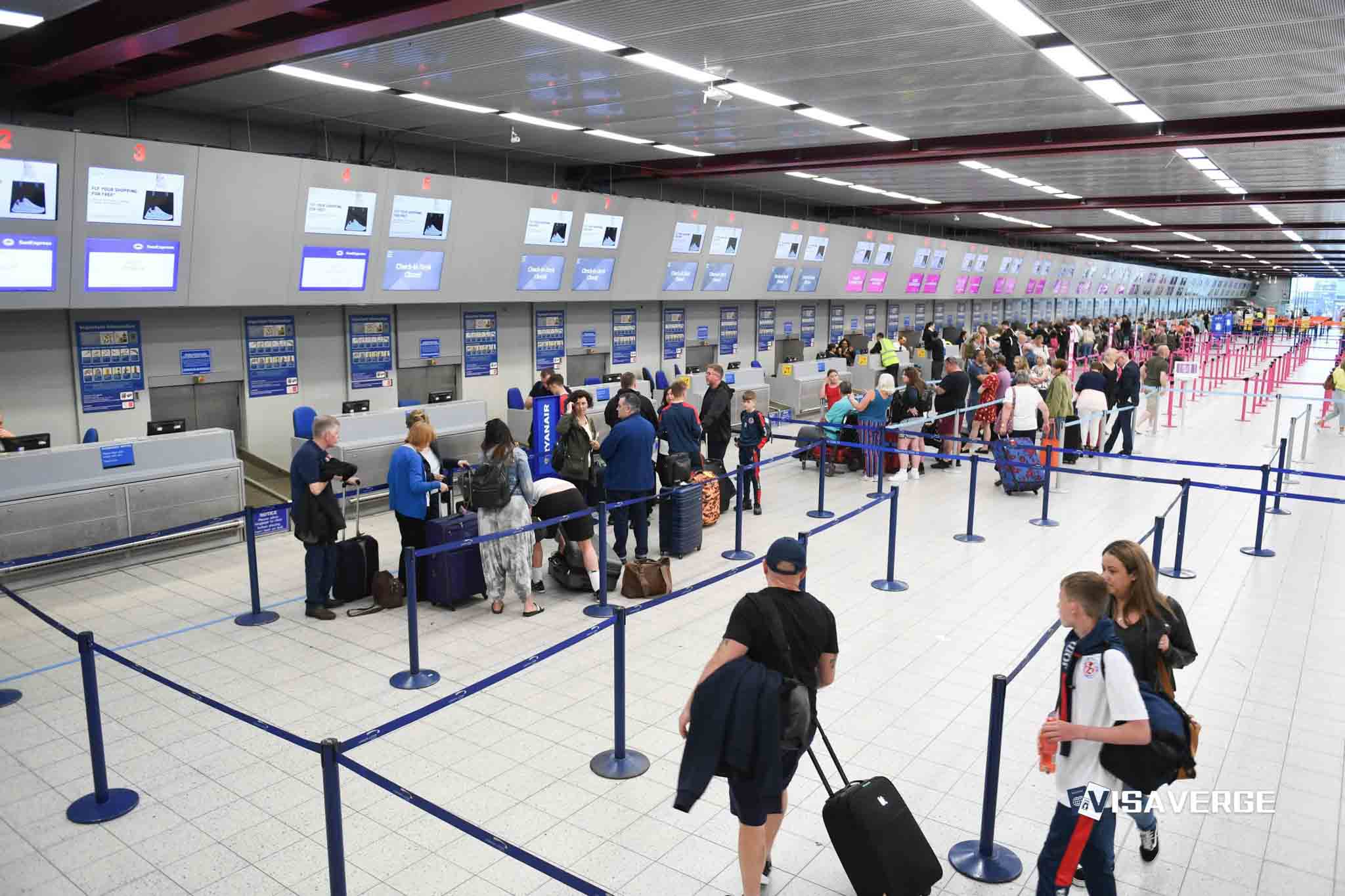
Carriers and authorities have urged passengers to wait for direct airline confirmation before leaving for terminals, as airport crowding can quickly worsen when travelers arrive without a confirmed departure. Airlines have also used timed update windows to manage demand for information, with further updates expected March 4 including Qatar Airways by 09:00 Doha time and Gulf Air by 11:00 Bahrain time.
For travelers trying to move on March 4, the most common pattern has been rolling cancellations paired with partial reinstatements, as some flights operate while others remain grounded. Airlines have also rerouted passengers through alternate hubs when possible, but longer routings and limited seat availability have kept itineraries uncertain.
Regional airspace closures and restrictions have remained the central constraint on returning to normal operations, limiting available corridors and forcing longer flight paths. Those changes affect not only passenger itineraries but also crew duty times and the ability to position aircraft in the right places to rebuild schedules.
Even when a flight can depart, longer routes can create knock-on delays that disrupt later rotations, complicating recovery planning across multiple days. Airlines have also faced the challenge of moving aircraft in and out for operational needs while keeping passenger movements aligned with what airports and airspace can handle.
Before the disruption, the region handled roughly ~1,500 daily regional flights, a volume that remains far off despite the limited resumptions now under way. Authorities have allowed exceptional services to operate, but the broader network has not returned to regular frequency, leaving airlines to prioritize specific routes and operational necessities over full timetables.
Claims about an “80 flights per day” phase have continued to circulate, but UAE authorities have not confirmed them as part of a formal plan. GCAA language has continued to emphasize exceptional and limited operations, and neither the authority nor carriers have announced a phased plan to 80 daily flights.
A genuine shift toward normalization would show up through published schedules, slot allocations, broad carrier-wide reinstatements and sustained airspace reopening, rather than isolated exceptional departures. Until then, officials and airlines have tied passenger guidance to one standard: do not go to Dubai International, Al Maktoum International or Zayed International without direct airline confirmation of a confirmed schedule.