- U.S. consulates in India have pushed visa interview slots back into 2027 due to massive backlogs.
- Indian professionals face employment risks and travel delays without valid visa stamps for re-entry.
- Companies are adopting remote work and project reallocation to mitigate the impact of prolonged absences.
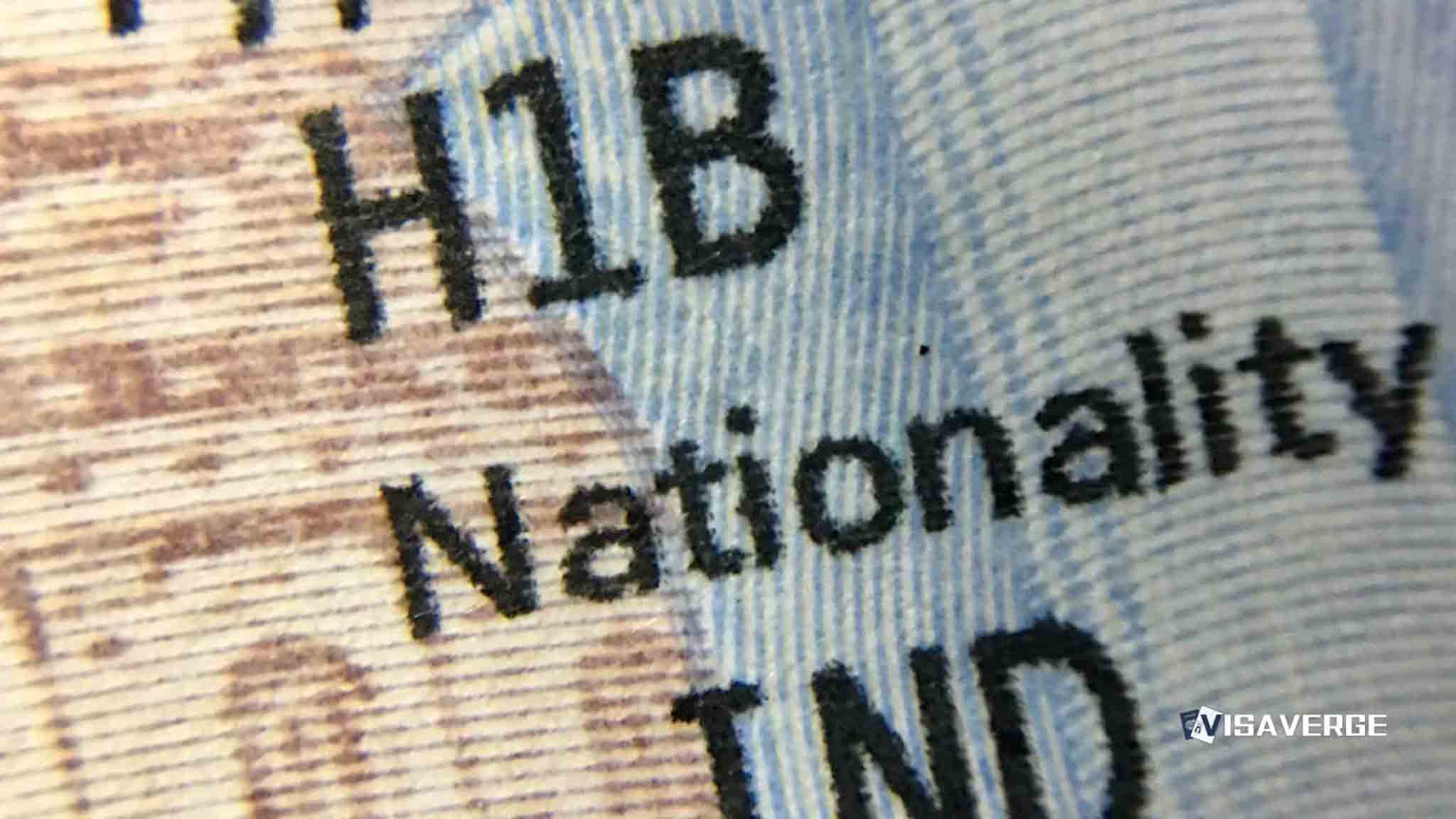
(INDIA) — U.S. consulates across India pushed regular interview slots for H-1B and H-4 visa stamping into 2027, leaving thousands of Indian professionals and their families facing long waits that upend travel and job plans tied to U.S. immigration status.
The delays span Delhi, Mumbai, Chennai, Hyderabad, and Kolkata, where applicants seeking routine appointments for H-1B visa stamping have found no regular interview availability until 2027.
For many workers, the backlog has become a practical barrier to returning to the United States after travel. Employers with U.S.-based teams have also had to account for longer absences that can ripple through projects and staffing.
India’s bottleneck reflects a combination of demand, capacity limits, and changes in how cases arrive at consulates. India accounts for a large share of H-1B visa requests globally, and the volume of candidates for employment-based visas is significantly greater than many other countries.
Consular staffing and operational constraints have also slowed throughput. Expanded vetting requirements, including social media screening, and ongoing processing backlogs have contributed to longer waits for interview slots.
Policy changes in late 2025 added pressure as well. New H-1B cap selection rules and related administrative changes altered case preparation dynamics, increasing documentation and query volumes that consulates must review.
At the same time, a reduction of third-country stamping options has funnelled more demand back to Indian posts. Policies affecting the ability of Indian nationals to pursue stamping in other countries have intensified pressure on local consulates.
The practical effect has been a rolling deferral of previously expected interview timelines. Appointments that applicants expected in late 2025 and 2026 were successively deferred, and many have now been rescheduled into mid-2027 and beyond.
While U.S. consular operations face waits in many places, the extreme year-long backlog described in India has not appeared uniformly worldwide. In many countries with lower visa demand, including several posts in Europe, Latin America, Africa, and Southeast Asia outside India, H-1B visa interview appointments are often available within weeks or a few months, depending on local conditions and consulate capacity.
That contrast has led some workers to consider whether they can bypass India’s queue. Some workers from India explore third-country visa processing, attending a visa interview in a country other than their home country, when interview slots in India remain backlogged.
Third-country processing, often referred to as TCVP, comes with limits that can narrow who can use it. Consulates may restrict eligibility, require strong ties to the processing country, or limit interview slots for third-country applicants, which can make planning difficult for workers trying to return to U.S. jobs on a fixed timetable.
Even with those constraints, the global picture remains uneven. Worldwide waits exist, but year-long backlogs like those being reported in India are rare or not seen in many other posts, reflecting the combined pressures of volume, administrative changes, and operational constraints concentrated in India.
For H-1B holders who travelled and now find themselves stuck in India, the most immediate consequence is straightforward. If a worker travels outside the United States and the H-1B visa stamp in the passport has expired, the person generally cannot return to the U.S. without a valid visa issued by a U.S. consulate.
A valid USCIS petition alone does not solve the re-entry problem. Possession of a valid USCIS petition is not sufficient for re-entry without a valid visa stamp.
The backlog means the ordinary path to a new visa stamp can stretch far beyond the time many employees and managers can accommodate. With interview slots unavailable until 2027, professionals who travelled home risk being unable to resume employment in the United States for an extended period.
The employment consequences can extend beyond missed meetings or delayed start dates. Extended inability to re-enter the U.S. can jeopardize employment, particularly when a job requires a U.S. presence and employers expect an H-1B employee to return in a timely manner.
Some employers may respond with workforce adjustments when a prolonged absence prevents an employee from doing the role as planned. The risks described include withdrawal of job offers or termination in cases where the worker cannot return and cannot work in a way that fits business needs.
The backlog has also reshaped travel decisions for workers who remain in the United States and had planned trips to India for family, weddings, or routine visits. Immigration experts have advised H-1B holders currently in the U.S. to avoid non-urgent travel to India until the visa appointment situation stabilizes, because re-entry may be delayed by many months.
That warning underscores how the backlog is not only a scheduling headache but a status-management problem. A worker can be compliant with U.S. immigration rules on paper, yet still be unable to physically return to the United States without a consular-issued visa stamp.
Applicants searching for ways through the system have focused on a handful of practical options, though none eliminates the underlying shortage of interview slots. One of the simplest steps is to monitor appointment availability regularly, because visa appointment systems can release new interview slots due to cancellations or capacity adjustments.
That monitoring can matter because a single earlier opening may change whether an absence lasts weeks or many months. The window can be narrow, and it requires repeated checks for new interview slots that appear unpredictably.
A second pathway involves assessing eligibility for third-country processing. Where permitted by consular policy, some applicants may pursue third-country appointments at U.S. posts in other nations with lower backlogs, though eligibility and practical constraints vary widely by location and post.
Some companies have also looked at employer-facilitated arrangements to reduce business disruption while employees wait for interview slots. Remote work arrangements can allow an employee to work from a current location if job nature allows, though the approach must be structured carefully with attention to local labor laws and taxation.
Other firms try temporary relocations when feasible. Some firms relocate employees to nearby countries such as Canada or Mexico, where stamping and cross-border work are logistically easier, then resume U.S. status later.
Companies sometimes move work instead of moving workers. Project reallocation, where responsibilities shift temporarily to other team members, can help avoid gaps in deliverables when a worker cannot return to the United States.
Applicants also look to emergency or expedited appointments, but those are limited and not designed as a general solution for work-related travel disruption. U.S. consulates sometimes offer emergency or expedited processing in rare cases such as serious medical or family emergencies, with strict criteria and no guarantee.
Even when expedited appointment categories exist, they do not function as a broad release valve for the backlog. The emergency pathway is not granted for general work resumption alone, leaving many workers to choose between waiting in line or altering work and travel plans for a much longer period.
Human resources teams managing H-1B visa populations have had to adapt to a world where a routine renewal trip can stretch into a prolonged absence. Workforce continuity plans have become a practical necessity, including remote work policies and cross-border transfer options when the business can support them.
Documentation readiness has taken on greater importance as well. Employers have been advised to ensure employee documentation, including current passports, approvals, and support letters, is prepared in case expedited slots or cancellations allow earlier stamping.
Companies also consider whether alternative visa classifications fit a particular employee’s situation, where suitable and compliant. That can become part of a broader mobility strategy when H-1B stamping timelines make travel to India difficult to plan around.
Clear communication inside companies can shape outcomes as much as any individual appointment search. Setting expectations on timelines and immigration constraints can help managers plan project staffing, allocate work, and avoid last-minute surprises when an employee cannot return to the United States on an anticipated date.
The differences between India and other posts also influence corporate planning, especially for multinationals with global footprints. Applicants in other countries generally face shorter waits, and in some cases may explore third-country visa stamping options, subject to local consulate policies and eligibility rules.
Still, third-country processing remains an imperfect pressure release. Even when a post has shorter waits, consulates can restrict third-country applicants, require strong ties to the processing country, or limit interview slots for those applicants, which can reduce predictability for workers trying to get back to the United States.
What emerges is a distinctly India-specific backlog tied to both demand and constraints in processing. Very high applicant volume from India, staffing and operational limits, and policy changes in late 2025 that altered case preparation dynamics have all converged as regular interview slots move into 2027.
For affected professionals, the backlog turns routine planning into risk management. A single decision to travel can become a decision about whether re-entry is feasible at all without a long wait for interview slots.
For employers, the backlog forces contingency planning around travel, staffing, and cross-border work arrangements. Remote work, temporary relocations, and project reallocation can limit disruption, but each option depends on the nature of the job and the company’s structure.
The outlook described by applicants searching for appointments remains defined by the calendar. With regular H-1B and H-4 interview slots in India pushed into 2027, many workers and families have had to plan their lives around long waits that few expected when they booked travel or accepted U.S.-based roles.