Key Takeaways:
- U.S. increasingly recruits Chinese students for humanities/social sciences and Indian students for STEM to address educational gaps.
- Security concerns limit Chinese students’ access to sensitive technologies; efforts balance academic collaboration and national security.
- Strategic recruitment enhances international ties and diversity while safeguarding U.S. academic and technological interests.
Why Does the U.S. Require Chinese Students in Humanities and Indian Students for Sciences?
The Role of Chinese and Indian Students in U.S. Education

The increasing need for Chinese students in humanities and Indian students for sciences has been highlighted by Deputy Secretary of State Kurt Campbell. He pointed out a significant gap in science, technology, engineering, and mathematics (STEM) fields among American students, emphasizing an urgent need for U.S. STEM recruiting.
The Changing Landscape of International Student Recruitment
Campbell stated, “I would like to see more Chinese students coming to the United States to study humanities and social sciences, not particle physics,” during his address at the Council on Foreign Relations think-tank. This shift is partly due to security concerns, leading U.S. universities to limit Chinese students’ access to sensitive technologies.
The China Initiative Controversy
Discussing the China Initiative launched by the Trump administration, Campbell reflected on its intent to counter Chinese espionage and safeguard intellectual property. However, the initiative ended during the Biden administration amid claims of racial profiling of Asian Americans.
Campbell remarked on the careful attempts by U.S. universities to support Chinese students while restricting their involvement in certain high-tech labs. “I do think it is possible to curtail and to limit certain kinds of access, and we have seen that generally, particularly in technological programs across the United States,” he mentioned.
The Need for Indian Students in U.S. Universities
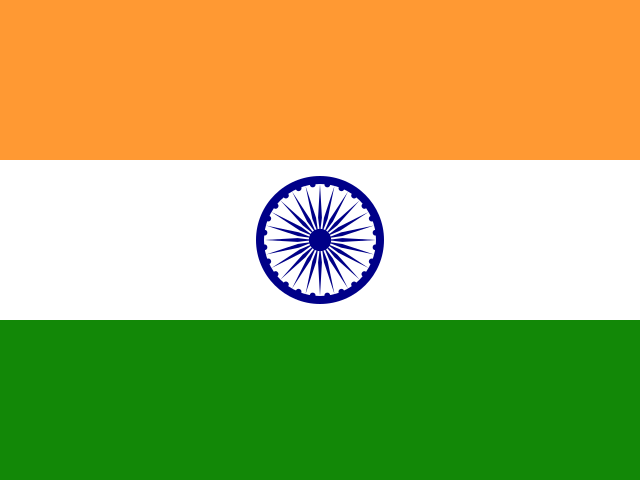
To address the shortage in STEM, Campbell suggested a substantial increase in Indian students in American universities. He noted, “I believe that the largest increase that we need to see going forward would be much larger numbers of Indian students that come to study in American universities on a range of technology and other fields.”
For years, Chinese students formed the majority of the foreign student body in the U.S., with nearly 290,000 attending during the 2022/23 academic year. However, the evolving geopolitical landscape and economic ties emphasize the growing importance of Indian students in these critical areas.
Strategic Collaborations and Recruitment
Encouraging diversity in academic recruitment, Campbell stressed the importance of maintaining links between China and the U.S., despite current challenges largely attributed to Beijing’s policies. “It really has been China that has made it difficult for the kinds of activities that we would like to see sustaining,” he added. This reflects broader concerns about fostering a balance between security and academic freedom.
The impact of stringent measures on scientific cooperation and mutual understanding has been profound. Amid fears of U.S. expertise theft, it’s crucial to develop strategies that welcome international talent while safeguarding national interests. For a deeper understanding of visa and study requirements for international students, refer to the official U.S. Citizenship and Immigration Services USCIS website.
Conclusion
The diplomatic shift in recruiting Chinese students for humanities and Indian students for sciences illustrates a broader strategy to balance national security with academic advancement. According to VisaVerge.com news, welcoming international students from diverse backgrounds not only enriches U.S. academic institutions but also strengthens international ties.
Balancing these objectives with security measures requires careful policy-making and open dialogue between educational institutions and government bodies. Aspiring international students are encouraged to stay informed about the latest developments and requirements to pursue their educational dreams in the United States. This strategic approach ensures that the U.S. remains a global leader in education and innovation while addressing existing gaps and future challenges.
Learn Today:
Glossary of Immigration Terms
- STEM (Science, Technology, Engineering, and Mathematics)
- Fields of study focused on scientific, technological, engineering, and mathematical disciplines. The U.S. aims to recruit more students in these fields to address existing gaps.
- China Initiative
- A program launched by the Trump administration aimed at countering Chinese espionage and safeguarding U.S. intellectual property. It ended under the Biden administration due to concerns over racial profiling.
- Geopolitical Landscape
- The political and economic factors that influence international relations and policies between countries. This term often refers to the changing dynamics that affect international student recruitment and collaboration.
- Intellectual Property
- Creations of the mind, such as inventions, literary works, and designs, which have commercial value and are protected by law. Safeguarding intellectual property is crucial in preventing unauthorized use, especially in sensitive technology fields.
- U.S. Citizenship and Immigration Services (USCIS)
- The government agency responsible for overseeing lawful immigration to the United States. It provides resources and information for international students, including visa and study requirements.
This Article In A Nutshell:
The U.S. seeks Chinese students for humanities and Indian students for sciences due to a shortage of American talents in STEM fields and security concerns. This strategic academic recruitment balances national security with innovation, enhancing U.S. educational institutions and strengthening international ties for a robust future workforce.
— By VisaVerge.com
Disclaimer: The information provided in this article is for informational purposes only. If you reference or use any content from this article, please attribute it to VisaVerge.com by including a link to the original source. We appreciate your adherence to our content usage policies and your commitment to giving proper credit.
Read more:
1. New Zealand Diplomatic Visa Guide
2. India Reinstates Diplomatic Visa for Saskatchewan Official
3. Azerbaijan and Gambia Announce No Visa for Diplomatic Passports
4. Canada Diplomatic Visa: Documents, Requirements, and Details
5. Surge in Russia Visa Issuance Boosts Foreign Travel at Russian Diplomatic Missions