(UNITED STATES) Latino voters are mounting a sharp political response to President Trump’s immigration actions in 2025, with new polling and turnout patterns suggesting a clear backlash that could shape the next midterm elections.
In an October survey of 3,000 Latino voters by BSP Research and UnidosUS, respondents ranked immigration arrests and deportations among the top drivers of their views. Community organizers and political analysts say the shift is showing up in record participation for Democrats in local contests this fall and in slipping support for the GOP in key states.
What’s driving the backlash
At the center of the storm are mass deportations, expanded ICE raids, and new limits on asylum and Temporary Protected Status (TPS). Immigrant advocates say these actions are hitting mixed-status families hardest.
The BSP Research survey found widespread disapproval of Trump’s immigration agenda, with many voters describing the actions as harsh and harmful to their neighborhoods. Analysis by VisaVerge.com indicates this turn is especially pronounced among younger Latinos and first-time voters, who are mobilizing through churches, unions, and community centers.
Arrests and community impact
Arrest data has fueled anger and fear across communities:
| India | China | ROW | |
|---|---|---|---|
| EB-1 | Feb 01, 2023 | Aug 01, 2023 ▲31d | Current |
| EB-2 | Nov 01, 2013 | Oct 01, 2021 | Apr 01, 2025 ▲90d |
| EB-3 | Jan 22, 2014 ▲21d | Jan 22, 2022 ▲14d | Jun 15, 2024 ▲31d |
| F-1 | Jan 22, 2021 ▲366d | Jan 22, 2021 ▲366d | Jan 22, 2021 ▲366d |
| F-2A | Oct 22, 2026 ▲30d | Oct 22, 2026 ▲30d | Oct 22, 2026 ▲30d |
- Latino arrests by ICE surged in the first half of 2025.
- Latino individuals made up about 90% of the arrests.
- Mexican nationals accounted for 41% of those arrests.
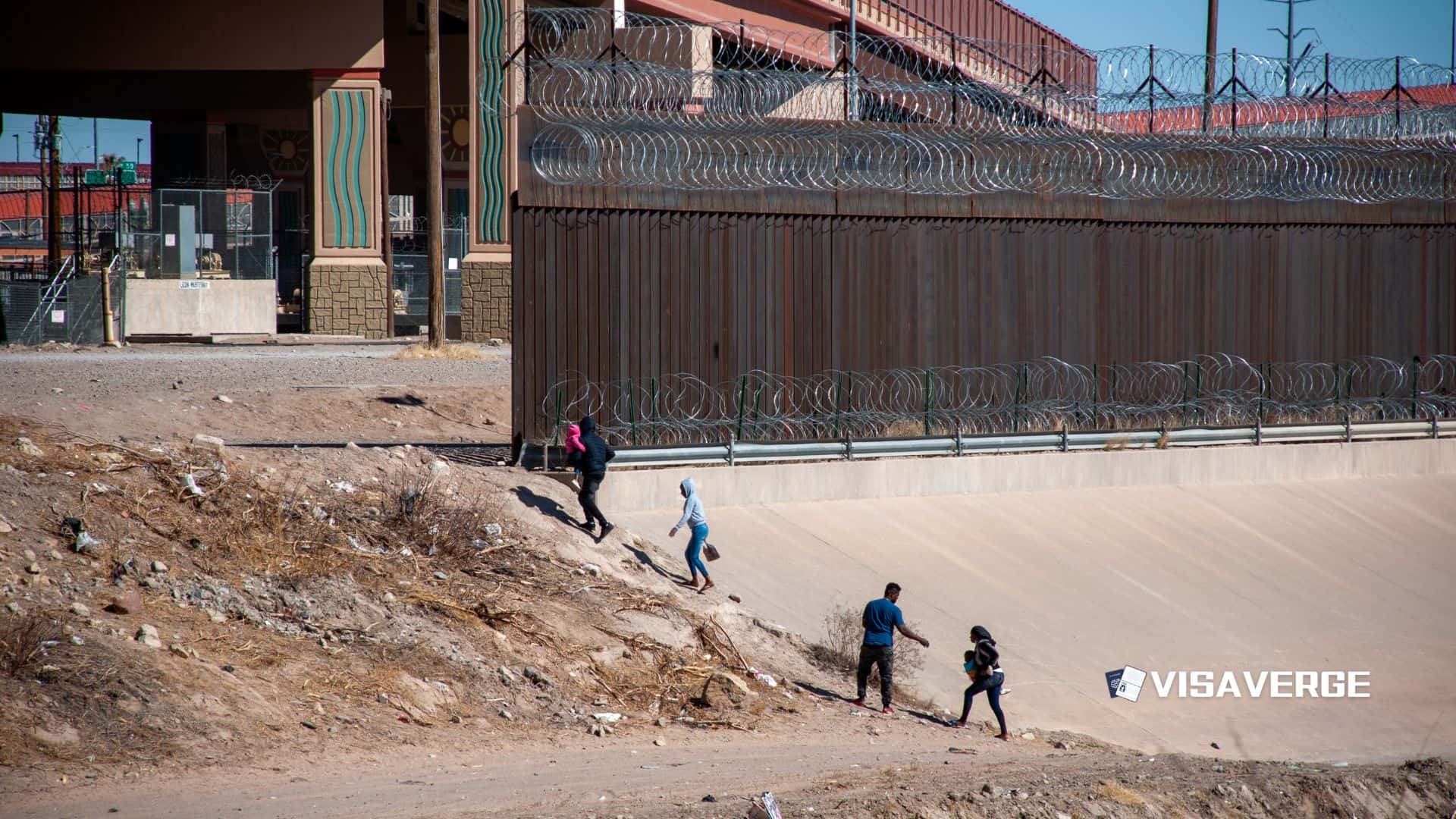
Families report late-night knocks and workplace roundups. School counselors say students fear coming to class if a parent could be detained before pickup. Advocates argue these are broad sweeps that reach long-settled residents with deep local ties, not targeted actions against dangerous offenders.
“We can’t hire and we can’t plan,” said one Texas retailer, summarizing concerns heard across border and interior markets alike.
Political repercussions and polling
The political effects are already visible:
- Among Latino voters who backed Trump in 2024, 13% now say they would not vote for him again.
- In states such as Texas and Georgia, that share rises to 20%.
Local Democratic candidates have benefited from swings in special elections and municipal races. Party strategists believe this momentum could threaten Republican control of Congress in 2026. Campaigns in Arizona, Nevada, and Florida are tailoring messages around family stability and work permits, betting enforcement headlines will keep turnout high.
Republican reaction and intra-party concerns
Trump’s immigration actions have also sparked criticism within Republican ranks:
- Several Latino Republicans (city council members and state legislators in the Sun Belt) urge the White House to focus on serious criminal cases and avoid broad raids that unsettle neighborhoods.
- Business-aligned Republicans warn that employer audits and site visits are straining local economies without clear long-term benefits.
They caution that videos of enforcement and fearful accounts from mixed-status homes are alienating swing voters the party needs.
Economic consequences
Economic pressures are compounding political damage:
- Farmers, small business owners, and construction firms report labor shortages following raids and high-profile operations.
- Community bankers say clients are deferring investments.
- Latino shoppers are pulling back as prices rise due to tariffs, according to local chambers of commerce.
The combination of higher costs and fewer workers has hit agricultural counties and fast-growing suburbs, where many families rely on remodeling, landscaping, or restaurant income.
Policy changes in Washington
In July, Trump signed the One Big Beautiful Bill Act (OBBBA), which immigrant rights groups say:
- Dramatically expands detention funding
- Permits indefinite family detention
Lawyers representing parents and children say the new rules widen the net and prolong custody, creating fear that routine traffic stops or courthouse visits could lead to months in detention. Faith leaders report congregations organizing legal clinics and emergency childcare plans as families brace for more arrests.
Historical context and long-term implications
These headlines recall a turning point in Latino political life from the 1990s: California’s Proposition 187, which spurred newly naturalized voters to register and stay active. Advocates argue the current moment is similar but larger, because Latinos now make up a bigger share of the electorate in battleground states.
If the turnout patterns seen in 2025 continue, strategists expect:
- Permanent changes to voter rolls
- Lasting shifts in family voting habits
- Potential effects on presidential races and statehouses beyond the next cycle
Effects on families and legal help
For many families, the policy mix cuts deeper than party labels. Limits on asylum and TPS—administered by U.S. Citizenship and Immigration Services—are changing plans for relatives who hoped to stay and work lawfully during unsafe conditions back home.
Community legal groups report higher demand for screenings and referrals as people try to figure out who still qualifies. Official information on program eligibility is available from USCIS on Temporary Protected Status at https://www.uscis.gov/humanitarian/temporary-protected-status.
Families with Dreamer relatives also describe a climate of uncertainty, worried enforcement could reach households with both citizens and noncitizens under the same roof.
Competing political narratives
Republicans argue that stepped-up enforcement is necessary to deter unlawful crossings and restore border order. White House aides say resources are directed to remove recent arrivals with final orders and to prioritize public safety. Some GOP candidates in Texas and Florida say voters want firmer rules and quicker removals.
Still, Latino polling suggests the broad scope of enforcement efforts is overshadowing security arguments. Personal stories of parents taken at work or during routine stops spread quickly through social media and local radio, shaping perceptions.
Democrats, seeing an opening, are proposing:
- Expansion of work permits
- Limits on family detention
- Support for community policing that separates local services from immigration enforcement
They cite the BSP Research and UnidosUS survey to argue swing Latino communities favor practical fixes over fear-based tactics. Organizers are investing in door-to-door outreach in suburban Phoenix and the Rio Grande Valley, aiming to convert enforcement anxiety and economic strain into registrations ahead of 2026.
Voter mobilization and sustained energy
Campaign veterans caution that enthusiasm can fade, but current backlash has sustained energy through:
- Voter education drives around courthouses, schools, and soccer leagues
- Faith-based “know your rights” sessions and ride-share programs for first-time voters
- Spanish-language talk shows featuring lawyers and union leaders answering questions about identity checks and traffic stops
These efforts create a steady civic reminder that can translate into ballots.
Key takeaway: For Latino voters, the stakes are personal—whether families can work, study, and worship without fear. The political math will follow.
Risks for both parties
As the year closes, both parties face risks:
- For Republicans: the immediate threat of local losses scaling up to House and Senate races in 2026.
- For Democrats: the challenge of converting anger into durable support across mixed suburbs and rural towns.
For Latino voters, the consequences are immediate and personal. For now, the evidence suggests Trump’s immigration actions have triggered a voter reaction with the power to rearrange the political map.
This Article in a Nutshell
An October 2025 BSP Research–UnidosUS poll of 3,000 Latino voters shows strong backlash to Trump’s immigration policies—mass deportations, expanded ICE raids, and new limits on asylum and TPS. Arrests surged in early 2025, with Latinos making up about 90% of arrests and Mexican nationals 41%. The backlash has driven record Democratic participation in local contests, eroded GOP support—13% of 2024 Latino Trump backers say they won’t support him again—and spurred community legal aid and voter mobilization ahead of 2026.