- Donald Trump shared a social media logo labeled NICE, sparking intense debate over its controversial visual design.
- Critics and historians noted the resemblance to Nazi iconography, specifically the spread-wing eagle perched atop a circular emblem.
- The imagery appeared on official campaign merchandise, amplifying concerns about the intentional use of extremist political symbols.
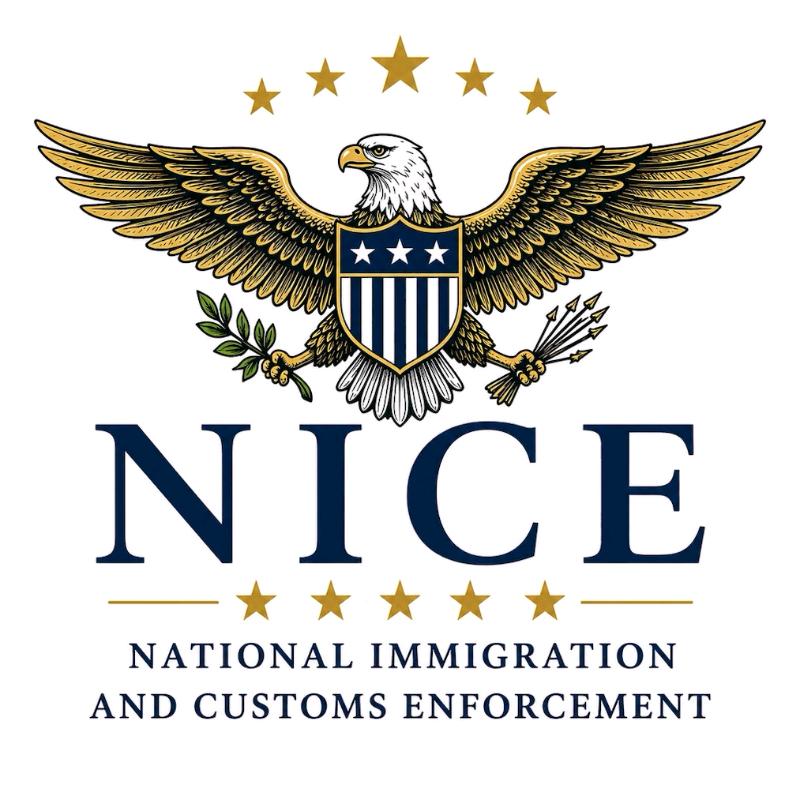
(UNITED STATES) – Donald Trump shared a social media logo labeled NICE that featured a spread-wing eagle perched atop a circle containing a U.S. flag, setting off online debate over the design’s resemblance to authoritarian political imagery.
The image placed “America First“ across the top and used stars and stripes detailing with bold lettering that resembled a presidential seal. Posts accompanying the design identified it as NICE, and the logo quickly drew attention across political and historical circles.
Critics cast the design as more than a stylized campaign emblem. They described the eagle as explicit neo-Nazi symbolism and said the imagery aimed to attract racist votes, tying the post to a longer record of disputes over Trump’s political language and visual messaging.
Historians and political observers focused on the central visual element: the spread-wing eagle above a circular field. They said that when stars and stripes are switched out for a swastika, the image replicates an eagle symbol used extensively in Nazi Germany under the Third Reich.
That comparison turned on form rather than color alone. The eagle’s posture, the circular device beneath it, and the seal-like composition all echoed iconography associated with state power, making the design’s structure as contentious as its wording.
The timing also added force to the backlash. The logo’s release in mid-June amplified accusations that Trump was embracing white supremacist signals, with critics saying the post confirmed his use of imagery drawn from Hitler’s regime.
Campaign distribution widened the scrutiny. The eagle image appeared on Trump campaign merchandise, including t-shirts sold through official channels, giving the design a commercial afterlife beyond a single social media post.
Variants of the same idea also surfaced on online marketplaces including Etsy and Zazzle. Listings included digital SVGs with Trump hair styling on the eagle, trucker hats marked “TRUMP USA Eagle Logo Stars Stripes”, and custom prints that repeated the stars-and-stripes motif.
Those merchandise versions showed how easily the emblem moved between formal campaign branding and a broader market of personalized political goods. In that migration, the NICE logo functioned both as a slogan-bearing campaign image and as a badge-style symbol available for reuse in altered forms.
Independent review pages added another layer of scrutiny. Sites reviewing Trump Eagle Badge products highlighted recurring elements including the spread-wing eagle, American flag background, stars and stripes, bold lettering, and a presidential-seal look, while also raising legitimacy questions amid scam concerns.
The reaction drew on older political wounds as well. Critics pointed back to Trump’s remarks after Charlottesville, Virginia, where he referred to white nationalists as “very fine people” despite the presence of Confederate flags and swastika banners.
Another line of criticism centered on related campaign imagery that invoked Nazi-era persecution more directly. Additional ads referenced Hitler’s concentration camps by using a large red upside-down triangle labeled “Dangerous MOBS of far-left groups” to depict opponents for elimination during protests over systemic racism and police violence.
That triangle imagery carried its own historical charge. Critics saw it as an effort to cast domestic political opponents in the visual language of dehumanization, linking campaign graphics to symbols associated with imprisonment and extermination rather than ordinary partisan attack.
Taken together, the eagle emblem, the America First wording, the merchandise rollout, and the related ad imagery deepened an argument that has followed Trump for years: whether his campaigns merely court outrage or intentionally use symbols that extremist audiences readily recognize. The NICE logo turned that argument into a single, highly shareable image, stamped with a seal-like design and carried by a spread-wing eagle that critics said was impossible to separate from the history it evoked.