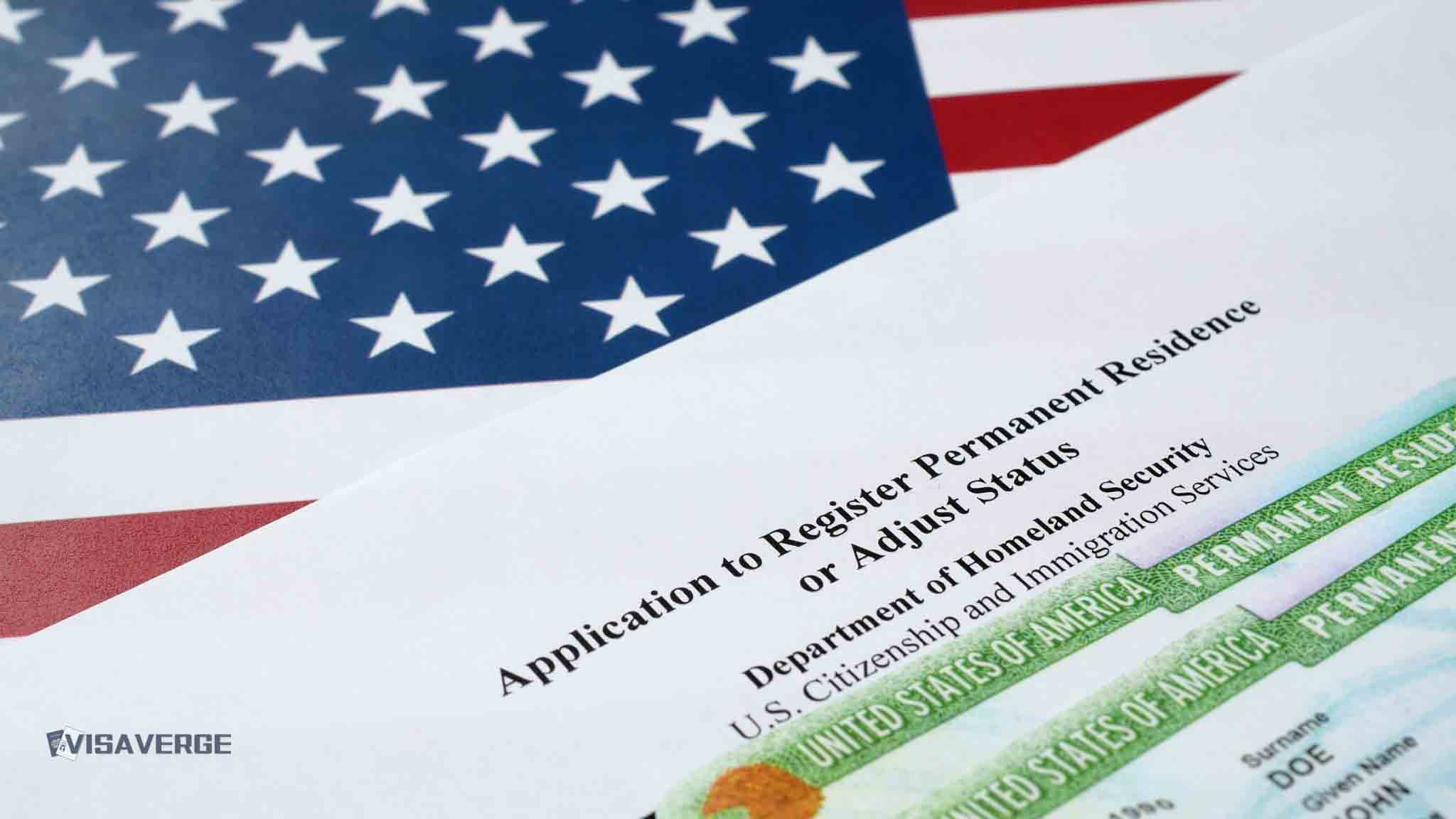
The Trump Administration formally launched a new Gold Card immigration program on September 19, 2025, presenting one of the boldest shifts in recent U.S. policy toward wealthy foreigners in decades. Framed by officials as a fast‑track route to permanent residence and eventual U.S. Citizenship, the initiative offers green card status in return for a direct $1 million gift to the federal government from individual applicants, or $2 million contributions from corporations seeking to keep specific foreign workers in the country.
Although the structure resembles a green card, the administration stresses that the Gold Card will move much faster than most existing employment‑based categories, with implementation scheduled to begin on December 18, 2025. The program also comes with a $15,000 non‑refundable processing fee and full security and medical vetting, including proof that all funds come from lawful sources.

Eligibility framework and legal linkages
Under rules released with the announcement, applicants must still qualify under existing merit‑based immigrant visa categories. Specifically, they must either meet EB‑1 Extraordinary Ability standards or fit the EB‑2 National Interest Waiver criteria.
- This design ties the Gold Card to established U.S. law rather than creating an entirely new class of immigrant.
- As a result, the program is reserved for a relatively narrow slice of high‑achieving and high‑net‑worth candidates who can satisfy those demanding standards.
Gold Card Eligibility & Cost Calculator
Check if you may qualify for the Trump Gold Card program and see total costs compared to other immigration paths.
Application Type
EB-1 Extraordinary Ability Criteria
EB-2 NIW Criteria (Alternative)
| Path | Min. Investment | Processing | Job Creation |
|---|---|---|---|
| Gold Card | $1,015,500 | Fast-track | None required |
| EB-5 (TEA) | $800,000+ | 2-4+ years | 10 jobs required |
| EB-5 (Standard) | $1,050,000+ | 2-4+ years | 10 jobs required |
| EB-1/EB-2 (Regular) | Filing fees only | Months to years | Job offer (usually) |
Disclaimer: This calculator provides general information only. Actual eligibility requires meeting EB-1 or EB-2 NIW legal standards as determined by USCIS. Consult an immigration attorney for personalized guidance.
Policy context and rationale
The launch follows months of internal debate about how to keep more global talent in the United States 🇺🇸 while also attracting fresh capital. It arrives at a time when backlogs in both employment‑based and family‑based green card lines are stretching into lifetimes for some applicants—especially Indians in certain categories whose waits can exceed 80 years.
Officials promoting the Gold Card say it will help the country retain:
– top graduates in science, technology, engineering and math,
– seasoned professionals, and
– global entrepreneurs
They argue these groups might otherwise settle in competing destinations that already run investor‑visa schemes.
Supporters point to investor programs in countries such as Portugal and the United Arab Emirates as models for how investor schemes can bring large inflows of money while offering long‑term residence rights. Analysis by VisaVerge.com estimates that combined gifts and fees could generate billions of dollars for the federal government if even a small share of the global millionaire class chooses the Gold Card.
Costs, processing and vetting — quick reference
| Item | Amount / Note |
|---|---|
| Individual contribution | $1,000,000 |
| Corporate contribution (to keep a worker) | $2,000,000 |
| Processing fee (non‑refundable) | $15,000 |
| Implementation / start date | December 18, 2025 |
| Required immigrant categories | EB‑1 or EB‑2 NIW |
| Security & medical vetting | Full background checks, medical exams, proof of lawful source of funds |
Reactions from affected groups
For most ordinary workers—even many in the high‑skilled H‑1B category—the $1 million contribution is far beyond reach. Many H‑1B holders have spent years building lives and careers in the U.S., yet frequently face visa extensions, layoffs, and long green card delays. Immigration lawyers say:
- The Gold Card is less a lifeline and more a symbolic reminder that a small, wealthy minority can buy its way out of the queue.
- Meanwhile, everyone else remains tied to per‑country quotas and outdated caps.
Many H‑1B professionals from India and other heavily backlogged countries have already waited a decade or more in temporary status. For them, the message that permanent residence could be almost instant for someone ready to write a seven‑figure check reinforces a sense the system favors money over time spent in the country.
International students on F‑1 status see a related picture. The administration frames the Gold Card as a tool to keep talented graduates after their studies, especially in science and engineering. But:
- There are no discounts, special waivers or academic exceptions for students.
- Students must either come from families that can afford $1 million gifts or secure $2 million corporate sponsorship—amounts far beyond typical relocation packages.
Beyond workers and students, the program is pitched at wealthy non‑resident Indians, global professionals, and mobile entrepreneurs who live between countries and want the ability to base themselves in the U.S. while keeping worldwide business interests.
How Gold Card compares with EB‑5 and the proposed Platinum tier
Officials say the Gold Card’s lack of a job‑creation requirement—unlike the aging EB‑5 investor visa—could make it more attractive than investing in regional centers that may not provide quick status or strong returns.
The administration has also floated a related Trump Platinum Card, which would:
– require a $5 million gift, and
– allow up to 270 days per year in the U.S. without U.S. tax on non‑U.S. income.
However, the Platinum tier remains on a waitlist and has not yet opened for applications.
Official guidance stresses:
– The new program does not replace EB‑5 or family‑based categories; it sits beside them as a premium option.
– The vast majority of green card routes remain unchanged.
For applicants who want to study existing pathways in detail, official information on permanent residence and naturalization remains available on the U.S. government’s green card portal: https://www.uscis.gov/green-card.
Security, screening, and remaining questions
The administration insists strong security checks will prevent abuse, pointing to plans for:
– detailed background screening,
– medical exams, and
– careful review of how applicants obtained the funds they will contribute.
Officials emphasize that applicants must still meet the demanding EB‑1 or EB‑2 NIW standards, so:
– Even very rich applicants must show extraordinary ability or a contribution that advances the national interest.
Supporters say those filters will exclude anyone who simply wants a bolt‑hole without achievement or a clear plan aligned with U.S. interests.
Yet many operational and policy questions remain unanswered. Because the policy does not change visa caps or recapture unused numbers, many experts expect the near‑term effect to be psychological and political rather than numeric. The population both wealthy enough and positioned to meet EB‑1 or EB‑2 NIW thresholds while also paying $1 million is very small compared with the millions already in line.
The ability of a few wealthy applicants to obtain near‑instant decisions could heighten perceptions that the system favors money.
Practical sequence for applicants (what to expect)
Officials are telling potential applicants to expect a relatively simple sequence once applications open in December:
- Register online and pay the $15,000 processing fee.
- Department of Homeland Security officers run background and security checks.
- Authorities confirm the lawful source of the funds and conduct medical screening.
- Applicants are invited to transfer the $1 million (individual) or $2 million (corporate) payment.
- After payment and approval of the EB‑1 or EB‑2 petition, recipients move directly to lawful permanent residence.
- After meeting normal residency requirements, recipients may apply for U.S. Citizenship through naturalization.
Political and social implications
People watching the rollout compare the Gold Card closely with EB‑5, which has long faced delays and uncertainty. Many critics view the Gold Card and proposed Platinum tier as evidence that lawful permanent residence is being treated more like a luxury product, while backlogs for families and workers remain unaddressed.
Within immigrant communities, reactions are mixed:
- Some high‑net‑worth families (notably in the Middle East, China, and parts of the global Indian diaspora) may view the program as another asset, since it leads directly to a green card and, with time, to U.S. Citizenship.
- Others—long‑term residents approaching retirement after decades of paying taxes and raising U.S.‑born children—see the announcement as confirmation that patience and deep community roots matter less than the ability to transfer large sums to the Treasury.
Bottom line
For now, the political meaning of the Gold Card may outweigh its technical design. The administration has signaled it intends to compete aggressively for moneyed migrants, even if the door it opens is accessible to only a tiny global elite.
For everyone else—from long‑waiting H‑1B engineers to F‑1 students hoping for a first job offer—the path to a green card and eventually U.S. Citizenship remains the familiar one: slow, uncertain, and, for now, unchanged by the arrival of the Gold Card.
The Gold Card, launched Sept. 19, 2025, offers a fast path to U.S. permanent residence for wealthy individuals and corporate sponsors who meet EB‑1 or EB‑2 NIW standards and contribute $1 million (individual) or $2 million (corporate). Implementation begins Dec. 18, 2025, with a $15,000 processing fee and full vetting of funds. Officials pitch it as a talent‑retention tool; critics say it privileges a tiny elite and does not address broad green card backlogs.