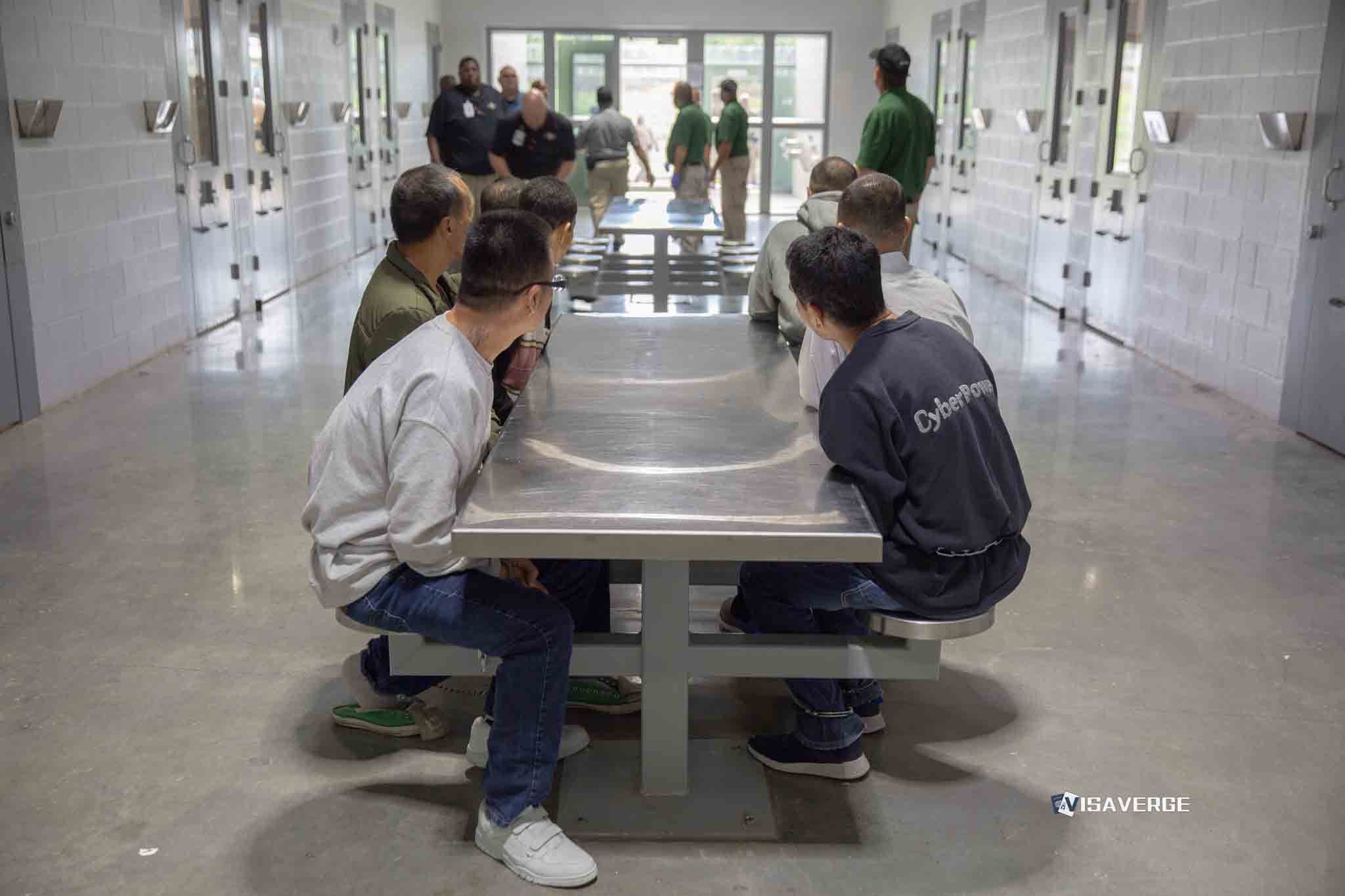
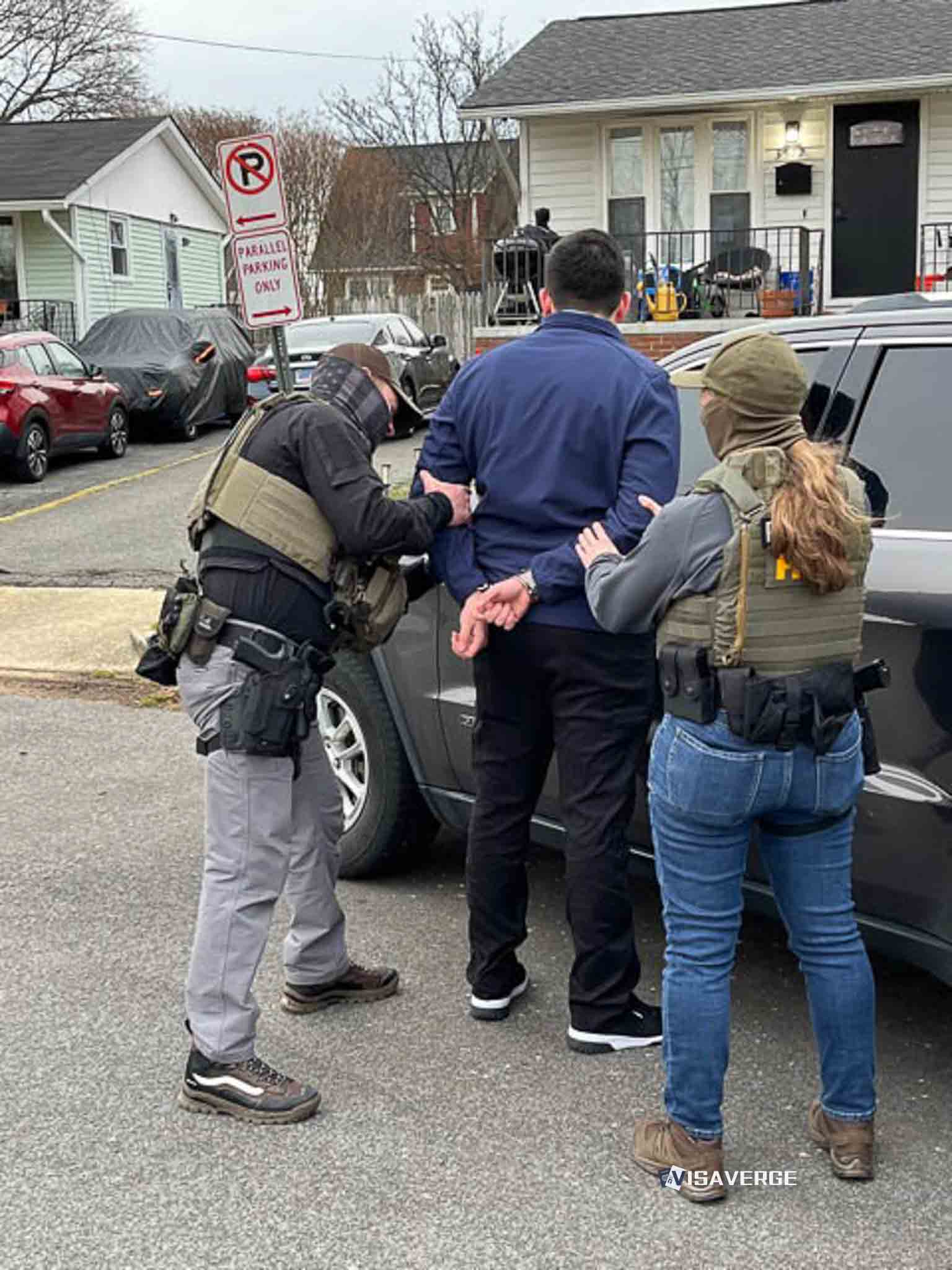
On Wednesday, July 22, 2026, ICE formally withdrew its appeal of Pennsylvania permit denials, ending its push to convert two rural warehouses into detention centers. The move follows the state Department of Environmental Protection’s refusal to approve drinking water and wastewater permits for the sites, which Pennsylvania officials said lacked the infrastructure needed for the detention plan.
- An ICE lawyer filed paperwork on Wednesday, July 22, 2026 withdrawing the agency’s appeal of the permit denials tied to the two Pennsylvania warehouse projects.
- The Pennsylvania Department of Environmental Protection had denied the required drinking water and wastewater permits, citing inadequate local infrastructure for the thousands of detainees ICE envisioned.
- Governor Josh Shapiro opposed the warehouses as detention sites, warning that the conversions would create serious health and safety risks for surrounding communities.
- The warehouses were part of the former Homeland Security Secretary Kristi Noem $38 billion expansion plan, which her successor, Markwayne Mullin, paused after community criticism last month.
- DHS has paused warehouse acquisition plans for immigrant detention following the appointment of Secretary Markwayne Mullin.
- The review follows significant local infrastructure concerns and legal challenges regarding environmental compliance in Maryland.
- The plan originally aimed for 100,000 detention beds across 34 federally-owned mega-centers and regional processing sites.
(UNITED STATES) — The Department of Homeland Security has paused plans to buy new commercial warehouses for immigrant detention, halting an effort that had been central to the Trump administration’s push to expand detention capacity.
Free toolUSCIS Receipt Number DecoderA senior DHS official, speaking on condition of anonymity, confirmed the pause on March 31 and April 1, 2026. On Wednesday, a DHS spokesperson said, “As with any transition, we are reviewing agency policies and proposals.”
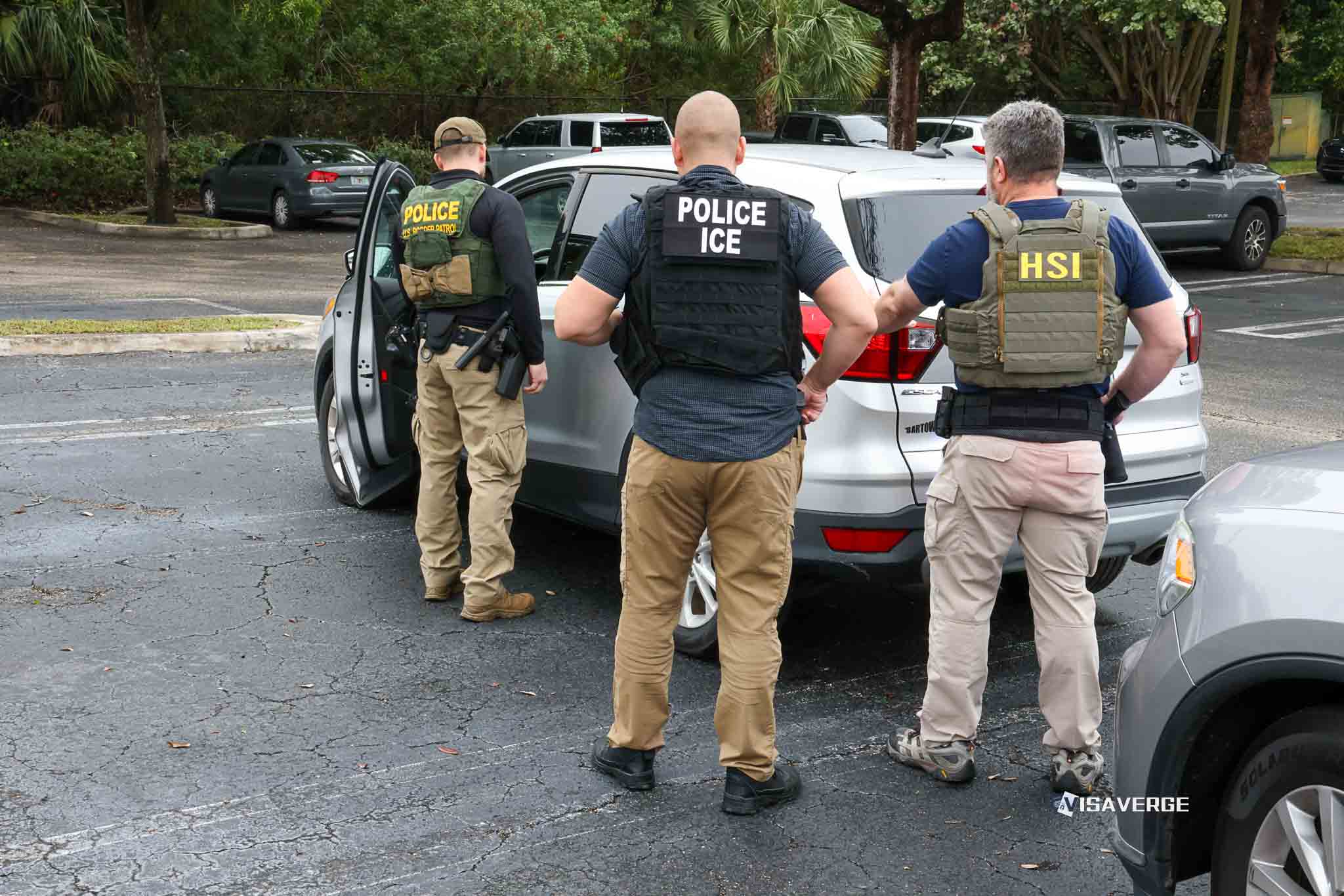
The shift follows the swearing-in of Secretary Markwayne Mullin, who took office last week after the departure of former Secretary Kristi Noem. The pause applies to the “Detention Reengineering Initiative,” an effort launched under Noem to reshape how the government detains migrants.
| India | China | ROW | |
|---|---|---|---|
| EB-1 | Feb 01, 2023 ▲109d | Jul 01, 2023 | Current |
| EB-2 | Nov 01, 2013 | Oct 01, 2021 ▲30d | Jan 01, 2025 |
| EB-3 | Jan 01, 2014 | Jan 08, 2022 ▲7d | May 15, 2024 ▼109d |
| F-1 | Jan 22, 2020 | Jan 22, 2020 | Jan 22, 2020 |
| F-2A | Sep 22, 2026 ▲31d | Sep 22, 2026 ▲31d | Sep 22, 2026 ▲31d |
Mullin had signaled during his March 2026 confirmation hearing that he would pair enforcement goals with more consultation with local officials. “We’ve got to protect the homeland and we’re going to do that. But obviously we want to work with community leaders and be good partners,” he said.
Drawing on his construction background, Mullin also said, “Municipalities don’t have the capacity in their infrastructure for waste and water. So, it’s important that we’re talking to the communities.” Those remarks now sit at the center of a policy review that has slowed one of the administration’s most expensive detention plans.
The initiative aimed to replace the current network of about 300 local jail contracts with 34 DHS-owned facilities. Under that model, DHS would rely far less on scattered county and local arrangements and more on large, centralized sites built around warehouse-style detention.
Plans called for 8 “Mega-Centers” capable of holding 7,000 to 10,000 detainees each for up to 60 days. The initiative also included 16 Regional Processing Centers designed to hold 1,000 to 1,500 people for 3–7 days.
Taken together, the target was to raise detention capacity to roughly 92,000–100,000 beds by November 2026. That scale would have marked a broad restructuring of immigrant detention operations across the country.
Money for the initiative came from a pool of approximately $38.3 billion, derived from the “One Big Beautiful Bill Act” passed in July 2025. Before DHS imposed the current pause, the federal government had already spent $1.074 billion to acquire 11 warehouses.
Those purchases stretched across multiple states. Acquired sites included warehouses in Arizona, Georgia, Maryland, Michigan, New Jersey, Pennsylvania, Texas and Utah.
The locations identified in the plan were Surprise, Arizona; Social Circle, Georgia; Williamsport/Hagerstown, Maryland; Romulus, Michigan; Roxbury, New Jersey; Tremont, Pennsylvania; Socorro, Hutchins and San Antonio, Texas; and Salt Lake City, Utah. The breadth of those purchases showed how aggressively the previous approach had moved before Mullin took office.
For the Trump administration, the pause does not amount to a retreat from immigration enforcement. DHS continues to process detainees through existing contract jails and through Camp East Montana at Fort Bliss, Texas, a soft-sided tent camp that remains part of the system while the department reviews warehouse acquisitions.
Still, the halt interrupts a strategy that had drawn operational, legal and political resistance in several states. Local officials in places including Georgia and Michigan challenged planned detention sites, and some communities moved to cut off water or sewer service, arguing that the projects would overwhelm local infrastructure.
That local backlash tracked closely with Mullin’s own confirmation-hearing comments about waste and water capacity. His concerns, voiced before he took office, echoed arguments made by municipal leaders who opposed rapid warehouse conversions in their communities.
A legal challenge in Maryland also added pressure. On March 11, 2026, a federal judge issued a Temporary Restraining Order halting construction at a Williamsport warehouse after finding failures tied to compliance with the National Environmental Policy Act, or NEPA.
That ruling placed one of the most visible warehouse conversions under court scrutiny and added to the uncertainty surrounding the broader initiative. Information about the Maryland case is available through the Office of the Attorney General of Maryland.
Criticism also sharpened after ICE Acting Director Todd Lyons described the initiative’s philosophy as being “like [Amazon] Prime, but with human beings.” The remark drew criticism from human rights groups and lawmakers and became one of the most cited examples of how opponents viewed the program’s approach.
Advocates have argued that warehouses built to store products are poorly suited for prolonged detention. Groups including the National Immigration Law Center and Detention Watch Network warned that such facilities often lack the ventilation, plumbing and medical infrastructure needed for safe human habitation.
They also said the model could make legal access harder. Under the mega-center system, thousands of detainees could be housed in remote locations, far from attorneys and support networks, complicating efforts by people in proceedings to contact counsel while facing deportation.
Those concerns have already shaped operations on the ground. At the Surprise, Arizona, site, capacity was scaled back from 1,500 beds to 542 because of local limits, showing that even purchased properties could face restrictions before full use.
The pause leaves the administration in a transitional moment. DHS has not abandoned its broader enforcement mission, but the department is now reassessing whether large warehouse purchases remain the best way to meet its detention goals.
That review lands at a sensitive time for the government’s immigration agenda. The Trump administration has kept detention expansion high on its list of priorities, yet the warehouse initiative had become a flashpoint over cost, legality and the treatment of detainees.
For communities near proposed sites, the review could slow projects that had already stirred opposition. For officials who backed the initiative, it could force a return to a more fragmented detention network built around local jail contracts rather than federally owned mega-facilities.
The scale of the original proposal showed why the current pause matters. Replacing about 300 local jail contracts with 34 DHS-owned centers would have concentrated immigrant detention into fewer, much larger locations, changing not only where people were held but how quickly they moved through the system.
Regional Processing Centers were designed for rapid turnover, with stays of 3–7 days. Mega-Centers, by contrast, were intended to hold detainees for up to 60 days, creating a detention model built around large-volume processing and longer stays at a smaller number of sites.
Mullin now inherits that plan at a moment when its vulnerabilities are exposed. Community resistance, infrastructure fights, court action and criticism over detention conditions had begun to shape the public debate even before he was sworn in.
The department has framed the latest move as part of a normal leadership transition. “As with any transition, we are reviewing agency policies and proposals,” the DHS spokesperson said.
Federal information about the department’s actions is available through DHS, while detention and enforcement operations can be tracked through ICE. Immigration-related agency information is also posted by USCIS.
What comes next will help determine whether the Trump administration continues with the warehouse model, reshapes it, or leans more heavily on existing facilities. For now, one of the government’s most ambitious immigrant detention plans has been put on hold as Markwayne Mullin reviews how far, and how fast, DHS should go.