- Federal agencies are expanding warehouse-style mega-jails to increase national immigration detention capacity through FY2029.
- Kansas City officials are pursuing a multi-year moratorium to block large private detention facilities within city limits.
- Detention significantly hinders legal defense efforts by limiting access to counsel, evidence, and community support networks.
(KANSAS CITY, MISSOURI) — For people facing immigration detention as the federal government moves toward larger, warehouse-style “mega-jails,” the most immediate defense strategy is often to pursue release through an ICE bond or an Immigration Judge (IJ) bond redetermination hearing—while simultaneously building the strongest possible record for the underlying immigration case.
That strategy matters because detention is not just a physical confinement issue. It can change the outcome of a case by limiting access to counsel, evidence, medical care, and family support.
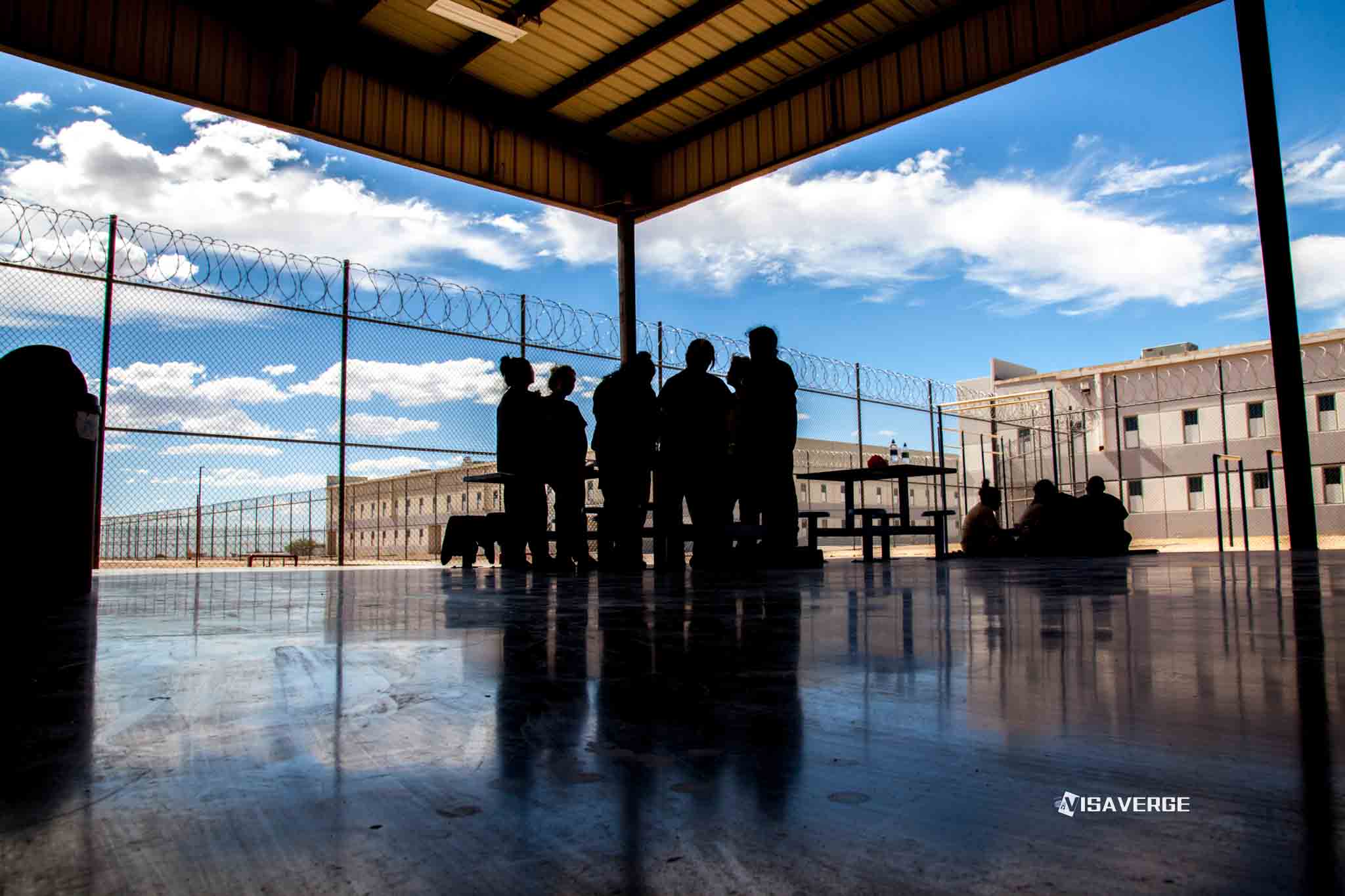
With Kansas City emerging as a flashpoint for local resistance to new facilities, many families are asking what legal tools exist right now for individuals who may be swept into expanded detention capacity.
Free toolUSCIS Receipt Number DecoderWhat follows is a practical, defense-oriented guide to bond, custody challenges, and related due-process protections, set against the backdrop of the current federal detention expansion and the Kansas City pushback.
1) Overview: the federal detention infrastructure expansion and why it matters for defenses
The administration’s plan contemplates a large federal investment to expand immigrant detention infrastructure nationwide. “Infrastructure expansion” can include new facility construction, reactivating shuttered detention centers, acquiring existing buildings (including large industrial warehouses), and expanding contracts with private or county operators.
Federal legislation and appropriations are the engine here: when Congress authorizes and funds more detention space, ICE can increase bed capacity faster and in more places. Capacity targets matter because they influence scale (how many people can be held), geography (where people are transferred), and speed (how quickly ICE can move people into custody).
Those operational changes can ripple into local housing and land-use debates, as communities confront proposals to convert warehouse properties into high-capacity facilities. For defense counsel and families, the key practical takeaway is this: when capacity expands, detention can become more frequent, more remote, and longer, making early legal intervention more important.
2) Official statements and government framing: what agencies say versus how detention rolls out
DHS and ICE public messaging has emphasized that expanded detention space is tied to enforcement priorities, removals, and “well-structured” facilities meeting ICE standards. DHS has also used public safety rhetoric to justify aggressive enforcement, which in turn increases demand for detention space.
It is important to separate messaging from implementation. Press statements may highlight standards and public safety goals. Implementation typically turns on procurement, contracting, inspections, staffing, transportation pipelines, and siting decisions.
In many cases, those decisions unfold quickly, with limited public notice until a proposed contract, building permit, or property transaction surfaces. Key milestones and announcement dates have been reported publicly, but readers should verify dates directly in agency releases and legislative records, because timelines can shift with new appropriations, contract protests, or litigation.
Primary official sources for statements include the DHS Newsroom and the ICE Newsroom.
3) The Kansas City pushback: what a moratorium can (and can’t) do, and why zoning fights still matter
Kansas City officials have pursued a multi-year moratorium aimed at blocking non-city-run detention facilities. The reported goal is to prevent conversion of warehouse-scale properties into facilities with thousands of beds.
From a legal perspective, a local moratorium can be powerful for ordinary development. Cities often control zoning classifications, conditional use permits, building codes, fire and life-safety compliance, and occupancy rules. Those tools can slow or block certain projects, particularly where a private developer needs local approvals.
But immigration detention introduces a recurring tension: local land-use authority versus federal power. If a facility is federally owned, federally leased, or embedded in federal contracting, the city’s leverage may be narrower. Even when local rules apply, federal contractors may argue preemption or seek alternate routes.
Outcomes can vary by jurisdiction and facts, including how the facility is structured and which permits are required. For individuals, the Kansas City dispute may affect where people are detained, how far they are transferred, and how easy it is to access counsel. Even if a project is delayed, enforcement and detention can still increase elsewhere, including through expansions at existing sites.
Warning: Local opposition to detention sites may change where detention occurs, but it usually does not stop ICE from detaining someone who is otherwise subject to arrest and custody under federal law. Detained individuals should act quickly on bond and custody options.
4) Key statistics and policy details: why “through FY2029” matters for contracting and detention realities
Congressional authorization to spend detention funds through FY2029 generally means the federal government may roll out projects in phases—issuing solicitations, awarding contracts, acquiring properties, and scaling staffing over several fiscal years. That pacing can produce rapid expansions in some locations and slower buildouts in others.
Recent increases in the detained population are a core driver of capacity expansion. When ICE detention numbers rise quickly, pressure increases to find beds, staff, medical providers, transportation, and access to immigration court (EOIR).
Capacity targets are often expressed as a range, which is operationally significant: even a range can require major expansions in guard staffing, medical screening capacity, telephonic and video legal visitation systems, and transport to hearings.
Public reporting has also described acquisitions and repurposing as a key implementation method—especially purchases or leases of large commercial properties that can be converted into mega-jails. For defense strategy, the most important point is not the purchase price. It is that rapid conversions can lead to detention in locations that are farther from families and lawyers, increasing the chance of missed deadlines and weaker case preparation.
The section on Key statistics and policy details is intended to introduce the context for interactive tools that display exact figures and contracting timelines. Those tools will provide the structured data presentation.
5) Context and significance: safety incidents, state/local restrictions, and uncertain litigation paths
High-profile enforcement incidents and deaths have intensified local policymaking around detention siting. Communities often cite safety, transparency, medical care, and accountability concerns, especially when proposals involve large warehouse facilities.
At the state level, some jurisdictions have tried to limit cooperation or restrict state and local contracting with ICE. Court outcomes have varied, and challenges often turn on preemption doctrines, statutory framing, and the specific way the restriction operates.
No single result is guaranteed, and the Kansas City dispute—if it ends up in court—would likely depend on the exact ordinance language, the facility’s legal structure, and the contracting path used. Because litigation is fact-specific and circuit law differs, readers should be cautious about assuming any one court outcome.
6) Impact on individuals and civil rights concerns: how detention changes cases, and what to do immediately
Detention affects core case mechanics: meeting deadlines, collecting identity documents, securing witness declarations, and preparing testimony. Conditions concerns, including allegations of overcrowding and limited medical oversight, can also intersect with due process and safety issues.
Multiple deaths have been reported early in 2026, heightening scrutiny and fear among detained populations and their families. Remote facilities create predictable defense problems such as reduced counsel access, weaker evidence gathering, and higher pressure to give up claims.
- Reduced counsel access: Fewer local attorneys, limited legal visitation hours, and heavy reliance on video visits
- Weaker evidence gathering: Harder to obtain documents from employers, schools, landlords, and family
- Higher pressure to give up claims: Some detainees may abandon viable relief to exit custody sooner
The defense strategy: bond first, record always
Bond and custody advocacy typically starts immediately, even before the first master calendar hearing.
Key legal framework
- Discretionary ICE custody and bond: INA § 236(a).
- Mandatory detention (no bond): INA § 236(c) for many covered criminal or terrorism-related grounds.
- Immigration Judge bond hearings: 8 C.F.R. § 1236.1(d) and 8 C.F.R. § 1003.19.
At a bond hearing under INA § 236(a), the IJ considers whether the person is a danger to the community or a flight risk. The Board’s leading bond factors appear in Matter of Guerra, 24 I&N Dec. 37 (BIA 2006) (including family ties, length of residence, employment history, criminal record, and prior court compliance).
For many asylum seekers, bond law has shifted over time depending on posture and jurisdiction; counsel should evaluate how Matter of M-S-, 27 I&N Dec. 509 (A.G. 2019) and later developments apply to the client’s procedural category. Federal courts have also addressed detention limits and bond timing in complex ways.
(For example, the Supreme Court rejected certain categorical bond timelines in Jennings v. Rodriguez, 583 U.S. 281 (2018), leaving room for constitutional arguments that vary across jurisdictions.)
Evidence that typically strengthens a bond request
- Proof of a stable address (lease, letter from landlord, mortgage statement)
- A housing plan in writing, including who will provide transportation and support
- Family ties (marriage certificates, birth certificates, caregiver letters)
- Employment history or a job offer letter
- Medical records and continuity-of-care plan, if relevant
- Community support letters (faith leaders, neighbors, teachers)
- Evidence of court compliance (prior appearances, probation completion)
- A well-prepared explanation of any arrests or convictions, with certified dispositions
Factors that weaken bond
- Recent convictions, especially violence, DUI patterns, weapons allegations, or protective order violations
- Prior removal orders or prior failures to appear
- Lack of a stable release address, or a vague plan to “figure it out later”
- Conflicting identity information or unresolved criminal cases
Potential bars and disqualifiers include mandatory detention under INA § 236(c), certain arriving noncitizen categories, reinstated removal orders, and expedited removal processes that redirect custody strategy toward parole requests or federal court review.
Deadline Alert: Bond strategy is time-sensitive. In many cases, the best evidence (leases, letters, certified dispositions) takes days to obtain. Families should start gathering documents immediately after detention.
Warning: Do not assume a “mega-jail” transfer will wait for your attorney. ICE transfers can occur quickly. Counsel should file notices of appearance promptly and request facility-specific visitation procedures early.
Outcome expectations (realistic, not guaranteed)
Bond outcomes vary widely by jurisdiction, facts, and the person’s record. Some individuals secure release quickly with strong community ties and clean records. Others face high bonds or no bond authority due to statutory limits.
Even when release is possible, remote detention can delay preparation and raise costs. This is precisely why representation matters.
Why attorney representation is critical
- Identify whether the person is in mandatory detention or eligible for IJ bond
- Prepare a coherent release plan tied to statutory factors
- Address criminal history with certified records and legal analysis
- Coordinate parallel defenses (asylum, cancellation, adjustment) while bond is pending
- Seek alternative custody remedies when IJ bond is unavailable
7) Official government sources and references (curated)
To track developments and verify official language:
- DHS Newsroom (press releases and policy statements)
- ICE Newsroom (enforcement and detention announcements)
- Congress.gov (bill text and legislative actions, including H.R. 1)
When reviewing these sources, check date stamps, updated versions, and whether a statement is a policy summary, a contract notice, or a final rule.
This article provides general information about immigration law and is not legal advice. Immigration cases are highly fact-specific, and laws vary by jurisdiction. Consult a qualified immigration attorney for advice about your specific situation.
Resources:
– AILA Lawyer Referral