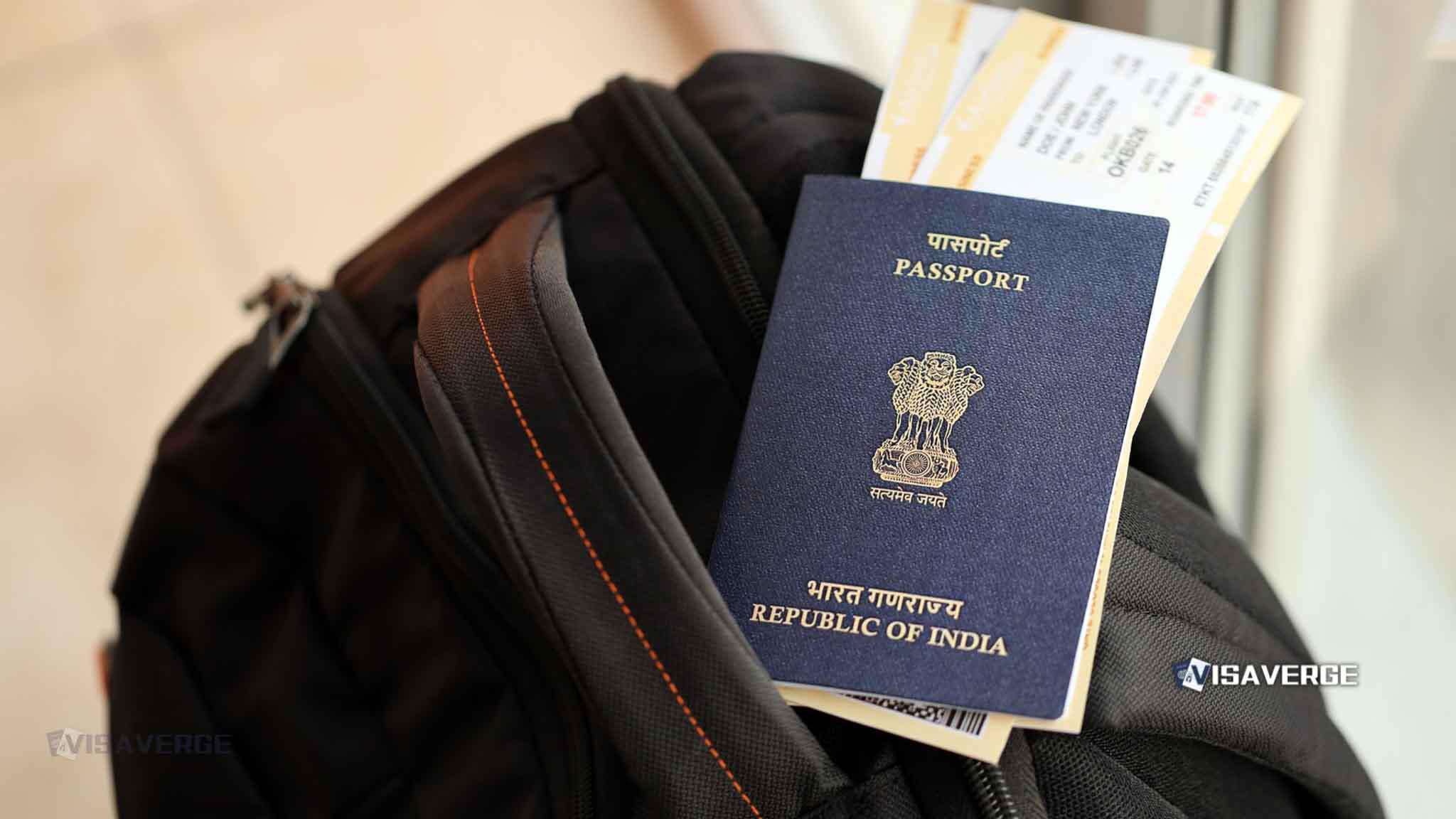
- Indian travelers to Thailand must carry twenty thousand Baht in cash for visa-free entry.
- Travelers are required to file the Digital Arrival Card within seventy-two hours of arrival.
- Immigration requires individual sets of travel documents for every member of a group.
(BANGKOK, THAILAND) — The Indian Embassy in Bangkok issued an advisory on July 2, 2026, telling Indian nationals bound for Thailand to carry complete travel documents, file the TDAC before arrival and, in some cases, show THB 20,000 in cash at immigration.
The notice has drawn attention because of the so-called ₹58,000 Cash Rule, a shorthand for the embassy’s reminder that travellers using the Visa Waiver or Visa on Arrival route should carry at least THB 20,000 per passenger in cash. The amount converts to roughly ₹57,000 to ₹58,000, depending on the exchange rate.
Free toolB1/B2 Tourist Visa Stay Calculator online
Thai authorities treat that amount as proof of sufficient funds, not as a fee. Travellers do not pay it to enter Thailand, but immigration officers may ask to see it when checking whether a visitor can support the trip.
The embassy also told travellers to keep a passport valid for at least six months from the date of arrival, a confirmed Return Ticket or onward ticket, hotel booking details, a clear itinerary and the appropriate visa for the purpose of travel. It advised Indian passengers to complete the Thailand Digital Arrival Card within 72 hours before arrival.
| India | China | ROW | |
|---|---|---|---|
| EB-1 | Feb 01, 2023 ▲109d | Jul 01, 2023 | Current |
| EB-2 | Nov 01, 2013 | Oct 01, 2021 ▲30d | Jan 01, 2025 |
| EB-3 | Jan 01, 2014 | Jan 08, 2022 ▲7d | May 15, 2024 ▼109d |
| F-1 | Jan 22, 2020 | Jan 22, 2020 | Jan 22, 2020 |
| F-2A | Sep 22, 2026 ▲31d | Sep 22, 2026 ▲31d | Sep 22, 2026 ▲31d |
Documents should be ready before a passenger reaches the immigration counter. Group travellers should not rely on one person to hold all paperwork, because the embassy said each traveller should carry documents individually.
That instruction has practical consequences for families. The advisory ties the cash requirement to each passenger, so a family of four may be expected to carry separate proof for all four travellers, along with passports, tickets and accommodation records for children as well as adults.
The use of the word “cash” stands out. Many Indian tourists now rely on cards, app-based balances or UPI-linked forex products abroad, but the embassy’s advisory says cash, and that leaves less room for a traveller to assume a digital balance will satisfy an immigration check.
Budget travellers and first-time visitors face the most pressure under that rule. Immigration screening may remain routine for genuine tourists with complete records, but passengers who arrive without hotel bookings, without a clear itinerary, without a Return Ticket or without the required cash risk delays, questioning or refusal of entry.
The TDAC requirement adds another layer. Thailand’s official FAQ describes the Thailand Digital Arrival Card as an online arrival form for non-Thai nationals entering the country, not a visa, and says it can be submitted up to 72 hours before entry.
Each entry requires a new TDAC, and children need one as well. Transit passengers who do not pass immigration may not need it, but travellers who leave the airport or go through immigration control should expect the form to matter.
That distinction has become important because some travellers still treat the arrival card as if it were an entry permit. It is not. A passenger still needs to match the correct visa or entry category to the actual purpose of the trip.
Confusion remains over whether Indians still receive visa-free entry for 60 days. The Royal Thai Embassy in New Delhi page, updated on May 21, 2026, says the 60-day visa exemption for Indian ordinary passport holders for tourism and short-term business engagements remains effective until further announcement.
Thailand’s Government Public Relations Department has also reported that the Thai Cabinet approved a revision of visa exemption and Visa on Arrival schemes on May 19, 2026. That approval includes revoking the 60-day visa exemption scheme for 93 countries and revising the Visa on Arrival list, with changes taking effect 15 days after publication in the Royal Gazette.
Until those positions fully align in public guidance, travellers face a narrower margin for error. The safer course is to check the applicable entry category before booking or departure and assume Thai immigration will closely examine visa status, proof of funds, hotel reservations and the Return Ticket at arrival.
The embassy’s warning extends beyond tourism. Indian nationals who already hold a job offer should not travel on Visa Waiver or Visa on Arrival terms while intending to work, and should obtain the proper visa before departure.
Entering on tourist status while planning to take up employment can breach immigration rules and create later visa trouble. It can also expose job seekers to fraud, exploitation or trafficking, particularly when agents promise work in Thailand without arranging the proper employment documents.
That caution also covers business assignments, internships and longer stays. Travellers whose real purpose is work should resolve the visa category before they board, because a cheap tourist entry route can become expensive if immigration officers question the purpose of travel on arrival.
Passengers using Thailand as a transit point have fewer formalities to manage, but not none. The advisory says transit travellers should carry onward tickets and all documents needed for the final destination, including visas where necessary, because airlines and immigration officials may check whether the passenger can legally continue the journey.
A missing onward document can create problems before the trip even starts. Carriers can refuse boarding when a passenger cannot show eligibility for the next country, and similar questions can arise during transit in Thailand.
By the time Indian passengers head to the airport, the embassy’s checklist is straightforward: a passport valid for six months, the correct visa category, a TDAC filed within 72 hours, hotel and ticket confirmations, a clear itinerary, and THB 20,000 in cash per traveller when using Visa Waiver or Visa on Arrival. Each person in the group should hold a separate set of documents, not a shared folder passed across the counter.
Thailand remains a popular short-haul destination for Indian travellers, but the 2026 message from Bangkok is more exacting than casual holiday planning often assumes. Entry still appears straightforward for visitors who arrive prepared; the pressure falls on those who treat the cash rule, TDAC filing and Return Ticket requirement as optional.