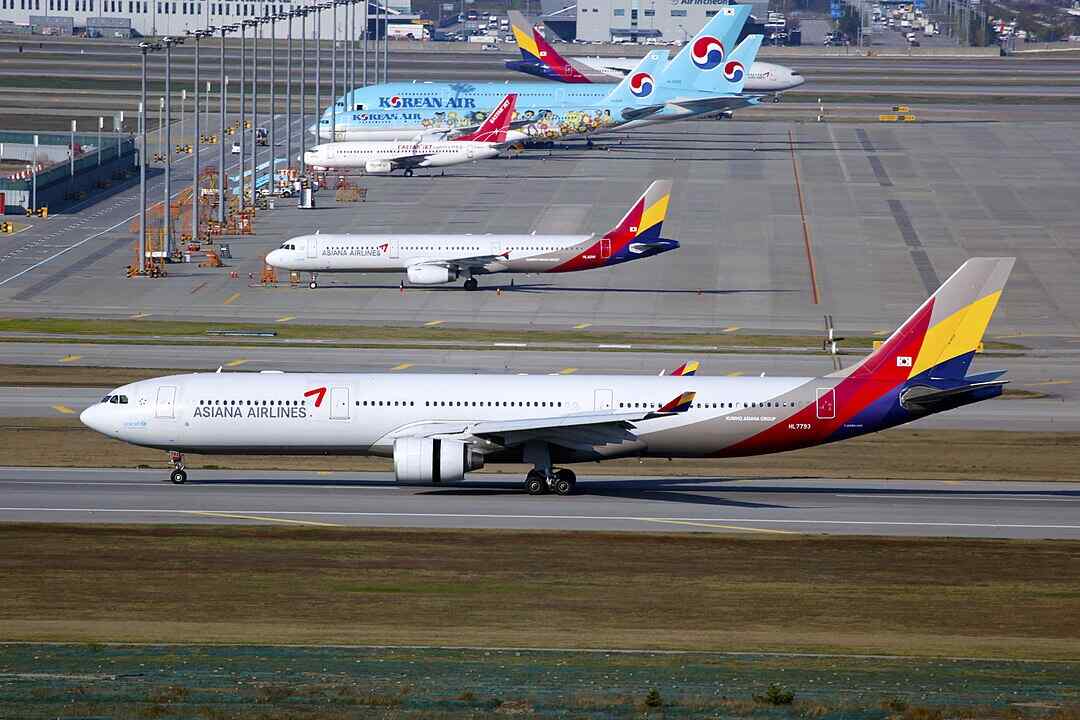
- South Korean airlines are slashing international flight schedules due to soaring jet fuel prices and Middle East conflict.
- Major carriers like Korean Air and Air Premia have entered emergency management mode to control rising operational costs.
- Fuel surcharges for international travelers jumped up to threefold in April, significantly increasing round-trip ticket prices.
(SOUTH KOREA) — South Korean airlines are cutting international flights as the Middle East conflict pushes up jet fuel costs, forcing both full-service and low-cost carriers to trim schedules, suspend routes and activate emergency measures.
Air Premia suspended 26 flights on its Incheon-Los Angeles route between April 20 and May 31, reducing operations from 88 to 62 flights, a 30% reduction. The carrier also canceled six flights on the Incheon-Honolulu route and plans to suspend 10 additional flights on Incheon-San Francisco and Incheon-New York routes in May.

Eastar Jet suspended 50 flights on the Incheon-Phu Quoc route from May 5 to May 31, citing limited local refueling conditions in Vietnam. Air Busan and Aero K Airlines have already reduced international services starting in April, while Jeju Air, T’way Air and Jin Air are considering cuts on Southeast Asian routes.
Korean Air extended the suspension of its Incheon-Dubai flights through April 19. The route has been suspended since February 28 following U.S. and Israeli airstrikes on Iran.
Korean Air entered emergency management mode in April and put in place phased response steps and company-wide cost efficiency measures to offset surging fuel expenses. T’way Air and Asiana Airlines also entered emergency management mode in March.
The pressure on South Korean airlines follows a sharp rise in jet fuel prices across the region. Jet fuel prices in Asia and Oceania rose 16.6% to $204.95 per barrel in the week of March 13-20.
Globally, the average jet fuel price reached $197 per barrel during March 14-20. That was a 105.8% increase compared with the previous month’s average and 96.3% above pre-war levels of $99.4 per barrel.
Those higher fuel prices are flowing straight into ticket costs. Fuel surcharges on flights departing Incheon rose by as much as three times in April from March, adding more than 1 million won, about $730, to round-trip fares from the Americas and Europe.
The squeeze extends beyond fuel itself. A weaker Korean won has added to the burden because about 70-80% of major airline expenses, including aircraft lease fees and fuel costs, are settled in U.S. dollars.
Carriers are also changing operations to cope with supply strain. Airlines are carrying extra fuel, adding refueling stops and reducing cargo to manage constraints.
The breadth of the cuts shows how quickly higher jet fuel costs are feeding into network decisions. Low-cost carriers have moved first and most visibly, but the response now stretches across the market, from airlines serving holiday destinations in Southeast Asia to a full-service carrier keeping a Middle East route off its schedule.
Air Premia’s reductions capture that shift in concrete terms. Pulling 26 flights from the Incheon-Los Angeles route between late April and the end of May removes nearly one-third of planned service on one of its long-haul corridors, while the canceled Honolulu flights and planned May suspensions on San Francisco and New York widen the retrenchment across the Pacific.
Eastar Jet’s move on Phu Quoc points to another layer of disruption beyond the direct rise in fuel prices. Limited local refueling conditions in Vietnam forced the airline to suspend 50 flights on that route during most of May, underscoring how supply conditions are shaping schedules as much as fares.
Other carriers have not yet announced reductions on the same scale, but the direction is the same. Air Busan and Aero K have already cut international flights from April, and Jeju Air, T’way Air and Jin Air are weighing reductions on Southeast Asian services, a region where lower fares can leave less room to absorb sudden increases in operating costs.
Full-service airlines are responding with a different mix of tools. Korean Air has paired route suspensions with emergency management steps and internal cost controls, while Asiana Airlines and T’way Air entered emergency management mode in March as the industry adjusted to a steeper fuel bill.
The Incheon-Dubai suspension shows how conflict-related disruption can ripple beyond fuel benchmarks. Korean Air halted the service on February 28 after U.S. and Israeli airstrikes on Iran, then extended the pause through April 19, leaving one more international route affected by the instability tied to the Middle East war.
Passengers hit by flight cancellations can change travel dates once within seven days free of charge or receive full refunds without cancellation fees. That offers some protection as airlines rewrite schedules, though it does not remove the wider impact of tighter capacity and higher surcharges on international travel.
The combined effect is visible in three places at once: fewer flights, higher fares and more operational strain. South Korean airlines are paying more for fuel, paying in a stronger U.S. dollar for most major expenses, and adjusting flight plans to preserve cash and secure supply.
That pressure has reached routes linking Incheon with Los Angeles, Honolulu, San Francisco, New York, Dubai and Phu Quoc, while possible cuts on Southeast Asian services remain under review. With fuel surcharges from Incheon jumping as much as threefold in April, the industry’s response has moved from internal contingency planning to visible flight cancellations across international networks.