(MUAN, south korea) — South Korea has now conceded a safety failure at Muan International Airport likely contributed to the jeju air crash that killed 179 people, a development that could shape airport reopening plans and how travelers judge the route’s safety and reliability.
In a briefing to the National Assembly, the Ministry of Land, Infrastructure and Transport said the airport’s localizer installation “failed to comply with airport safety operation standards.” The ministry also said the structure should have been modified during a 2020 upgrade to “break easily in the event of a collision” if located within 240 meters of a runway end.
That marks a reversal from earlier statements that the installation was legal. For passengers, it is a rare, direct admission that ground infrastructure was a factor in a fatal airline accident.
A government-commissioned simulation went further. The analysis, performed by the Computational Structural Engineering Institute of Korea at the request of the aviation and railway accident investigation board, found all 179 people who died would likely have survived if the concrete mound supporting the localizer had not been there, or had been frangible.
The study concluded the jet’s initial belly-landing impact was not severe enough to cause serious injuries. It said the Boeing 737-800 would likely have slid around 770 meters before stopping without the concrete barrier. The expected outcome, the report said, would have been minor injuries.
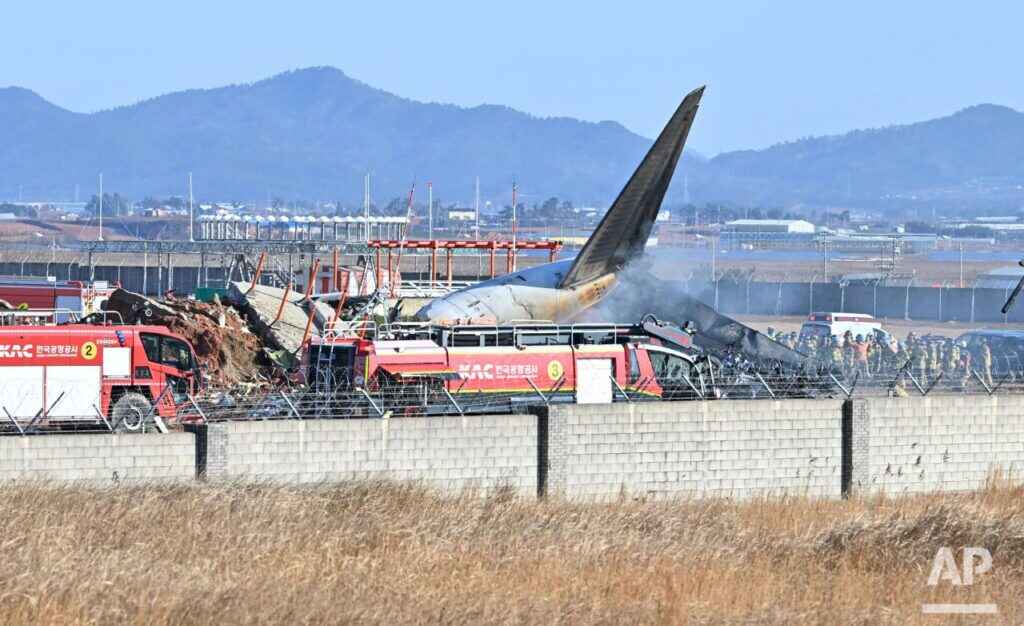
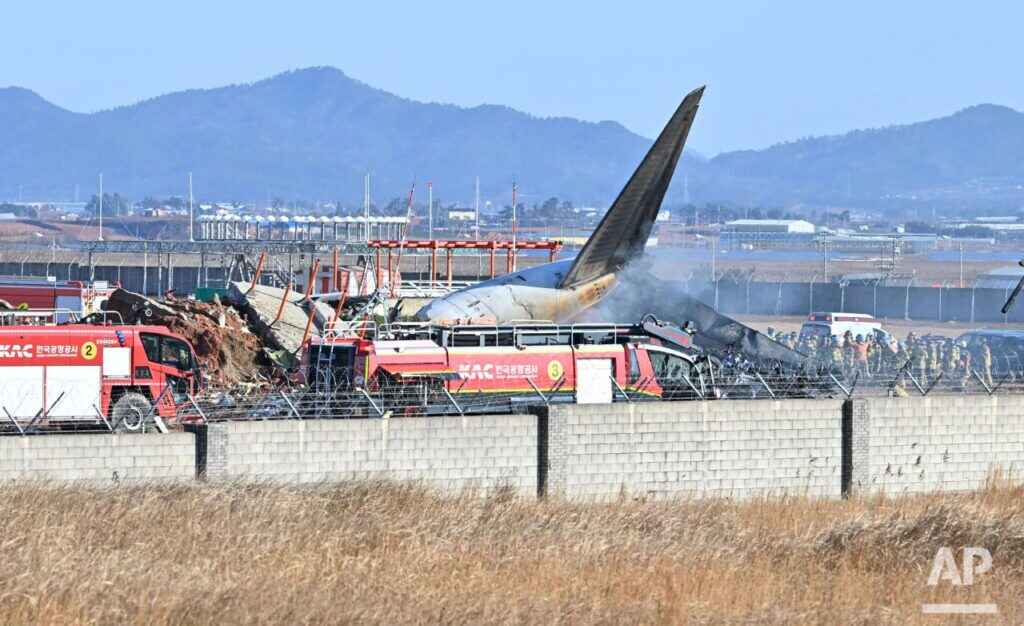
Jeju Air Flight 2216 crashed on Dec. 29, 2024. The Boeing 737-800 was flying from Bangkok to Muan when it suffered bird strikes affecting both engines. The crew attempted a belly landing, overran the runway, and struck the concrete support for the localizer antenna.
The impact triggered a fireball. It killed 179 of the 181 people onboard. The only survivors were two flight attendants seated in the tail.
What regulators say went wrong
South Korea’s airport safety standards, first issued in 2003, require navigation-related structures within 240 meters of a runway end to be frangible and as low as possible.
- The localizer at Muan sat on a concrete mound built in 1999.
- It was not corrected during the 2020 airport upgrade, despite the standards.
Opposition lawmaker Kim Eun-hye, who sits on a parliamentary special committee investigating the accident, called the admission an acknowledgment of government responsibility.
Families of victims have demanded an apology and fuller disclosure of investigation materials. They have also pushed for an independent probe and legal changes, describing the crash as a preventable case of human error.
What this means for flights to Muan right now
Muan International Airport remains closed. It is not expected to reopen until April 2026, according to the government timeline.
For travelers, near-term demand for service to South Jeolla Province will continue shifting to other airports. Schedules may stay fluid well into the spring, even for airlines that do not normally serve Muan.
Here’s the practical impact if you are planning a 2026 trip.
| Topic | What’s happening | What you should do |
|---|---|---|
| Muan airport operations | Closed, reopening not expected until April 2026 | Build in extra buffer time and consider alternate airports now |
| Safety infrastructure | Government admits localizer structure failed standards | Watch for reopening conditions and new infrastructure rules |
| Investigations | Final report not released; parliamentary probe active | Expect ongoing headlines and possible policy changes affecting ops |
⚠️ Heads Up: If you see cheap fares that assume an early Muan reopening, read the schedule notes closely and favor refundable options.
Competitive context: how this compares globally
Frangible runway-area structures are a well-established norm at major airports worldwide. The idea is simple: if a plane overruns, it should hit something that breaks away, not a concrete wall.
The ministry’s admission puts South Korea under pressure to show that Muan is not an outlier. Travelers will watch whether similar reviews are ordered at other regional airports, especially those with older installations near runway ends.
Airlines tend to benefit from consistent, visible safety standards. A clearer standard reduces operational uncertainty and reputational risk, especially for low-cost carriers competing on trust as much as price.
Loyalty and mileage angle: refunds, rebooking, and earning
Jeju Air is a low-cost carrier and does not run a big, global points program like Korean Air’s SKYPASS or Asiana Club. That means your “miles angle” here is mostly about how you book.
- If you book with a major bank travel card, you often get better trip protections than with a debit card.
- You may have more flexible rebooking tools if schedules change around the April 2026 target.
- For award travelers, reroutes to alternate airports can change the value equation.
- If you used a fixed-value bank points ticket, price differences after a schedule change may matter.
- If you booked through an airline program, an involuntary change can sometimes open a path to a no-fee reroute.
Keep your paperwork tight:
- Save original receipts and booking confirmations.
- Screenshot schedule changes when they post.
- Track fare rules if you bought a non-refundable ticket.
What happens next
The final accident report has not been released. The investigation board has already missed the one-year ICAO-recommended deadline for an interim update, and parliament is running its own probe.
That creates two parallel timelines:
- Engineering — including changes to the localizer installation and runway-area safety design.
- Political — including transparency demands and potential legal action.
If you have travel in the region penciled in for spring 2026, plan around the April reopening estimate rather than hoping for an earlier date.
Recommended travel preparations:
- Book lodging with free cancellation.
- Choose flights with same-day alternatives through Seoul, Busan, or Gwangju.
- Monitor airline schedules until Muan’s reopening is confirmed on official timetables.
South Korean officials conceded that Muan International Airport’s navigation infrastructure failed safety standards, turning a survivable emergency landing into a disaster. A government simulation confirmed all 179 victims likely would have survived if the localizer mound had been frangible. Consequently, the airport is closed for major safety overhauls until April 2026, forcing airlines and travelers to redirect regional traffic to alternate South Korean hubs.