- Schengen visa issuances reached 10.3 million in 2025, a 5% increase.
- First-time asylum applications fell 27% across the European Union during the same period.
- China and Türkiye remained the top markets for short-stay visa applications worldwide.
Schengen consulates issued almost 10.3 million Schengen visas in 2025, while EU countries recorded approximately 669,400 first-time asylum applications, a 27% fall from the previous year. The figures point to two different movements, not one replacing the other.
Consulates received more than 12 million short-stay applications, up 4.3% from 2024. Issuances rose approximately 5.2%, from 9.7 million to almost 10.3 million.
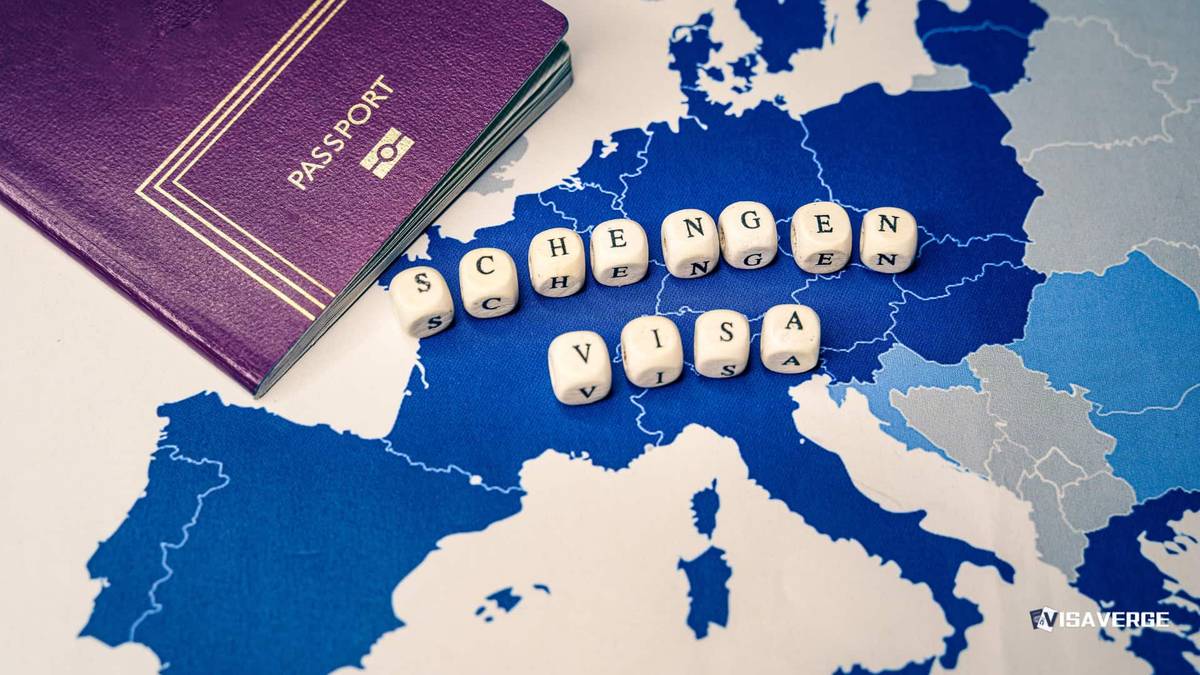
At the same time, the wider EU+ area recorded approximately 822,000 claims, down 19%. That total includes Norway and Switzerland, as well as repeated applications.
The European Union Agency for Asylum attributed the decline to geopolitical developments, changing nationality patterns and cooperation along migration routes. Syrian claims fell most sharply after political change in Syria in late 2024.
| India | China | ROW | |
|---|---|---|---|
| EB-1 | Feb 01, 2023 | Aug 01, 2023 ▲31d | Current |
| EB-2 | Nov 01, 2013 | Oct 01, 2021 | Apr 01, 2025 ▲90d |
| EB-3 | Jan 22, 2014 ▲21d | Jan 22, 2022 ▲14d | Jun 15, 2024 ▲31d |
| F-1 | Jan 22, 2021 ▲366d | Jan 22, 2021 ▲366d | Jan 22, 2021 ▲366d |
| F-2A | Oct 22, 2026 ▲30d | Oct 22, 2026 ▲30d | Oct 22, 2026 ▲30d |
The two systems measure different legal events. A short-stay visa supports tourism, family visits, business, conferences, limited study, training or medical travel. A protection claim alleges persecution or serious harm if the person returns.
The gap with the pre-pandemic period remains wide. Schengen countries received approximately 17 million applications in 2019, compared with more than 12 million in 2025. They issued approximately 15 million visas in 2019.
Visa demand rose, but the recovery remains below 2019
Free toolSchengen Short-Stay Visa Calculator| Measure | 2024 | 2025 | Annual change |
|---|---|---|---|
| Short-stay visa applications | 11.7 million | More than 12 million | +4.3% |
| Visas issued | 9.7 million | Almost 10.3 million | +5.2% |
| Worldwide refusal rate | 14.8% | 14.6% | Slight decline |
| First-time applicants in the EU | 912,400 | 669,400 | -27% |
| Applications across the EU+ | About 1.01 million | 822,000 | -19% |
China supplied approximately 1.9 million applications, the largest national market. Türkiye followed with 1.26 million, and India with 1.15 million. Russia recorded 679,000 applications and Morocco 620,000.
Demand can still overwhelm individual consulates. Applicants may face appointment shortages, longer submission queues, seasonal pressure and extra checks, even while overall issuance increases.
The worldwide refusal rate edged down from 14.8% to 14.6%. Local outcomes differed widely: the reported 2025 rates were approximately 6.4% in Russia, 31% in Algeria, 34% in Ethiopia, 40.1% in the Democratic Republic of the Congo, 51.9% in Senegal and 53.4% in Burundi.
A global rate does not predict an individual decision. Consulates examine the trip’s purpose, funds, accommodation, medical insurance, employment and family circumstances, previous compliance, return plans and whether documents can be verified.
Multiple-entry permits expanded travel without creating residence rights
Approximately 5.3 million issued visas, or 51.7%, allowed multiple entries in 2025. That share was slightly below the 52.2% recorded in 2024.
A multiple-entry document can remain valid for months or years. It does not permit continuous residence for the validity period.
Holders must follow the visa’s dates, purpose and maximum stay, including the 90-days-in-180-days rule. Border officials can still inspect passports, accommodation, return arrangements, funds, database alerts, previous overstays and possible security or immigration risks.
A visa allows a traveller to approach an external border and request entry. It does not guarantee admission.
The figures mainly cover uniform short-stay permits for up to 90 days in any 180-day period. Ireland follows its own visa policy, while Cyprus has a distinct position in parts of the published data. Long-term work, study and family residence generally fall under national immigration systems.
Syria drove much of the protection decline
Syrian claims in the EU+ area fell approximately 72%, from around 151,000 in 2024 to about 42,000 in 2025. Syrians had often formed the largest nationality group for more than a decade.
In the EU’s first-time figures, Venezuelans moved into first place with approximately 89,500 claims, or 13% of the total. Afghans followed with approximately 63,800, while Syrians recorded approximately 40,000.
Turkish and Colombian claims also declined. Afghan and Venezuelan claims increased in the broader EU+ figures, showing how the overall fall concealed different national trends.
Spain received approximately 141,000 first-time applicants, followed by Italy with 126,600, France with 116,400, Germany with 113,200 and Greece with 55,400. Those five countries accounted for approximately 83% of the EU total.
Germany recorded one of the largest national declines. Its first-time total fell by more than 116,000, or approximately 51%, compared with 2024.
The wider dataset gives a different ranking because it includes repeated claims and additional countries. Germany recorded 163,000 total EU+ applications, France 152,000, Spain 143,000 and Italy 134,000.
Legal entry and protection claims can overlap
Venezuelan citizens can generally visit the Schengen Area without a visa for short stays. Many Venezuelan claimants therefore did not need a visa before travelling, and the overwhelming majority lodged their cases in Spain.
Entry method alone does not decide eligibility. A person may arrive with a visa, under a visa exemption, through a residence or study route, irregularly at an external border or after spending time in Europe.
A person holding a valid visa may still request protection at the border or from inside the country. The claim must meet the legal test, however. Using false information or documents to obtain the earlier visa can create credibility and immigration consequences.
A protection claim cannot extend an ordinary holiday simply because a traveller wants to stay longer. Authorities assess the alleged fear of persecution or serious harm separately from any deception in the travel application.
The categories also differ geographically and statistically. EU visa data cover countries participating in the common Schengen system, including non-EU associated countries. The first-time figure covers the 27 EU member states, while the EU+ count adds Norway and Switzerland and includes repeat claims.
That is why the figures cannot produce a meaningful visitors-to-claimants ratio. Border detections, meanwhile, count events at an external border and can include the same person more than once. A claimant may have entered legally, and an irregular crossing does not automatically produce a protection claim.
Border technology expanded as legal travel recovered
The Entry/Exit System became fully operational on April 10, 2026. It digitally records entries, exits and refusals involving many non-EU short-stay travellers, using facial images, fingerprints and travel-document data.
Visa issuance and digital border checks are therefore advancing at the same time. More approved trips do not by themselves indicate weaker controls.
At the end of 2025, EU+ countries had approximately 863,000 cases pending at first instance and an estimated 1.2 million pending across all stages. The first-instance recognition rate fell to approximately 29%, partly because fewer decisions involved Syrians, whose historical recognition rates were comparatively high.
Early 2026 figures continued the downward pattern. EU+ countries received just over 52,000 claims in May 2026, the lowest monthly level since July 2021 and 19% below May 2025. EU countries recorded 42,960 first-time applicants in April 2026, an 11% year-over-year decline.
Syrian claims remained far below earlier levels, while Afghans and Venezuelans remained among the largest groups. Conflict, political instability, court rulings and access to routes can still change those patterns quickly.