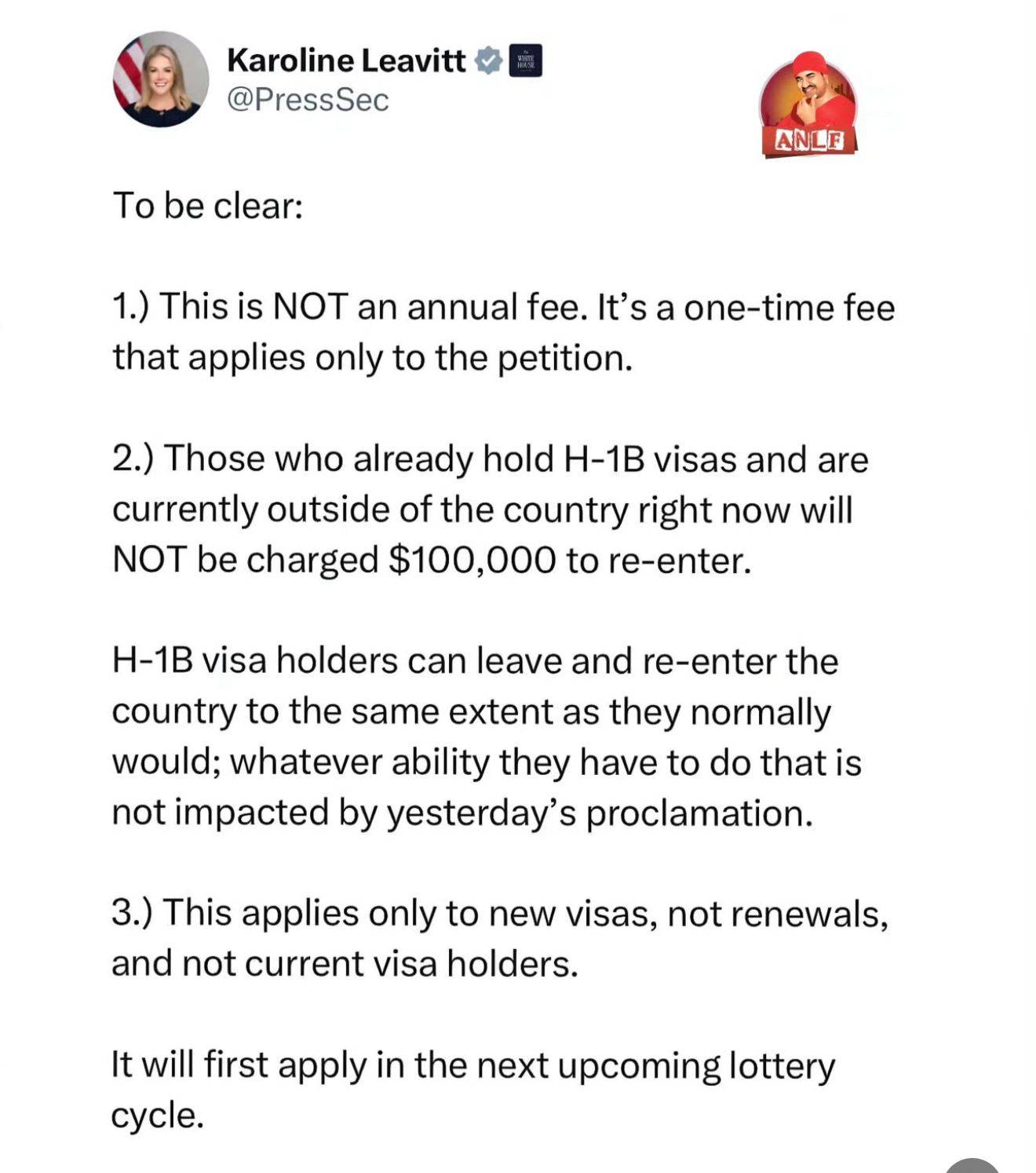
(UNITED STATES) A steep H-1B fee hike that took effect on September 21, 2025 has left many mid-sized technology employers breathing easier than first feared. The $100,000 charge applies to new H-1B visa petitions filed on or after that date, but it does not touch renewals, extensions, or existing visa holders. That carveout is insulating many mid-cap IT firms, which tend to rely less on brand-new H-1B hires than larger rivals and have already shifted staffing models over the past few years.
Who is most and least affected

- Most affected: Firms that rely on a steady flow of first-time H-1B filings — mid-sized consultancies and startups that cannot spread costs across a broad client base.
- Least affected: Companies with a low share of fresh H-1B petitions in their U.S. workforce mix — many mid-cap IT firms that already reduced onsite headcount and shifted hiring strategies.
Industry analysts note that for mid-cap players, visa spending has historically been a tiny slice of total employee costs — about 0.02% to 0.05%. Even with the hike, projections for many such firms often rise only into a roughly 0.3% to 1.0% range, depending on how many new hires they plan to sponsor.
Projected behavioral and market shifts
The rule’s narrow scope — applying only to new petitions — has reduced the likelihood of immediate budget shocks for these mid-cap companies. Still, longer-term and sector-wide effects are expected:
- Early models predict a 60% to 70% decline in new petitions in FY27 if pricing stays the same and business models do not change.
- Larger providers with deeper balance sheets may continue filings for critical roles, while mid-sized firms and startups could trim or delay U.S. expansion.
- Firms are accelerating changes that predated the fee increase:
- Boosting local hiring in the U.S. through campus recruiting and mid-career programs
- Subcontracting niche roles to American partners when demand spikes
- Shifting delivery work offshore and nearshore — notably to Canada ?? and Mexico ??
Delivery model trends and ratios
These operational shifts show up in delivery ratios. The offshore-to-onsite balance, once close to 70:30 for many global IT service providers, is expected to move toward about 85:15 by FY27. This adjustment is driven by:
- Visa cost pressures, including the H-1B fee hike
- Mature remote collaboration tools
- Broader client comfort with distributed teams
- A deeper pool of skilled workers outside the U.S.
Financial impact on different firms
- Large Indian IT companies: Analysts expect a limited near-term margin effect — operating profit could dip by a few basis points (estimates vary roughly 7 to 49 basis points) depending on new petitions filed at the higher rate.
- Mid-cap IT firms: The expected effect is even smaller for many, since visa-linked expenses are a thin slice of payroll and many had already reduced onsite presence after earlier U.S. policy changes.
In practice, most mid-caps are not revising earnings guidance solely because of the new fee.
Timing and tactical responses
The calendar matters for companies deciding whether to file:
- Petitions for new roles filed before September 21, 2025 are not affected.
- Requests to extend or amend existing H-1B status remain exempt.
That timing has prompted tactical moves, such as:
- Staggering start dates to keep changes in the “renewal” column rather than as brand-new petitions.
- Adjusting internal mobility plans to avoid triggering new-petition status.
- Prioritizing renewals and internal transfers to retain experienced staff.
These tactics affect different employers unevenly: firms with stable U.S. rosters see less churn and fewer new filings, while project-based companies that staff up quickly for new contracts face tougher choices.
“Because renewals and extensions are exempt, companies can maintain continuity on long-running projects without facing a new charge every time an employee’s status is extended.”
Applicant pool and competitive effects
Policy watchers expect the fee to change the applicant pool:
- If new H-1B filings drop by up to two-thirds in FY27, competition at the application stage could fall.
- Larger firms may still file for acute skill needs.
- Smaller players may avoid the cost and pivot to alternative models, such as:
- Contracting within the U.S.
- Moving work offshore or nearshore
- Partnering with vendors that already employ visa holders
Analysis by VisaVerge.com suggests these shifts could widen the gap between enterprises that can absorb short-term costs and those that must pivot their business models to keep delivering in the U.S. market.
Inside mid-cap companies: hiring and retention strategies
Many mid-cap shops have already set people decisions for the coming year and are pursuing a “local-first” approach:
- Recruiters focus on local hires for roles that need frequent onsite or client-facing work.
- Teams are growing in Canadian and Mexican hubs to maintain similar time zones with U.S. headquarters.
- Delivery leaders are sharpening workforce planning to minimize last-minute visa needs that would trigger the $100,000 fee.
- Firms may invest more in retaining current H-1B staff via training and internal transfers, since renewals avoid the new-petition cost.
Regulatory context and reference
The U.S. government’s H-1B framework — specialty occupation criteria, wage rules, and employer obligations — remains in force. The fee increase does not change underlying eligibility or petition standards.
For official information on eligibility and petitioning, refer to the USCIS H-1B overview:
https://www.uscis.gov/working-in-the-united-states/temporary-workers/h-1b-specialty-occupations
What to watch next
- How quickly the 70:30 onsite-offshore split continues to shift toward 85:15.
- Whether FY27 filing drops land closer to 60% or 70%.
- The degree to which work is pushed to established offshore and nearshore centers while U.S. client demand for digital projects remains strong.
Executives at mid-cap IT firms say the best cushion remains a diverse hiring model that reduces exposure to any single policy shift. With the H-1B fee hike now in force and affecting only new petitions, many believe they can meet client needs without major cuts — using local hires, vendor partnerships, and cross-border teams to fill gaps. For workers considering U.S. opportunities, the path is likely to continue through American employers, but with fewer brand-new H-1B slots and more roles based in Canada or Mexico integrated into U.S. delivery.
This Article in a Nutshell
The H-1B fee hike—$100,000 for new petitions effective September 21, 2025—targets only first-time filings, sparing renewals and existing visa holders. Mid-cap IT firms are relatively insulated because they sponsor fewer new H-1Bs and shifted delivery models earlier. Forecasts suggest a 60%–70% fall in new petitions in FY27 and a delivery shift from roughly 70:30 to 85:15 offshore-onsite. Companies plan local hiring, vendor partnerships, and nearshore growth in Canada and Mexico to mitigate impact.