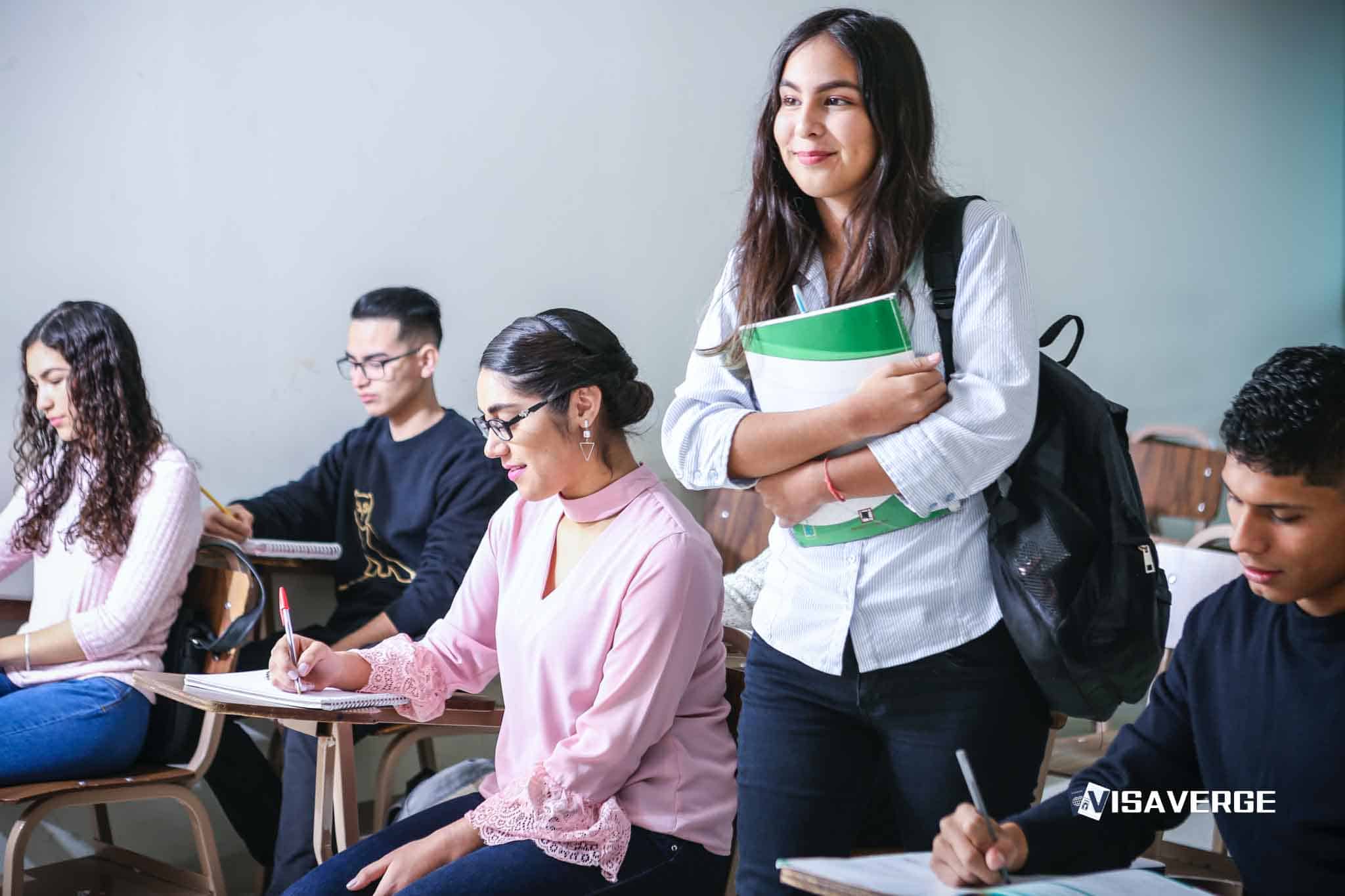
(UNITED STATES) Indian student arrivals to the United States fell by 46% in July 2025 compared with July 2024, the steepest monthly drop in decades and a clear sign that the Trump immigration crackdown is reshaping the flow of talent to U.S. campuses. Total international student arrivals also slid 28% in July to just under 79,000, deepening concern across higher education and sending families in India scrambling for alternatives.
University leaders say the fall rush has turned into a scramble to fill seats, with admission officers calling waitlisted students while budgets are redrawn mid-year. The sharp decline follows a hectic summer of visa turbulence: pauses in interviews, new screening rules, and a surge in revocations.
Visa turmoil and policy changes this summer
The administration paused student visa interviews in late May, then restarted them in mid-June with new rules requiring public social media profiles and tougher background checks. That pause overlapped with the peak application period, creating a pileup that many consulates have yet to clear.
The State Department has revoked more than 6,000 student visas so far in 2025, nearly half held by Indian nationals, citing violations of U.S. law, overstays, and alleged security issues. Officials say the focus is on security and compliance; universities say the timing and scale of the changes disrupted the pipeline when it mattered most.
As of August 22, 2025, F‑1 visa issuance to Indian students in the first half of the year is down 44% to 14,700. For the full 2024 fiscal year, Indian students received 86,000 U.S. student visas. That compares to 332,000 Indian students enrolled in 2023–24, when India overtook China as the largest source of international students.
| India | China | ROW | |
|---|---|---|---|
| EB-1 | Feb 01, 2023 | Aug 01, 2023 ▲31d | Current |
| EB-2 | Nov 01, 2013 | Oct 01, 2021 | Apr 01, 2025 ▲90d |
| EB-3 | Jan 22, 2014 ▲21d | Jan 22, 2022 ▲14d | Jun 15, 2024 ▲31d |
| F-1 | Jan 22, 2021 ▲366d | Jan 22, 2021 ▲366d | Jan 22, 2021 ▲366d |
| F-2A | Oct 22, 2026 ▲30d | Oct 22, 2026 ▲30d | Oct 22, 2026 ▲30d |
“The travel ban, expanded screening processes, appointment backlogs—all these create uncertainty for students from China, India and beyond.”
— Zuzana Cepla Wootson, Presidents’ Alliance on Higher Education and Immigration
Michael Crow, president of Arizona State University, said visa delays have been “more disruptive than the pandemic,” reflecting private concerns from many campus leaders.
Consequences for campuses and finances
Universities now expect up to 150,000 fewer international students on U.S. campuses this fall. Finance teams are bracing for a $7 billion hit in tuition and related spending and more than 60,000 jobs at risk in the higher education sector.
- Mid-tier public and private institutions that depend on full international tuition—especially in STEM master’s programs—report the hardest strain.
- Program cuts, hiring freezes, and reduced research support are already being reported, according to analysis by VisaVerge.com.
Students and departments face immediate operational effects:
- Empty seats in master’s cohorts previously full at this time last year.
- Merged courses and revised staffing plans to match reduced demand.
- Fewer teaching assistants and graduate researchers on grants.
- Reduced spending in college towns (housing, retail, services).
The summer bottleneck: practical effects on applicants
The late-May pause, mid-June restart, and added social media and background-check requirements produced more denials and slower approvals. Consulates in India, already busy, took on extra vetting that pushed many students past program start dates.
Key changes and impacts:
– Stricter screening: Officers now review public social media profiles along with financials, academic records, and travel history. Expanded definitions of security risks have increased rejections and revocations.
– Administrative delays: Interview pauses and backlogs left thousands unable to secure timely visas, forcing deferrals or changes of destination.
– Ongoing monitoring: Post-arrival, students face closer review for violations, overstays, or alleged “anti-American” activity; revocation risk is not limited to the border.
For Indian applicants, the 2025 process generally follows these steps:
1. Secure admission from a SEVP-certified school and receive a Form I-20. The Department of Homeland Security explains the Form I-20 here: https://www.ice.gov/sevis/i20.
2. Book a visa appointment, which may involve long waits and cancellations.
3. Prepare documents—financial proof, academic records, and now a public social media profile—for review.
4. Attend the interview and expect detailed questions about study plans, funding, ties to India, and online activity.
5. Wait for a decision; administrative processing may delay outcomes and denials/revocations are more common.
6. After arrival, maintain full-time study and status; compliance checks have tightened.
Applicants seeking official guidance can review the State Department’s student visa page: https://travel.state.gov/content/travel/en/us-visas/study/student-visa.html. The page outlines eligibility, documents, and interview steps for F‑1 and M‑1 visas and is updated with current information.
Student and family experiences
Families in India are feeling the shock in real time. Appointment wait times have stretched into months as consulates work through the backlog. Many families report students switching last minute to Canada, Germany, or Australia after interview dates slip past orientation.
- Some students deferred to spring while keeping backup offers abroad alive.
- Extra costs include additional deposits, flight changes, and in some cases a lost semester.
- Screening questions about social media posts and online activity feel new and unpredictable to applicants and parents.
Human examples reported:
– A family in Hyderabad faces a deferred start despite a year of test prep and nonrefundable deposits.
– A doctoral admit to a California engineering program lost departmental funding after visa delays and accepted a scholarship in Europe instead.
Advisers working with first-generation Indian students stress that a consistent message of welcome matters as much as rules; unpredictability discourages risky decisions like postponing a year.
Policy messaging and longer-term concerns
Universities say the chilling effect reaches beyond new enrollments. Current students worry about Optional Practical Training (OPT) and the path to H‑1B work visas. The administration has signaled plans to limit work authorization under OPT and to change H‑1B rules, including proposals to dismantle the lottery.
- Government rationale: decisions are framed as protecting jobs and national security.
- University and industry response: pathways like OPT and H‑1B attract talent that supports research, startups, and local economies.
- Analysts warn: repeated shocks could weaken the U.S. position in research and advanced industry.
President Trump has floated offering green cards to all foreign graduates of U.S. universities. Many students welcomed the idea, but no formal plan exists and the current enforcement posture toward visas, OPT, and H‑1B points in the opposite direction. Students must plan for the policies on paper today, not hypothetical future changes.
Global market shifts and competitor countries
Indian students have been the growth engine of U.S. international enrollment for years. After a post-pandemic surge (2022–24), the upswing reversed rapidly since May 2025.
- Canada, Australia, and Germany are actively courting Indian students; families view their visa systems as more predictable this year.
- Early data show demand for those countries has softened too, but not as sharply as in the U.S.
- Indian agents now advise: build parallel plans early, hold firm on timelines, and monitor U.S. visa policy weekly.
VisaVerge.com reports campus leaders pressing for predictable processing and clearer rules, arguing that security and steady recruitment can coexist.
Projections and economic ripple effects
Looking ahead to fall, projections suggest a 30–40% drop in new international student enrollment, with Indian students driving much of the falloff. Potential consequences include:
- Fewer teaching assistants in labs and fewer graduate researchers on grants.
- Tighter finances at institutions that educate both local and international students.
- Job losses and reduced local economic activity in college towns.
Universities are modeling deeper cuts; the pain is uneven. Elite universities can cushion the blow, while smaller private colleges and some state campuses face intense pressure to balance budgets.
Practical advice for applicants still pursuing U.S. study
If you are continuing with the U.S. application cycle, consider these practical steps:
- Apply early and keep copies of every record, including bank statements and scholarship letters.
- Confirm your school is SEVP-certified before paying deposits.
- Keep your online presence professional and consistent with your application; officers may review it.
- Monitor appointment portals daily for earlier slots that open up.
- If your start date is at risk, ask your school about deferral options and updated Form I-20 issuance.
- After arrival, maintain full-time study, keep your address updated with your school, and follow status rules closely to avoid issues that could lead to revocation.
Final takeaway
The stakes are high for students and for the United States. International education is one of the country’s most reliable talent pipelines, and Indian students have been at its heart. The July numbers show how fast policy changes can shift real lives and institutional plans.
Whether the trend stabilizes will depend on actions in consulates and policy rooms in the next few months—and on whether students feel the door is open when they try again.
This Article in a Nutshell
A 46% drop in Indian student arrivals in July 2025 follows visa interview pauses, new social‑media screening, and many revocations. F‑1 issuance to Indians fell 44% in H1. Universities warn of 150,000 fewer international students, a $7 billion revenue loss, and job risks, prompting many applicants to consider Canada, Germany, or Australia.