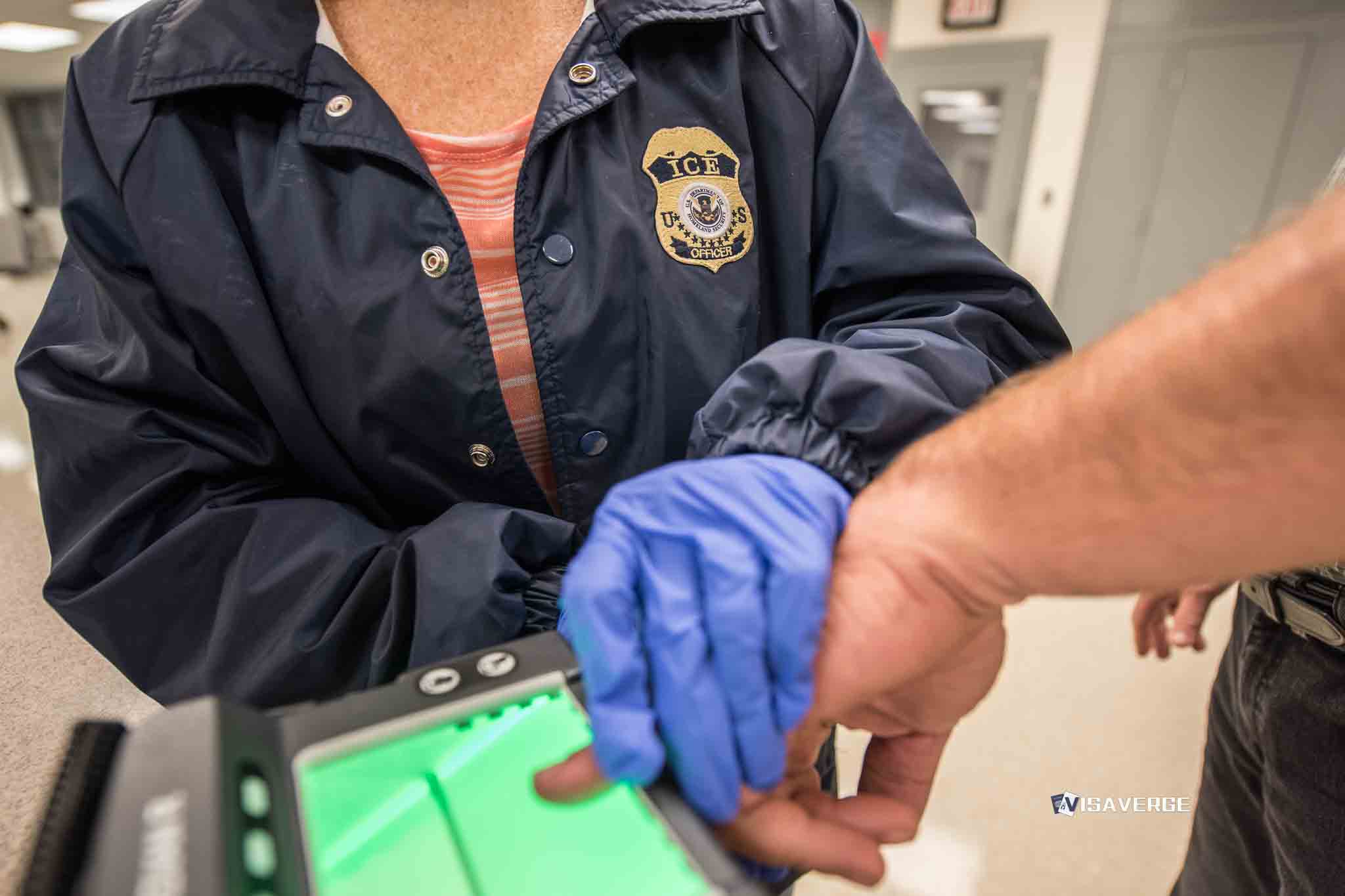
- ICE-led removals reached 540,000 by January 2026, surging sharply but missing the million-per-year administration target.
- Enforcement has shifted from the border to interior street arrests, which have increased more than tenfold.
- Detention capacity expanded to over 60,000 beds, while stricter bond policies have significantly reduced release rates.
(UNITED STATES) ICE deportations have surged sharply under President Trump’s second term, but the pace still falls short of the White House’s one-million-a-year promise. By January 2026, ICE-led removals had reached about 540,000, while arrests and detention expanded even faster across the country.

The numbers matter because they show a different kind of enforcement machine. ICE arrests are rising in neighborhoods, workplaces, and homes. Deportations are following those arrests more quickly than in recent years, yet legal delays, detention limits, and court challenges still keep removals below the administration’s target.
Interior Enforcement Replaces Border Focus
The biggest change is the shift from border pressure to interior arrests. Border crossings fell, freeing ICE to focus on people already living in the United States. That shift pushed deportations after ICE arrests to 4.6 times the late-2024 average by mid-October 2025, driven by more arrests, fewer releases, and more detention space.
Street arrests rose especially fast. These are arrests made away from jails and prisons, often during routine enforcement operations. The surge was much steeper than jail-based worksite or criminal custody actions. That matters for families, because many of the people caught in this wave are long-term residents without criminal convictions.
Detention capacity also expanded quickly. Daily beds climbed from about 40,000 in January 2025 to more than 60,000 by October. By February 7, 2026, 68,289 people were detained, including 50,259 without criminal convictions. ICE also monitored 179,991 people through Alternatives to Detention, an electronic system that tracks people outside custody.
The federal government’s own ICE data dashboard, along with official enforcement statistics, remains the clearest public window into detention and removals.
Arrests Are Rising Faster Than Removals
The gap between arrests and deportations is one of the most important parts of this story. ICE arrests have quadrupled overall, while street arrests have risen more than tenfold from a low base. Removals have increased too, but not at the same pace.
That mismatch reflects legal and logistical limits. Immigration courts are overloaded. Cases take time. Bond restrictions became tighter after ICE guidance on July 8, 2025, blocked bond for people who entered without inspection. The Board of Immigration Appeals backed that position on September 5, 2025, making release harder for many detainees.
Release rates fell sharply. Within 60 days of detention, releases dropped from 16% to 3%. That pushed the odds of deportation within 60 days from 55% to 69%. Voluntary departures also rose 21-fold, a sign that some detainees chose to leave rather than remain in prolonged custody.
VisaVerge.com reports that this combination of stricter detention policy and faster interior arrests is the clearest reason deportations are climbing even while the administration misses its larger target.
Detention Pressure Shows Where ICE Is Pushing Hardest
Texas has become the center of the detention surge. Statewide, 18,734 detainees were held in fiscal 2026, and El Paso Camp East Montana averaged 2,954 detainees a day. Louisiana and California also ranked among the top enforcement states.
January 2026 brought another spike. ICE recorded 39,694 bookings that month, including 36,099 ICE arrests and 3,595 CBP bookings. That volume shows how heavily the agency now depends on interior operations rather than border transfers.
The detention buildup was financed through the “One Big Beautiful Bill,” which helped ICE use existing facilities at maximum capacity before new construction could come online. Vice President JD Vance said on January 7, 2026, that the administration would add 10,000 more agents and use private data for “door-to-door” targeting after an incident that intensified the campaign.
Federal Targets Still Outpace Reality
President Trump promised mass deportations on a scale not seen in modern U.S. politics. The actual numbers are historic, but they still fall short of that pledge. Projections for fiscal 2025 point to under 300,000 interior deportations, even with the late-2025 surge.
The administration has also cited broader figures, including more than 2 million removals when “self-deportations” are counted. Experts have sharply disputed those claims. Migration researchers have said the headline total is inflated because it mixes formal deportations with people leaving on their own, often under pressure.
For comparison, fiscal 2024 under President Biden ended at about 271,000 deportations. President Trump’s first term peaked at 267,000 in fiscal 2019. President Obama’s high point was 316,000 in fiscal 2014. Those figures show that Trump’s second-term numbers are high, but not yet at the level the White House promised.
What the Shift Means for Communities
The human cost is showing up in families, schools, and workplaces. Non-criminal arrests make up a large share of the surge, and that has widened fear in communities far from the border. In Connecticut, monthly arrests rose from 21 in 2024 to 63 in 2025 through October. Hartford accounted for 49% of the state’s 632 apprehensions.
Employers are feeling the pressure too. Construction, agriculture, food processing, and other labor-heavy sectors face sudden absences when workers are detained or deported. In Texas and Florida, where ICE activity is intense, those disruptions spread quickly through local economies.
Communities also face a sharp trust problem. When arrests rise faster than removals, people see more visible enforcement but no clear end point. That drives more voluntary departures, more legal filings, and more anxiety in immigrant neighborhoods.
Why the 2026 Numbers Will Keep Rising
The machinery now in place points to continued pressure in 2026. More agents, more beds, and a stronger focus on interior arrests all support faster deportations. But the same barriers remain: court delays, legal challenges, and the simple limits of detention space.
The most useful reading of the current numbers is not that ICE has reached its goal. It has not. The better reading is that deportations, arrests, and detention have all moved sharply upward, with the biggest change happening inside the country rather than at the border. That shift will shape immigration enforcement through the rest of 2026, especially if funding and political support stay in place.
For readers tracking enforcement trends, the key terms are straightforward: arrests are the initial apprehensions, detentions are the periods in custody, and deportations are the formal removals that follow. In this cycle, ICE has made arrests faster than the system can process them, and that is why the numbers keep climbing without reaching the administration’s full target.