Key Takeaways:
- The H-1B visa allows U.S. employers to hire foreign workers in specialty occupations, particularly popular in the tech industry.
- Eligibility requires a job offer, a bachelor’s degree or equivalent, and necessary state licensure for the position.
- The application involves filing an LCA, submitting Form I-129, participating in a lottery, and potentially applying at a U.S. consulate.
What is an H-1B Visa for Specialty Occupations?
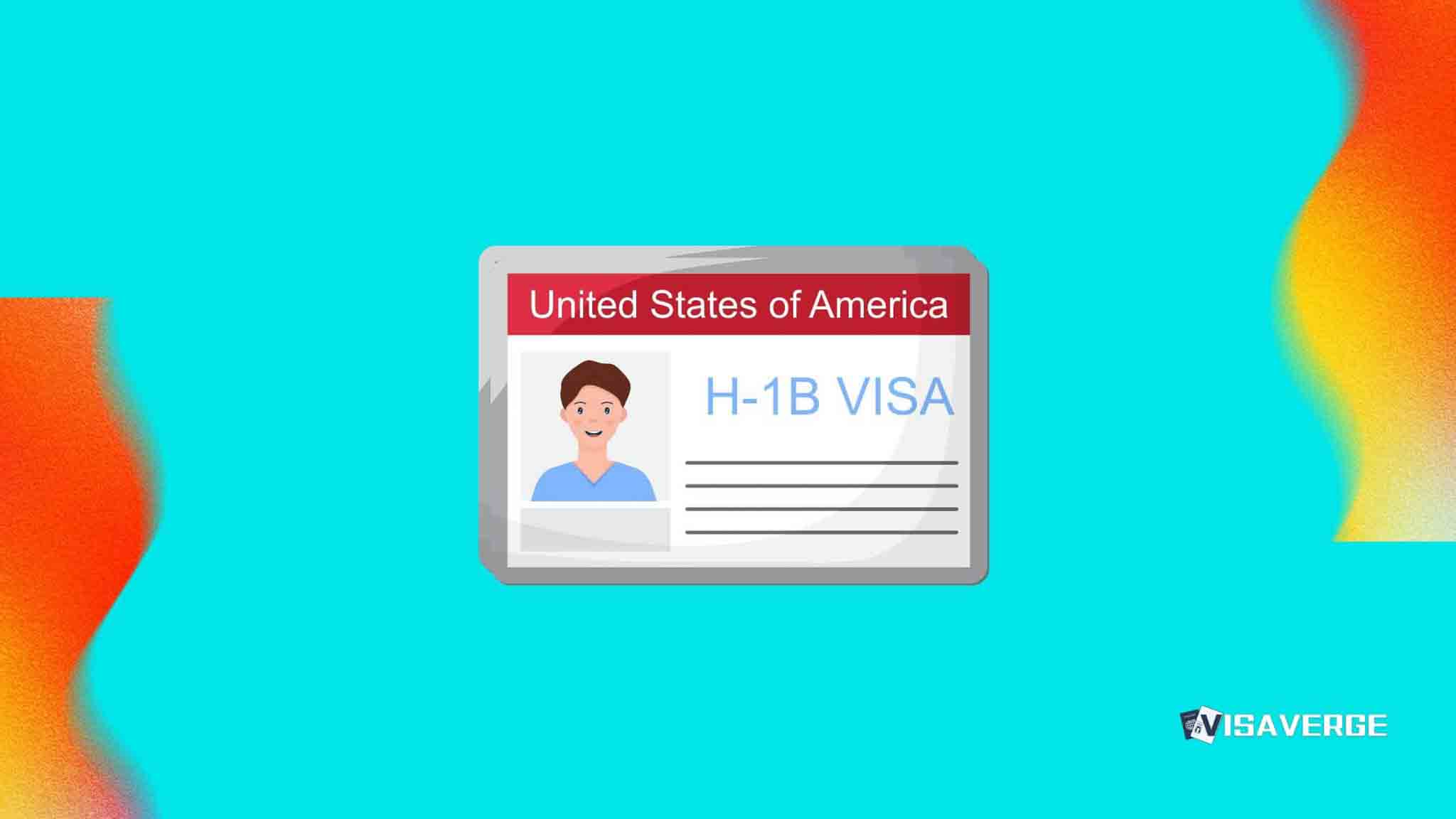
The H-1B visa is a non-immigrant visa that allows U.S. employers to temporarily employ foreign workers in specialty occupations. This visa is particularly popular among tech professionals, enabling companies to hire skilled talent from around the world.
What Defines a Specialty Occupation?
A specialty occupation requires both theoretical and practical application of highly specialized knowledge. In the technology sector, this typically includes roles such as:
- Software Engineers
- Data Scientists
- AI/Machine Learning Engineers
- Network Architects
- Cybersecurity Specialists
To qualify, the position must meet one of the following criteria:
1. A bachelor’s degree or higher is the minimum requirement.
2. The degree requirement is common across the industry.
3. The employer typically requires a degree for the position.
4. The role’s specific duties are so specialized and complex that they generally require knowledge attained through a bachelor’s degree or higher.
How Does the H-1B Visa Cap and Lottery System Work?
The H-1B visa program has an annual cap of 65,000 visas, with an additional 20,000 visas for those holding a master’s degree or higher from a U.S. institution. Due to high demand, U.S. Citizenship and Immigration Services (USCIS) often receive more petitions than there are available visas, leading to a lottery system.
Who is Eligible for an H-1B Visa?
To be eligible for the H-1B visa, candidates need to:
| India | China | ROW | |
|---|---|---|---|
| EB-1 | Feb 01, 2023 ▲109d | Jul 01, 2023 | Current |
| EB-2 | Nov 01, 2013 | Oct 01, 2021 ▲30d | Jan 01, 2025 |
| EB-3 | Jan 01, 2014 | Jan 08, 2022 ▲7d | May 15, 2024 ▼109d |
| F-1 | Jan 22, 2020 | Jan 22, 2020 | Jan 22, 2020 |
| F-2A | Sep 22, 2026 ▲31d | Sep 22, 2026 ▲31d | Sep 22, 2026 ▲31d |
- Have a job offer from a U.S. employer for a specialty occupation.
- Hold a bachelor’s degree or equivalent in the specific specialty.
- Possess state licensure if it’s required to practice in that field.
What’s Involved in the H-1B Visa Application Process?
Step 1: Labor Condition Application (LCA)
The employer files an LCA with the Department of Labor, attesting to wages, working conditions, and notice of filing.
Step 2: H-1B Petition
Once the LCA is certified, the employer files Form I-129 (Petition for a Nonimmigrant Worker) with USCIS.
Step 3: Lottery
If the cap is reached, USCIS conducts a lottery to select petitions for processing.
Step 4: Adjudication
USCIS reviews the selected petitions and either approves or denies them.
Step 5: Visa Application
If approved and the individual is outside the U.S., they can apply for an H-1B visa at a U.S. embassy or consulate.
For more detailed information on the application process, you can visit the official USCIS page.
How Long is the H-1B Visa Valid?
The initial H-1B status is granted for up to three years and can be extended up to a maximum of six years. Extensions beyond six years are possible if the beneficiary has started the green card process.
Can H-1B Visa Holders Change Employers?
Yes, H-1B visa holders can change employers through a process called “H-1B portability.” The new employer must file a new H-1B petition, and the worker can start working for the new employer once USCIS receives the petition.
What About Dependents?
Spouses and unmarried children under 21 of H-1B visa holders may qualify for H-4 dependent visas. In certain cases, H-4 spouses can get work authorization.
What is Dual Intent?
The H-1B visa is a dual intent visa, meaning holders can pursue permanent residency (green card) without compromising their H-1B status.
What Should Tech Professionals Consider?
Timing: Be aware of the H-1B cap season and work with your employer to file petitions early.
Education Evaluation: If your degree is from outside the U.S., get a credentials evaluation to ensure it meets U.S. educational standards.
Specialization: Clearly demonstrate how your role requires specialized knowledge.
Salary Requirements: Ensure that the offered wage meets or exceeds the prevailing wage for your occupation and location.
Career Planning: Consider how the H-1B visa fits into your long-term career and immigration goals, including potential green card sponsorship.
Continuous Learning: Stay updated on emerging technologies to maintain your edge in the job market.
Networking: Build professional connections within the U.S. tech community.
How Do Policy Changes and Challenges Affect the H-1B Visa?
The H-1B program has faced scrutiny and policy changes in recent years. Concerns include:
- Allegations of misuse by certain employers to replace U.S. workers.
- Debates over the appropriate cap limit.
- Processing delays and increased scrutiny of petitions.
It’s crucial for tech professionals to stay updated on potential policy changes that may impact the H-1B program.
What Are the Benefits of Having a Master’s Degree From a U.S. Institution?
- Access to the H-1B Master’s Cap: A separate pool of 20,000 H-1B visas is reserved each year for applicants with a master’s degree or higher from a qualifying U.S. institution.
-
Higher Chances of Selection: Due to the separate master’s cap, applicants with U.S. master’s degrees generally have better odds in the H-1B lottery.
-
Qualification for Specialized Positions: Many H-1B positions requiring higher levels of education and specialization often prefer candidates with master’s degrees.
-
Potential for Higher Wages: H-1B workers with master’s degrees may command higher salaries compared to those with just bachelor’s degrees.
-
Easier Path to EB-2 Green Card: Having a U.S. master’s degree can position you well for the EB-2 green card category, which typically has shorter wait times than EB-3.
-
Demonstrates Advanced Knowledge: A master’s degree shows a higher level of specialized knowledge, aligning with the H-1B requirement of working in a “specialty occupation.”
-
Visa Approval Advantage: While not guaranteed, having an advanced U.S. degree may be viewed favorably by USCIS when evaluating H-1B petitions.
It’s important that the degree comes from an eligible, accredited, and non-profit U.S. institution.
How Can Tech Professionals Maximize Their Chances of Obtaining an H-1B Visa?
Prepare Early: Start gathering documentation and plan your application well in advance.
Check Your Eligibility: Ensure that your education and job offer meet the H-1B requirements.
Seek Professional Help: Consider consulting an immigration attorney, particularly if your case involves complexities.
Stay Informed: Keep up-to-date with the latest changes in immigration law and policy.
Network: Engage with professionals and employers within the tech industry who have experience with H-1B sponsorship.
Final Thoughts
The H-1B visa remains a vital pathway for tech professionals to work in the United States. Though the application process is complex, understanding the requirements and considerations can help you succeed. As the tech industry evolves, the H-1B program will continue to be an important tool for U.S. companies to access global talent and for international professionals to contribute to America’s innovative landscape.
According to VisaVerge.com, staying updated on emerging policies and leveraging your specialized skills are key strategies for navigating the H-1B visa process.
For official and detailed information about the H-1B visa, visit the USCIS official page.
By understanding these aspects, tech professionals can better prepare themselves to navigate the intricacies of the H-1B visa application process with confidence and clarity.
Learn Today:
Glossary of Immigration Terms
- H-1B Visa: A non-immigrant visa that allows U.S. employers to temporarily employ foreign workers in specialty occupations that require specialized knowledge and a bachelor’s degree or its equivalent.
- Specialty Occupation: A job that demands both theoretical and practical application of highly specialized knowledge, often requiring at least a bachelor’s degree or higher in a specific field.
- Labor Condition Application (LCA): A document filed by the employer with the Department of Labor, attesting to the wages and working conditions for the H-1B worker, which must be approved before an H-1B petition can be filed.
- H-1B Lottery: The random selection process used by U.S. Citizenship and Immigration Services (USCIS) to allocate H-1B visas when the number of petitions exceeds the annual cap.
- Dual Intent: A characteristic of the H-1B visa that allows the visa holder to pursue permanent residency (a green card) while simultaneously holding non-immigrant H-1B status.
This Article In A Nutshell:
The H-1B visa allows U.S. employers to hire foreign professionals in specialty occupations, especially in tech roles like software engineering and data science. It requires at least a bachelor’s degree and is capped annually. The visa is valid for up to six years and can lead to permanent residency.
— By VisaVerge.com
Disclaimer: The information provided in this article is for informational purposes only. If you reference or use any content from this article, please attribute it to VisaVerge.com by including a link to the original source. We appreciate your adherence to our content usage policies and your commitment to giving proper credit.
Read More:
– Canada Eases Work Permits for H-1B Visa Holders
– Details on Canada Work Permits for H-1B Visa Holders
– Impact of New July 8th H-1B Visa Rules on Indians
– H-1B Visa Holder in Florida Faces Jail for Buying Property
– New H-1B Visa Rules Effective July 8