Key Takeaways:
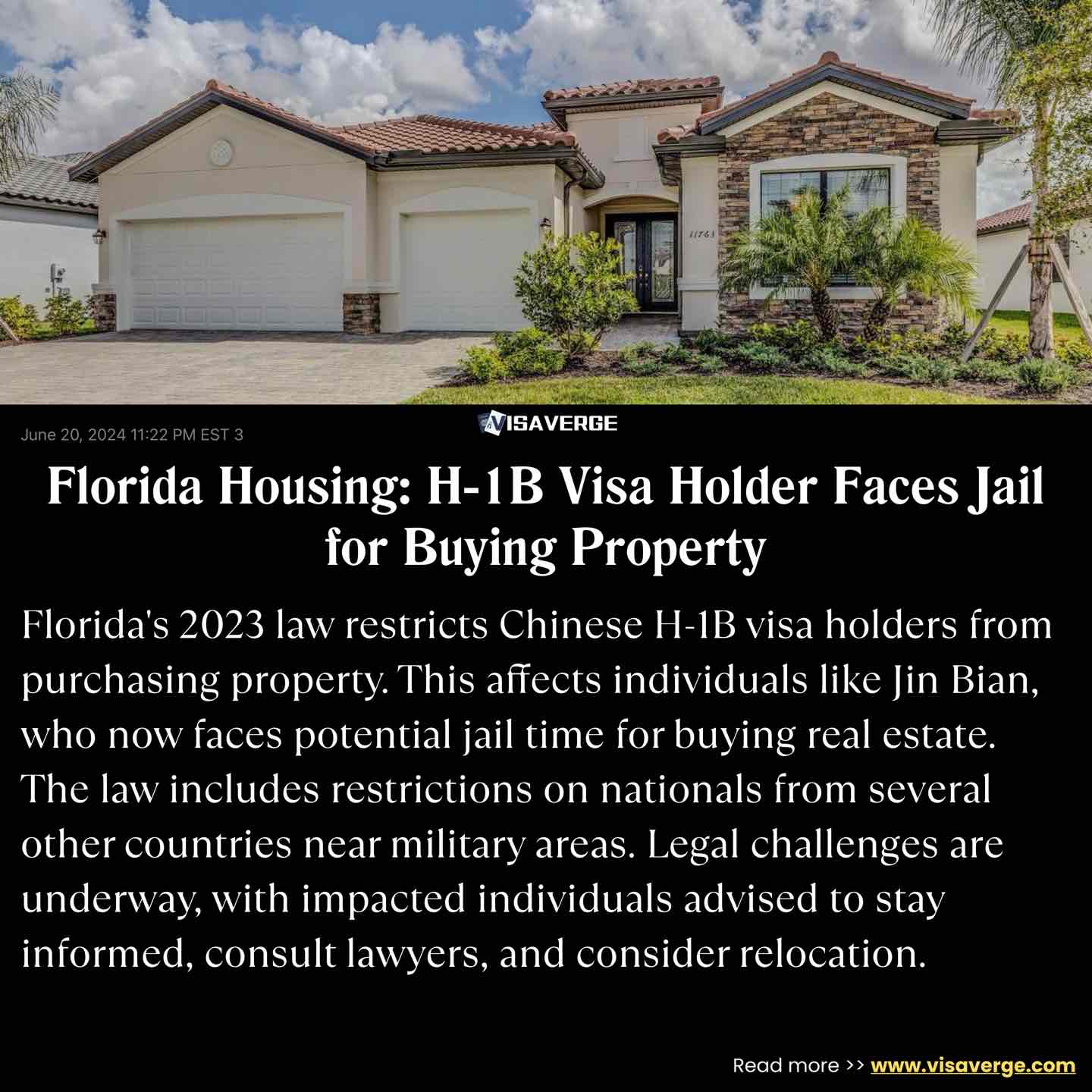
- Florida’s Senate Bill 264 restricts property purchases by Chinese H-1B visa holders and other nationals near critical infrastructure.
- Chinese software engineer Jin Bian reconsidered buying property in Florida due to potential jail time under the new law.
- The law faces legal challenges and has sparked discussions on its potential discriminatory and geopolitical implications.
What is the Recent Law Banning Property Purchase by H-1B Visa Holders in Florida?
In July 2023, Florida enacted a significant law that specifically affects Chinese nationals on H-1B visas. Governor Ron DeSantis signed Florida Senate Bill 264, which restricts Chinese citizens without US green cards from buying real estate in the state. This law also includes restrictions for citizens from Russia, Iran, North Korea, Cuba, Venezuela, and Syria, preventing them from buying property within 10 miles of military installations or critical infrastructure. However, Indians are not listed in the law.

Personal Impact on H-1B Visa Holders
Jin Bian, a 31-year-old Chinese software engineer, has lived in the US for 12 years on an H-1B visa. Recently, Bian considered buying a property in Tampa to reduce his one-hour commute. To his surprise, he discovered that he could face jail time due to the new law. “I was really shocked. It’s just purchasing property. Once I learned that, I didn’t even bother to look anymore,” Bian said in an interview with CNN.
Bian is now reconsidering his future in Florida because of this statute. He remains hopeful that the law might be reversed but is considering moving back to California if no changes occur in the next year or two. “We’re ordinary people. We don’t talk about these political things. I think 99.99% of people here just want to have a good life… I don’t think California will ever have this kind of law,” Bian told CNN.
Free toolH-1B Cost Calculator OnlineConsequences for Real Estate Transactions
Chinese citizens without green cards face a felony charge and possible prison time if they purchase property in Florida. This law doesn’t just affect buyers but sellers and real estate agents as well, who can also be found liable under the law. According to VisaVerge.com news, the legislation has sparked significant discussions and protests from various communities, adding to the sense of urgency around its potential modification or repeal.
Legal Challenges and Future Outlook
The Florida property law is currently facing legal challenges in court. Other states are also considering similar measures. While some view the law as a stance against geopolitical threats, others see it as an unnecessary and discriminatory restriction. Susan Li, who holds a green card, said she “really felt the discrimination” when she first learned about the bill, emphasizing the emotional and social impact of such laws on residents.
What Can Affected H-1B Visa Holders Do?
- Stay Informed: Keep an eye on legal updates regarding this law. Changes may take place that can affect your rights and actions.
- Consult an Immigration Lawyer: Get professional advice to understand your specific situation better and explore your options fully.
- Consider Relocation: Contemplate moving to another state without such stringent property purchase laws. States like California may have a friendlier attitude towards immigrants.
- Participate in Legal Action: Join efforts that are challenging this law in court if you have standing and resources to do so.
For those currently affected by the Florida housing ban, it is crucial to understand that laws regarding property purchase by Chinese H-1B visa holders are subject to change. To get updated information and legal advice, you can check the official USCIS page on property laws.
Broader Implications
This legislation has broader implications for international relations and domestic policy. While intended to address national security concerns, it places a heavy burden on individuals who contribute positively to the state’s economy and communities. As discussions and legal challenges continue, residents like Jin Bian are closely monitoring the situation to make informed decisions about their future.
By ensuring a clear and detailed understanding of such regulatory changes, H-1B visa holders can better navigate their housing and investment decisions, staying within the bounds of the law while advocating for fairer policies.
Learn Today:
Glossary
- H-1B Visa: A non-immigrant visa that allows US companies to employ foreign workers in specialty occupations requiring theoretical or technical expertise. This visa is common among tech companies that hire employees from abroad.
- Green Card: An identification card for lawful permanent residents of the United States, allowing them to live and work permanently in the country. It serves as proof that its holder has been granted the privilege of residing in the US permanently.
- Senate Bill 264: A specific piece of legislation enacted in Florida that restricts Chinese nationals and citizens from several other countries from purchasing property within the state under particular conditions, notably excluding those with US green cards.
- Felony Charge: A serious criminal charge that can result in severe penalties such as imprisonment. In the context of Florida’s property law, Chinese nationals without green cards face felony charges if they purchase real estate in violation of the law.
- Critical Infrastructure: Facilities and systems that are essential for the functioning of a society and economy, including energy, water, transportation, and communication systems. The Florida law restricts property purchases within 10 miles of such infrastructure for citizens of certain countries.
This Article In A Nutshell:
In July 2023, Florida passed Senate Bill 264, banning property purchases by Chinese H-1B visa holders near critical infrastructure and military sites. This law also affects citizens from six other countries, sparking legal challenges. Chinese nationals without green cards now face restrictions and potential penalties for real estate transactions.
— By VisaVerge.com
Disclaimer: The information provided in this article is for informational purposes only. If you reference or use any content from this article, please attribute it to VisaVerge.com by including a link to the original source. We appreciate your adherence to our content usage policies and your commitment to giving proper credit.
Read More
- H1B Transfer: Switching Jobs Without a Visa Stamp
- H1B Change of Status vs. Consular Processing: Key Differences Explained
- Understanding the H1B Change of Status Process
- H1B Visa Consular Processing Explained
- H1B Visa Changes Prompt Indian IT Professionals to Consider Returning Home